Appliance Leak Water Damage in Brooklyn, NY
A washing machine fill hose holds house pressure even when the machine is off. When one splits overnight, you wake up to a flooded kitchen and your downstairs neighbor at the door. We pull the water back out, dry both units, and handle the whole cleanup.
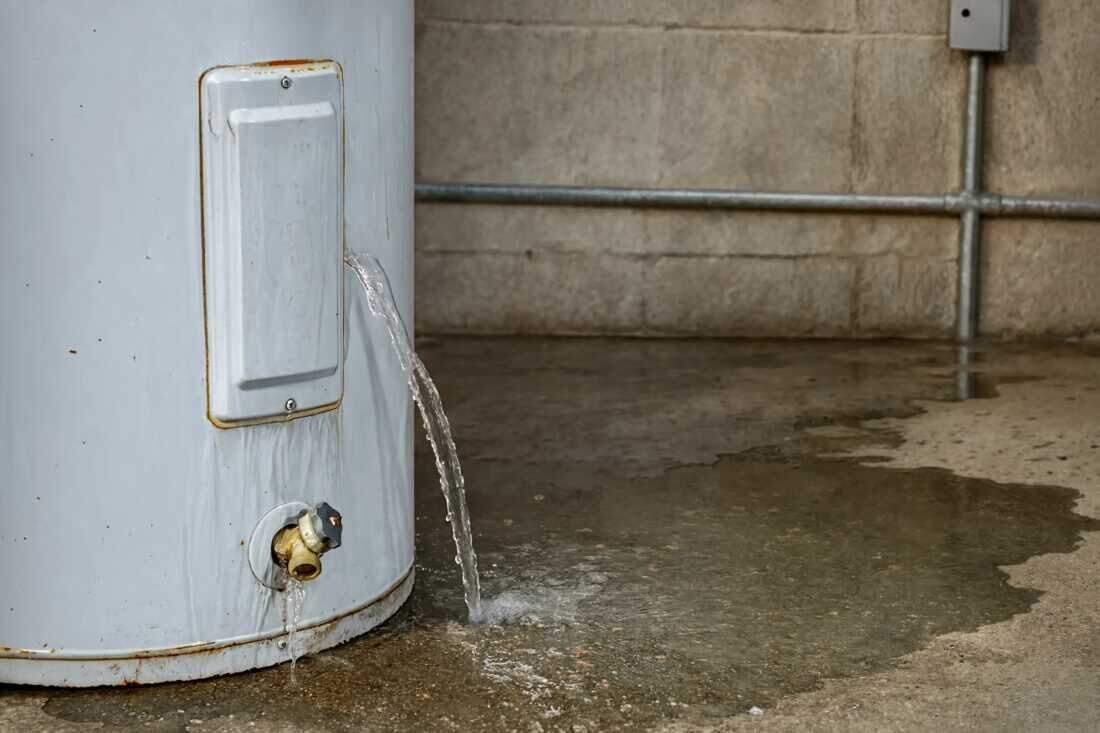
The damage from a failed appliance is mostly the water you can't see. When a supply line lets go or a tank rusts through, the water doesn't pool politely in the middle of the room. It runs into the cabinet base, down behind the toe-kick, under the vinyl, and along the joists into the apartment below. By the time a board cups or a brown stain shows up on a downstairs ceiling, the subfloor has been wet for hours. Cleaning up appliance leak water damage means chasing that hidden path: Reliable Brooklyn Water Damage Restoration meters where the water actually went, extracts it, and dries the cabinets, subfloor, and framing to a logged moisture reading, not a guess.
What we handle
- Washing machine & dishwasher floods — a burst fill hose, a failed inlet valve, or a worn door gasket can empty across a kitchen or laundry floor; we extract it and dry the cabinets and subfloor it ran under.
- Water heater failures — a corroded tank or a popped relief valve dumps 40-plus gallons at once and keeps refilling; we pump it out and dry the surrounding walls, floor, and anything stored nearby.
- Leaks under the kitchen sink — a slow drip from a supply line or a P-trap rots the cabinet base and the floor under it for weeks; we open it up, dry the cavity, and check for mold behind the panel.
- HVAC & AC condensate overflows — a clogged drain line backs the pan up and the water finds the ceiling below or runs down inside a wall; we dry the cavity and stop the staining before it spreads.
- Fire sprinkler discharge — one fused head flows 15 to 25 gallons a minute until the riser is shut, and the first water out has sat in black iron pipe for years; we extract it, sanitize what it touched, and dry every room it reached.
How a call goes, start to finish
- We answer and dispatch
A real person picks up, day or night, takes your address, and sends the nearest crew. From our Brownsville base we usually reach most of Brooklyn in around 45 minutes, depending on traffic.
- Kill the source, make it safe
We shut the supply valve to the appliance, check for live electrical near the water, and then meter the floor and walls to map how far it actually traveled.
- Extract and open up
Portable extractors pull the standing water; we pop toe-kicks and base panels so the water hiding behind the cabinets can dry instead of sitting there feeding mold.
- Dry to a reading and document
Air movers and dehumidifiers run while we meter daily, so the structure dries to an actual number. We photograph and meter every bit of it, then bill your insurer direct.
A failed washer or heater usually opens up a chain of work: structural drying for a soaked subfloor and framing, ceiling water damage when it hits the unit downstairs, or mold removal if the leak sat behind a cabinet for weeks. One Brooklyn crew runs the whole thing.
Questions we get
The dishwasher flooded overnight — how fast can you get here?
Call now and a real person picks up live, with no answering service holding your message until morning. We dispatch from Brownsville and usually reach most of Brooklyn in around 45 minutes, depending on traffic. With an appliance leak the clock matters: the water's already been running into the cabinets and subfloor while you slept, and every hour it sits wicks deeper into the floor and the wall below.
My water heater let go in the basement — is it worth calling, or do I just mop it up?
Mop up what you can see and call us anyway. A water heater puts 40-plus gallons on the floor in one go, and in an older Brooklyn row house that floor is often the lowest finished room in the building. The water soaks into the slab, the foundation wall, and whatever's stored down there, and a wet-vac doesn't pull it back out of concrete or framing. We drop a pump for the standing water, then meter and dry what soaked in below the surface. That's the part that decides whether mold shows up in three weeks. And if the flooding started somewhere else and reached the heater, plan on replacing the unit: burners and controls that sat underwater rarely come back, and we photograph that damage for the claim too.
My leak ran into the apartment below — can you handle that too?
Yes, and in a Brooklyn two-family or co-op that's the normal case, not the exception. A washer or sink leak follows the joists and shows up as a sagging, stained ceiling in the unit underneath. We dry both the source room and the affected ceiling below, and we document the water's full path, room by room, so both units' claims rest on the same set of readings.
The AC has been dripping inside a wall all summer — do you handle that?
Yes. HVAC water damage is the slow-motion version of an appliance flood: a clogged condensate line overflows its drain pan a cup at a time, all cooling season, and the wall cavity or the ceiling under the unit never gets a dry day. By August the drywall is soft, the framing meters wet, and there is often mold where the pan sits. We open the cavity, dry it down to target, and treat any growth we find. Clearing the blocked line itself is an HVAC tech's fix; we'll tell you plainly if that's all you need before any drying gear comes off the truck.
Will insurance cover an appliance leak?
Usually the water damage is covered and the appliance is not. A sudden, accidental failure (a hose that bursts, a tank that rusts through, a valve that sticks open) is typically covered under a homeowner's, HO-6, or renter's policy: the floors, cabinets, walls, and ceilings the water ruined. The washer or heater that failed is treated as a maintenance item, so carriers rarely pay to replace it, and a slow drip that was visibly ignored for months can be excluded altogether. We photograph the source, log moisture readings room by room, and bill your insurer directly. We document the loss in full; your carrier decides what's covered. See our insurance claims guide.
When an appliance fails across Brooklyn
Appliances fail quietly. A fire sprinkler head fuses in a hallway, a water heater corrodes through its tank (rusty hot water at the taps is usually the first warning), a dishwasher gasket gives out mid-cycle, an AC condensate line clogs and the drain pan overflows into the ceiling. None of these announce themselves the way a burst pipe does. The water just runs, hour after hour, into the cabinet base, under the floor, and along the joists until it shows up as a cupped board or a brown stain on the ceiling below. That slow, hidden quality is exactly what makes appliance leak water damage so expensive: the longer it runs unnoticed, the deeper it wicks, and the difference between a two-day dry-out and a gutted kitchen is usually how long the water ran before anyone called.
Where the leak sits changes the work. A dishwasher or washer flood is gray water (detergent, food waste, whatever was in the machine), so we sanitize the floor as we extract it. Water damage from a water heater or a burst supply line starts clean, but once it has run through a finished ceiling or sat in old plaster overnight, it is no longer something you just air-dry. Water damage under the kitchen sink is the sneakiest of all: the cabinet hides it, the base rots from the inside, and the floor under the unit can be soft long before anything looks wrong on top. We meter behind the cabinet and under the floor to catch what's still wet, then dry it to a verified reading instead of sealing a damp wall back up.
Brooklyn's housing stock makes a single failed appliance everyone's problem. In a brownstone or a two-family row house, a washer on the second floor or a heater in the cellar sends water down through the framing into the unit below. In the loft conversions of Williamsburg and Bushwick, and in the newer towers downtown where every apartment finally has its own washer hookup, the same failure repeats floor over floor. One leak becomes two ceilings, two claims, and sometimes a building-wide call. We dry the whole path of the water (the source room, the wall cavity it ran through, and the ceiling it stained downstairs) and document every room so each party's insurer sees exactly what happened. Handle it the day it happens and dry the cavity behind the surface, and the loss stays a repair instead of a teardown.
Reliable Brooklyn Water Damage Restoration dispatches from Brownsville and serves East New York, Bed-Stuy, Crown Heights, Flatbush, Bushwick, Williamsburg, Park Slope, Bay Ridge, Canarsie, Coney Island, Mill Basin, and the rest of Brooklyn, plus Queens, Manhattan, the Bronx, and Staten Island. Call (347) 906-9419 any hour and a technician will pick up.
Licensed, insured & trained to industry standards


A leak soaking your home — call now
A Brooklyn crew is standing by 24/7. The sooner the cleanup starts, the less the water takes with it: your floor first, your neighbor's ceiling next.
Call (347) 906-9419