Hardwood Floor Water Damage Repair in Brooklyn, NY
You feel it before you see it: ridges underfoot where yesterday's dishwasher leak soaked into the oak. That's cupping, and caught inside a day or two, most floors still dry flat under vacuum mats. Call while your floor is a drying job, not a tear-out.
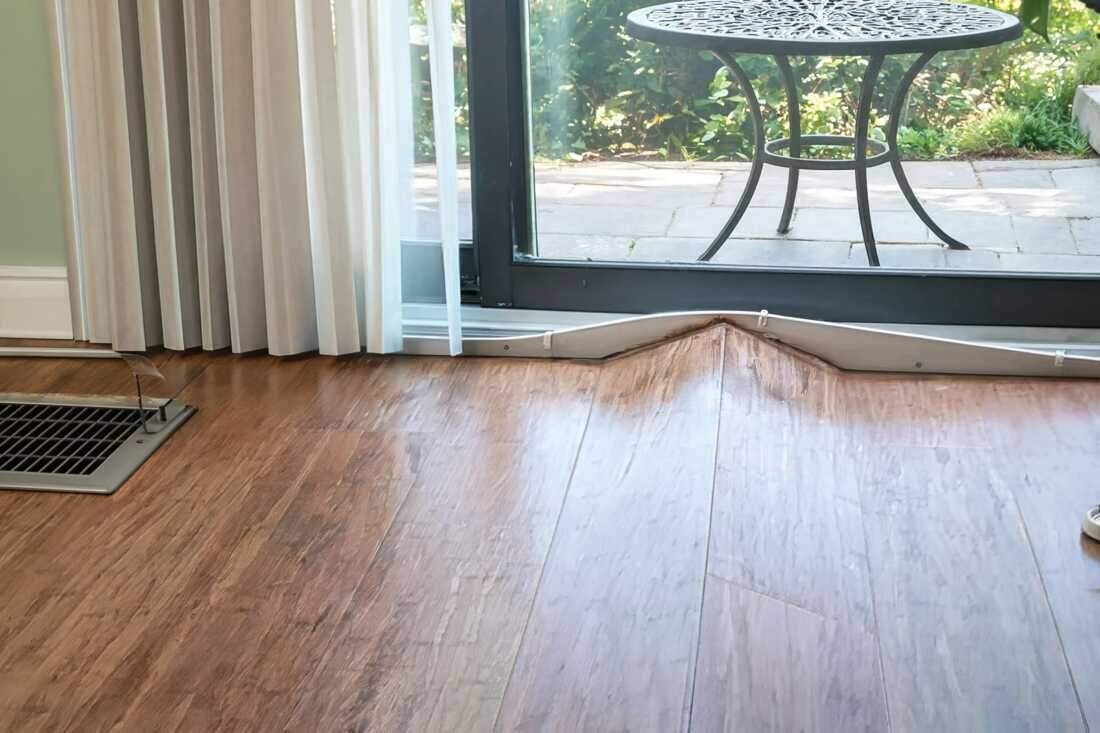
Wet hardwood is a race you win in the first day. The spill you mop up is not the problem — it's the water that slipped through the seams into the subfloor, feeding back up into the boards until their edges curl. That's why our hardwood floor water damage repair starts with vacuum drying mats instead of a crowbar: catch it early and most floors pull back flat to sand and refinish; wait a week and the same floor comes up in pieces.
What we do for a soaked wood floor
- Vacuum drying mats — sealed panels that pull trapped water up through the seams and pores of the wood, so the floor dries in place, still nailed down.
- Moisture metered board by board — a pin meter reads each plank and the subfloor against the species' real dry target, so nobody is guessing when the floor is done.
- Cupping & crowning held in check — slow, even drying that coaxes swollen boards back flat before the edges crack or the joints split apart.
- Board replacement when it's the only fix — planks too far gone get lifted and swapped, then sanded and refinished into the surrounding floor so the patch doesn't read as a patch.
From your call to a flat, dry floor
- A technician answers, day or night
No answering service. The person who picks up is the one who dispatches, so tell them what leaked and when. From our Brownsville base a crew typically crosses most of Brooklyn in about 45 minutes, depending on traffic.
- We pull the water and map the wet
Standing water comes off the surface first, then we meter the boards and the subfloor to find exactly where the moisture sits, including the wet you can't see along the seams.
- Mats and dehumidifiers go down
The mats seal over the wet run while a low-grain dehumidifier holds the room's air dry, so the wood gives up its moisture instead of reabsorbing it. We log readings every day and adjust the setup as the numbers move.
- Refinish, or replace what's lost
Once the wood reads dry to target, we sand and refinish the cupped areas flush, or replace any boards past saving, and confirm a flat, dry floor before we pull the gear.
Drying a floor ties straight into structural drying for the subfloor and joists underneath, into water removal when there's standing water to pump out first, and into mold removal if the wet boards sat hidden for a while. One Brooklyn crew runs the whole chain.
Questions we get
How do you fix a water-damaged hardwood floor — dry it in place, or replace it?
In place, whenever the wood is still sound. Vacuum mats go over the wet boards and pull the water back up through the grain, a dehumidifier holds the room dry, and a floor caught in the first day or two usually flattens enough to sand and refinish. Boards that have buckled off the subfloor, split at the joints, or sat wet for a week are past that; those we lift, replace, and blend into the rest. We meter every board before quoting either path, so you're not paying to dry a floor that's already lost.
How long does it take to dry out a wood floor?
Hardwood dries far slower than carpet or drywall. Figure several days to about a week of mat drying, depending on how deep the water went, the board species, and how big the wet area is. There's no shortcutting it: rush the wood and it cracks. We recheck the moisture readings daily and only pull the equipment once the boards hit their dry target, not when the surface feels dry to your palm.
My floor is laminate, not solid hardwood — does that change the job?
Usually, yes, and it's better to hear it up front: laminate floor water damage almost always ends in replacement. The planks are a photo layer over a fiberboard core, and once that core soaks it swells and stays swollen; the edges puff up, the layers separate, and no amount of mat time presses them flat again. The save is underneath. We pull the ruined planks, dry the subfloor to a metered target, and you lay new flooring over a base that won't feed mold under it. Engineered wood with a real hardwood wear layer sits in between: sometimes it dries, and we meter it before calling it either way.
Our brownstone still has the original parquet — can it be saved?
That's the floor we try hardest to dry in place. The herringbone parquet and narrow-strip oak in Brooklyn's prewar brownstones were milled from old-growth stock, and new boards don't match a century of color and wear; a replaced section is the first thing your eye finds in a parquet field. So we dry the original wood conservatively, mats over the run, slow and metered, accepting a longer dry-out to keep the boards. If a few pieces are truly gone, we source reclaimed stock close in age and grain and feather the finish across the repair.
Will my insurance cover the hardwood floor repair?
A sudden, accidental loss (a burst supply line, a failed washing-machine hose) is often covered under a homeowner's, HO-6, or renter's policy, and drying the floor is normally part of that claim. We photograph the source, map the wet, log meter readings every day, and bill your insurer directly. We can't promise what your carrier approves; that's the adjuster's call. What we control is the documentation, and a metered day-by-day file is what a floor claim stands on. See our insurance claims guide.
Saving water-damaged hardwood floors across Brooklyn
Most water damage to a wood floor hides where you can't see it. The spill spreads thin, slips between the boards, and soaks into the subfloor, and the wood above keeps drinking from below long after the surface looks dry. Over a day or two the planks swell and their edges ride up above the centers, which is cupping. Point a box fan at the surface and you can trade one problem for another: the top face dries hard while the core stays wet, the middles hump up instead, and that's crowning. Getting a floor back means drawing the moisture out through the boards evenly, top and bottom, before the wood sets in its new shape — vacuum mats, a low-grain dehumidifier, and a meter log that proves the floor actually finished drying. Do that inside the first days and most hardwood comes back with a light sand instead of a rebuild.
The water itself sets the rules. Clean supply-line water dries in place. Gray water from a dishwasher or washer drain gets extracted and the floor sanitized as it dries. Black water from a sewer backup (common in the older blocks of Brooklyn where the cellar floor sits below the sewer line) is a different job: what it soaked can't just be dried back into a home, so saturated boards come out and the subfloor is cleaned before anything new goes down. Either way we meter the subfloor and the joists underneath before calling the job done, because a plank that reads dry on top can still be sitting on wet plywood, and that's where mold starts.
Reliable Brooklyn Water Damage Restoration repairs and dries water-damaged hardwood floors across Brownsville, East New York, Bed-Stuy, Crown Heights, Flatbush, Bushwick, Williamsburg, Park Slope, Bay Ridge, Canarsie, Coney Island, Mill Basin, and the rest of Brooklyn, plus Queens, Manhattan, the Bronx, and Staten Island — from new engineered planks to the original strip oak and parquet of the prewar brownstones. Our IICRC-certified crews run their own mats, dehumidifiers, and meters, and a person, not a recording, picks up the phone. Call (347) 906-9419 and tell us what happened to your floor.
Where we work across Brooklyn & NYC
We repair water-damaged wood floors in: Brownsville · East New York · Bedford Stuyvesant · Crown Heights · Flatbush · Bushwick · Williamsburg · Park Slope · Bay Ridge · Canarsie · Coney Island · Mill Basin · Queens · Manhattan · The Bronx · Staten Island.
Licensed, insured & trained to industry standards


Your floor can still dry flat — call now
A Brooklyn crew is ready 24/7, mats and meters already on the truck. Hardwood that starts drying today gets sanded and refinished; a floor that waits comes up board by board.
Call (347) 906-9419