Hardwood Floor Water Damage in Mill Basin, NY
You come down to the first floor and the oak by the basement stairs is cupped and spongy, water having pushed up from a flooded canal-side garage below. Until the source is stopped, mats over the floor would run forever. We meter first and dry once it's controlled.
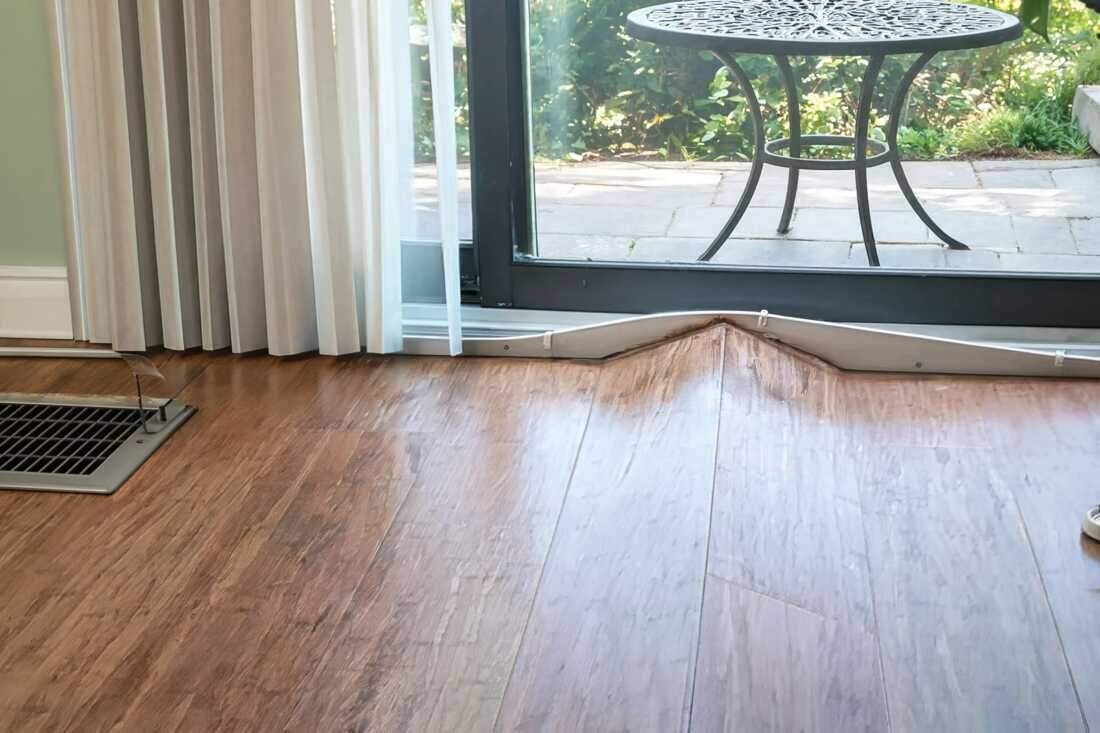
Hardwood floor water damage in Mill Basin almost always starts below the floor, not on it. The detached and semi-attached houses off National Drive and Strickland Avenue back onto the canals that finger off Jamaica Bay, sitting low on a high water table inside a FEMA AE flood zone, and the lowest point of most of them is a tuck-under garage at grade with the finished basement right behind it. When a nor'easter or a spring tide raises the basin, the water comes over the grade and up the floor drain at once, collects in the garage and basement, and then wicks up through the wood subfloor into your first-floor oak. By the time the boards cup, the subfloor underneath them is usually wetter than the surface.
So our first move is the source, not the mats. We extract the standing water below, confirm it's no longer feeding the floor, and only then set vacuum mat systems and dehumidifiers on the hardwood above — because mats over a floor that's still taking on water from a rising canal will run without end. Once the source is controlled, we repair water-damaged hardwood floors the same careful way: a pin meter reads each board and the subfloor, readings get logged daily, and hardwood floor water damage repair closes when the wood reads dry to the species target. A live person answers around the clock, no answering service, and from our Brownsville base we're usually in Mill Basin inside about 45 minutes.
What we cover in Mill Basin
- Source stopped, then mats — we pump and control the canal-side garage or basement first, because vacuum mats over a floor still fed from below dry nothing and run forever.
- Board-and-subfloor metering — a pin meter reads each plank and the wood subfloor below, and we dry both to the species' real target, since on a canal block the layer underneath is usually the wettest.
- Cupping brought back flat — controlled drying settles the swollen boards before they crown, crack, or split, once the water is no longer rising under them.
- Targeted plank replacement — where boards or a delaminated subfloor are past saving, we lift just those sections, replace, and refinish to match the surrounding floor.
Full detail on this service: Hardwood Floor Water Damage in Brooklyn · or see every water damage service we provide in Mill Basin.
Common questions in Mill Basin
The water came up from my flooded garage off the canal. Will mats actually save the floor?
Often, yes, if we get on it quickly and the water that reached the oak was clean. Mat systems do best on boards caught while they're still cupping, before the wood dries hard in a swollen shape. The catch in Mill Basin is the source: if your garage or basement is still taking on water from the high table, mats over the floor above will run forever and never win. That's why we extract below and confirm the source is controlled before we commit to drying the hardwood, so the floor isn't fighting a fresh supply of water the whole time. Once it's stopped, the drying is straightforward and metered.
My Mill Basin home is in an AE flood zone. Will NFIP cover drying my floor, or only replacement?
National Flood Insurance Program building coverage treats flooring as a building component, and drying counts as a covered mitigation step when the paperwork backs it up. We document the loss from arrival: the high-water mark, moisture readings, a daily drying log, equipment placed, and final dry numbers. Whether your policy pays for drying alone or drying plus some replacement comes down to the adjuster's read of the floor's condition and your limits — and NFIP caps improvements to a finished basement, which surprises a lot of owners here. We give the adjuster real data to decide on; your carrier makes the call on what's covered.
My sump handles ordinary rain fine, so why did the canal put water through my floor this time?
Because a sump is built for the water that seeps in during a normal rain, not for a canal that's pushing back against your foundation. When the basin rises on a nor'easter or a spring tide, the water table around the house rises with it and comes in low through the block wall and the window wells faster than any single pump can clear, while the same high tide can surcharge the sewer and send it up the floor drain too. The pump isn't failing; it's out-matched. That's also why we confirm the water has actually stopped rising before we dry the floor above — otherwise the hardwood is drying against a source the sump can't hold back. Stopping the water is a plumber's or a waterproofer's job for the long term; our part is drying what it reached.
What should I do before your crew gets to Mill Basin?
Photograph everything first, before you move furniture or pull up any boards. For a flood-zone claim the adjuster wants to see the high-water line, any standing water, and the affected oak in place, so the record matters as much as the cleanup. If it's safe, kill power to the wet area — standing water and outlets don't mix. Then call (347) 906-9419 and we'll start extraction and drying, which the policy still expects you to do to limit further damage while the claim is open. A live person answers any hour and can walk you through it while the crew heads over.
Licensed, insured & trained to industry standards


Cupped hardwood in your Mill Basin home? Call now.
Call (347) 906-9419 for a live answer any hour, no answering service. A Brooklyn crew pumps the garage and basement, confirms the water's stopped, meters the boards and subfloor, sets mat drying, and documents the loss for your flood claim. The subfloor under a canal-side floor holds water long after the surface looks dry, so the sooner it's metered, the more of the oak comes through.
Call (347) 906-9419