Water Damage Restoration in Bay Ridge, NY
A bathroom branch lets go on the fifth floor of a prewar elevator co-op on Ridge Boulevard, and the ceiling two units down darkens before the shareholder up top notices a thing. Whole stacks in Bay Ridge share one riser. A real person answers any hour.
Real jobs, on camera
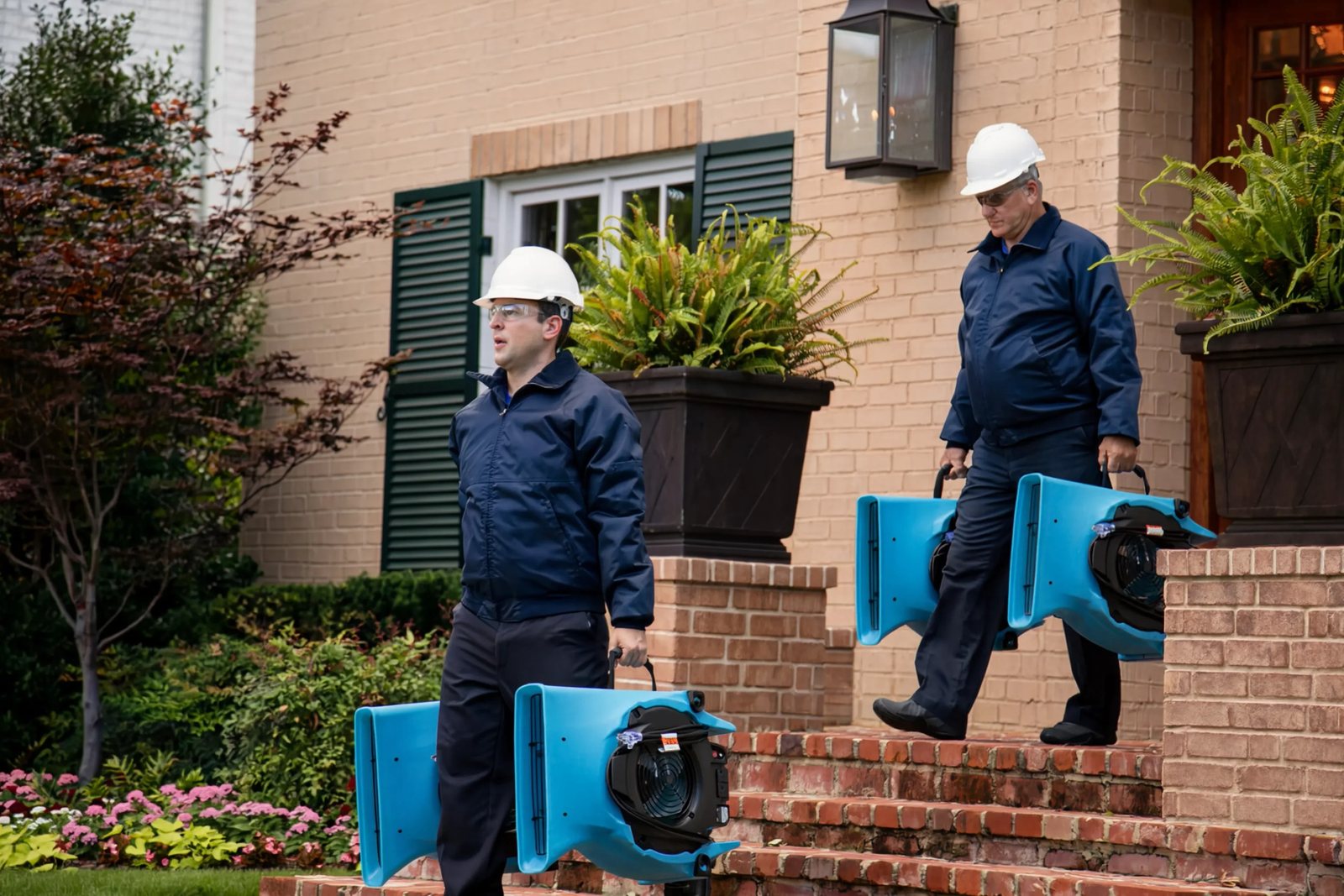
Short clips from real water damage jobs across Brooklyn — the same crew that responds in Bay Ridge: extraction, structural drying, and the gear we run on site.
The water problems we fix in Bay Ridge
Water damage restoration in Bay Ridge is shaped by the big prewar elevator co-ops that line Shore Road, Ridge Boulevard, and Colonial Road, blocks of six-story brick where a whole column of owner-occupied apartments hangs off one shared riser. That is why a leak here so seldom stays where it began: a branch fails on an upper floor and the water surfaces two shareholders down. The limestone and brick attached rows off the numbered streets fail more privately, an old supply line letting go inside a wall. We run the whole loss with one residential crew, any hour: water removal, structural drying, the water damage cleanup where the leak fed mold, and the water damage repair that puts the plaster and floors back.
Water Removal & Extraction
Standing water pumped and vacuumed out before it wicks into drywall and subfloor.
Mold Remediation
Contained removal of mold from flooding or slow leaks — plus the moisture fix.
Emergency Water Damage
A real person answers 24/7 and dispatches the nearest crew to your door.
Ceiling Water Damage
Stained, sagging ceilings from an upstairs or roof leak — found, dried, restored.
Structural Drying
Air movers and dehumidifiers set to a moisture map, monitored daily until dry.
Sewage & Contaminated Water
Safe cleanup and sanitizing of Category 3 water from backups and overflows.
Roof & Storm Damage
Leaks from storm-hit or aging roofs — traced, dried, and the ceiling restored.
Hardwood Floor Drying
Cupped or buckled boards dried in place where possible, before full replacement.
Carpet Water Damage
Soaked carpet and pad extracted and dried — or removed when it can't be saved.
Burst & Frozen Pipes
Fast response to burst or frozen supply lines — water stopped, extracted, dried.
Appliance & Water-Heater Leaks
Washer, dishwasher, and water-heater failures cleaned up and dried to the subfloor.
Common causes of water damage in Bay Ridge homes
The steady Bay Ridge call comes out of the elevator co-ops. Shore Road, Ridge Boulevard, and Colonial Road are lined with six-story prewar apartment buildings put up in the 1920s and 1930s, and most still run the plumbing they were built with: galvanized supply branches and cast-iron waste stacks feeding a full column of kitchens and baths off one shared riser. Corrosion works from the inside until a fitting on an upper floor gives, and because the apartments stack on that single line, the failure almost never shows where it happened. The water follows the chase down through the floor-ceiling assembly and surfaces a unit or two below the break, so the shareholder who reports it is rarely the one whose branch let go, and every apartment in between has wet plaster nobody has looked at yet. What sharpens it here is that these are co-ops, not rentals: the neighbor upstairs owns shares too, so a leak becomes a matter between two owners and the board rather than a call to a landlord.
Off the water the housing changes and the failures turn private. The limestone-fronted and brick attached rows that fill the numbered streets, and the older frame and brick houses toward the Fourth and Fifth Avenue corridors, hide their leaks inside the walls: an aged supply line pinholes or a cast-iron drain cracks at a joint and weeps behind the plaster for weeks before a stain connects to the musty smell. Bay Ridge also runs downhill toward the Narrows, and the low blocks along Shore Road and below Colonial catch it both ways: a hard rain surcharges the combined sewer and pushes contaminated water back up through the cellar floor drain, while the grade sends street runoff toward the same low foundations. A sewer backup is Category 3 water no matter how briefly it stands, so treating it like a clean spill, a wet-vac and a box fan, is how a finished lower level grows mold by the weekend.
Our emergency response in Bay Ridge
A live person answers at any hour, no answering service, and the crew loads at our Brownsville base a run to the southwest; figure roughly 45 minutes to Bay Ridge in ordinary traffic, which is the honest drive and not a scheduled slot. In a stacked co-op the ceiling stain only marks where the water broke through, so a thermal camera and a moisture meter come out before anything is opened, and we trace the wet path down through every affected floor rather than guess from the unit below. We get the shared riser shut with the super, coordinate access with the managing agent or board, and pull the standing water first. Air movers and dehumidifiers then run against those readings, metered daily until the plaster and framing hold dry numbers instead of a dry surface, and where the water sat long enough to feed mold, contained removal comes before any rebuild. The repair closes it out with the soaked plaster and drywall put back, and each affected apartment is documented on its own, so every shareholder's file stands alone for whoever your carrier sends.
Frequently asked questions
The leak came down from the shareholder above me in my Ridge Boulevard co-op, and we both own our apartments. Who pays, and can I just get the drying started?
Start the drying now; sort the money after, because in a co-op every wet hour damages shares the corporation is on the hook for. The one thing you can't reach is the shut-off, since the branch that failed is in the unit above, so tell the super or the managing agent to close that riser while you get a crew moving. Who ultimately pays is a question between two owners and the board: the building's master policy generally answers the riser and the bare structure, your own HO-6 covers the interior finishes and your belongings, and the shareholder upstairs may owe your deductible if their fixture caused it. We don't settle that. What we do is extract, dry the wet plaster to a meter reading, and write up the source and the scope so the board and every carrier work from one record. Call (347) 906-9419 the hour you see it.
My co-op renovated the kitchen years ago. If a wall has to come open to dry it, does the corporation fix it or do I?
The split usually follows the proprietary lease, and in most Bay Ridge co-ops the line falls at the wall surface: the corporation owns the structure and the pipe inside the wall, while everything you or a prior shareholder installed on your side — cabinets, tile, finished surfaces, the kitchen you paid for — is your responsibility as a betterment. That is exactly why the record matters. We open only the pockets the moisture meter flags, dry the cavity behind your finishes to a verified number, and document what had to come out and why, so when the repair is divided you and the board are working from the same facts rather than a guess. We restore the structure; whether your HO-6 reimburses the finished side is your carrier's call, and our file is what they read.
I'm on a low block near Shore Road and heavy rain backs water up my cellar floor drain. Is that the same as the ceiling leaks you handle upstairs?
No, and we treat it as a different, dirtier job. Bay Ridge runs downhill toward the Narrows, so the low foundations along Shore Road and below Colonial catch the combined sewer when a hard rain surcharges it, and that water comes up the drain as Category 3 black water, contaminated the moment it surfaces. A clean riser leak upstairs can often be dried in place; a sewer backup can't. We contain the cellar, pump and extract, disinfect the slab and masonry, and cut out the soaked drywall and carpet that can't be saved before any dryer runs. The lasting fix for a drain that backs up every storm is a plumber's backwater valve on the house line, which is the owner's job, not a cleanup crew's, and once the cellar is dry we'll tell you plainly whether what we saw was a sewer surcharge or a failing house drain.
The stain is on my ceiling but the shareholder directly above swears their floor is dry. In a prewar building, how does that happen?
It's common in these stacked co-ops, and it usually means the source isn't the apartment right over yours. On a shared riser the water follows the plumbing chase and runs sideways along the floor-ceiling assembly before it finds a way down, so it can surface a unit or two off from where it actually entered, which is why the neighbor above can be genuinely dry. We trace the real wet path with a thermal camera and moisture meters and put it on paper, which tells the managing agent which stack to open and usually ends the back-and-forth between shareholders. Then we dry the cavity to a verified reading before the old plaster sags or starts feeding mold behind a ceiling nobody opened.
Licensed, insured & trained to industry standards


Water tracking down through your Bay Ridge co-op from the unit above? Call now.
A live person answers any hour, and a Brooklyn crew runs to Bay Ridge from our Brownsville base nearby. We've worked these prewar co-op stacks before: we trace the leak down through the plaster, pull the water out, dry the structure to a meter reading, and document each affected apartment for its own claim. Call (347) 906-9419.
Call (347) 906-9419