Water Damage Restoration in East New York, NY
A supply line splits in the framed back wall of a two-family off New Lots Avenue, and by morning the garden-level unit the owner rents out below is standing in water. That is a routine East New York call. Call any hour and a real person answers.
Real jobs, on camera
Short clips from real water damage jobs across Brooklyn — the same crew that responds in East New York: extraction, structural drying, and the gear we run on site.
The water problems we fix in East New York
Water damage restoration in East New York is mostly a job in one- and two-family houses where the lowest level is lived in, not left as a dry cellar. These blocks of brick and frame row houses run a garden-level or basement apartment under most of them, and that is the floor a burst supply line drains into and the floor a storm backup fills first. Reliable Brooklyn Water Damage Restoration carries the whole loss with one crew, any hour: pump-out, structural drying, mold cleanup where the water sat, and the water damage repair that puts the walls and floors back.
Water Removal & Extraction
Standing water pumped and vacuumed out before it wicks into drywall and subfloor.
Mold Remediation
Contained removal of mold from flooding or slow leaks — plus the moisture fix.
Emergency Water Damage
A real person answers 24/7 and dispatches the nearest crew to your door.
Ceiling Water Damage
Stained, sagging ceilings from an upstairs or roof leak — found, dried, restored.
Structural Drying
Air movers and dehumidifiers set to a moisture map, monitored daily until dry.
Sewage & Contaminated Water
Safe cleanup and sanitizing of Category 3 water from backups and overflows.
Roof & Storm Damage
Leaks from storm-hit or aging roofs — traced, dried, and the ceiling restored.
Hardwood Floor Drying
Cupped or buckled boards dried in place where possible, before full replacement.
Carpet Water Damage
Soaked carpet and pad extracted and dried — or removed when it can't be saved.
Burst & Frozen Pipes
Fast response to burst or frozen supply lines — water stopped, extracted, dried.
Appliance & Water-Heater Leaks
Washer, dishwasher, and water-heater failures cleaned up and dried to the subfloor.
Common causes of water damage in East New York homes
Start with the houses. East New York is a dense grid of one- and two-family brick and frame row houses off New Lots, Pennsylvania, and Dumont Avenues, and most of them finished the lowest level into a garden apartment, a basement rental, or a den. That is where the everyday failures land. A galvanized supply line corrodes through inside an old framed wall, or a pipe running an uninsulated exterior wall freezes and splits on a January thaw, and because these houses are built on platform framing the clean water rides the studs and joists sideways and down before a stain ever shows on the level below. It is usually salvageable if the drying starts fast, which is the whole reason an early call matters here.
Then there is the low ground. The flats around Cypress Hills and the blocks below New Lots sit on an aging combined sewer that carries storm runoff and household waste in one pipe, so a hard rain overwhelms it and shoves that mix back up through the lowest basement floor drain. A backup like that is Category 3 black water, contaminated from the first inch, and the water damage cleanup that follows is containment work: seal the area, disinfect what stays, haul what cannot be saved. We confirm which kind of water we are dealing with before anything else, because a clean burst and a sewer surcharge get handled in completely different ways, and in a lived-in basement the difference decides what can be saved.
Our emergency response in East New York
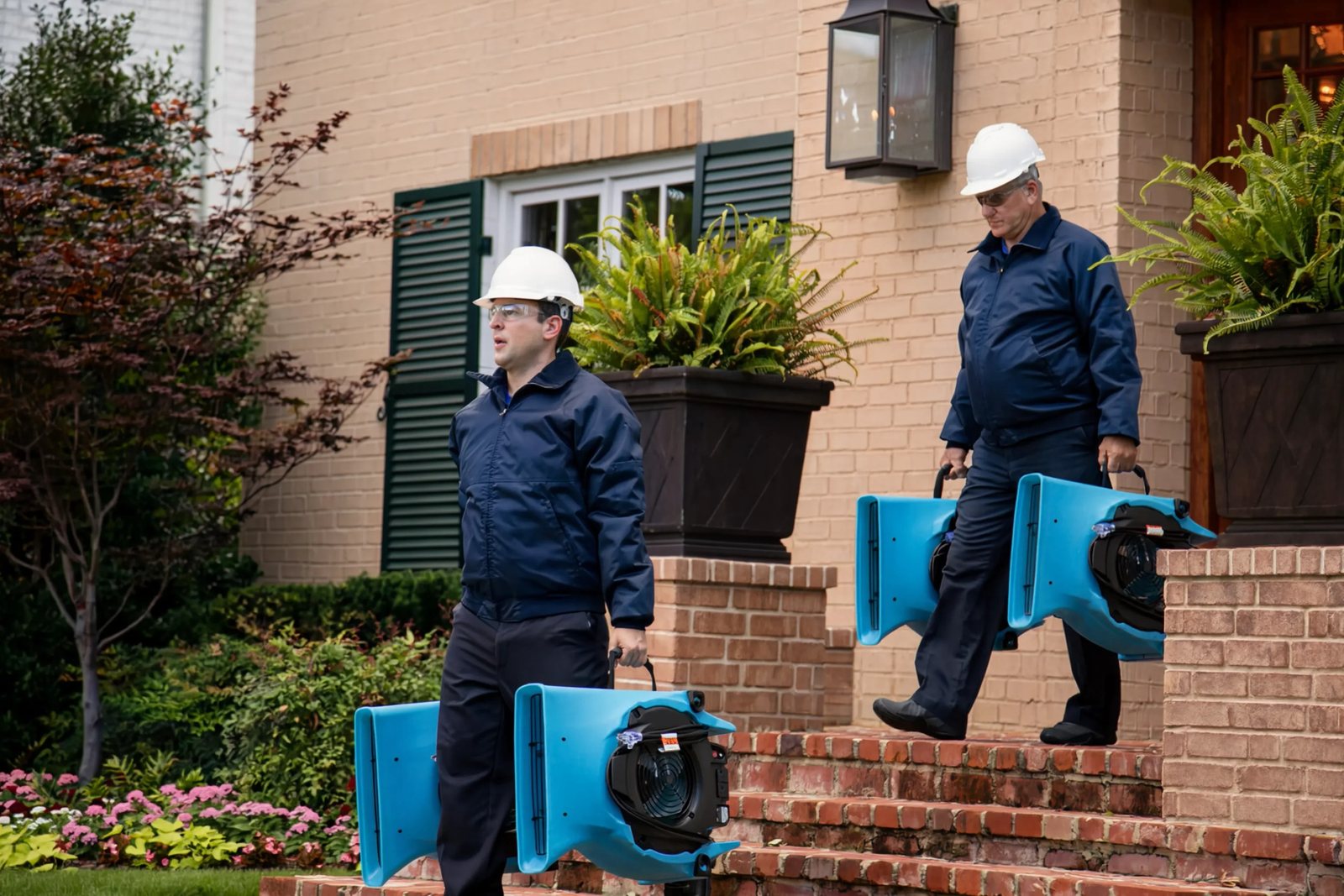
A live person answers at any hour, no answering service, and the crew loads at our base in Brownsville, the neighborhood that shares East New York's western line along Van Sinderen Avenue. Being next door is geography, not a clock, so we quote you the honest drive and never a scheduled slot; what it does mean is that these are streets and houses the crew already knows. We classify the water first, since a sewer backup is Category 3 and gets contained and sanitized before any dryer runs. Then we pump what is standing, extract what soaked into the slab and the framed lower walls, and set air movers and dehumidifiers on a moisture map, reading the meters daily until the framing holds dry numbers rather than a dry surface. Only then does the repair close it out, with the readings, photos, and dates filed for whoever your carrier sends.
Frequently asked questions
A pipe let go in the framed wall of my two-family and the water came down into the basement apartment. Do you have to open the whole level to dry it?
Usually not. The framing decides it: platform-built rows like these let a wall-line break drop through the stud bays and ride the joists, so what shows in the basement apartment is the low point of a wider wet zone. Rather than strip the level, we chase the meter: the bays that read wet get opened, the ones that read dry stay closed, and the drying gear runs in the cavity until the numbers come down. Fresh, clean water caught the same day is the best case there is for saving a finished rental. Shut the water off at the main if you can reach it, then call (347) 906-9419; every hour of head start keeps more of the level closed.
The water came up my basement floor drain during the storm, not from a pipe. Is that on my homeowners policy?
Often no, and it is worth knowing before the adjuster tells you. Backups through a floor drain sit under a separate sewer-and-drain endorsement that plenty of policies here do not carry by default, while water rising in from the street is excluded outright; that risk lives in a flood policy, not a homeowners form. The one source a standard policy usually does answer is a pipe that failed suddenly inside the house, which is why pinning down where the water came from matters as much as drying it. Where a finished basement apartment is involved the money at stake is real, since the water ruins living space and belongings, not a bare slab. We pin down the source, record the water category, and log the scope with dated photos and readings; the coverage call is your carrier's, and our job is to hand them a file they cannot argue with.
I own the two-family and the flooded apartment is the one I rent out downstairs. How does the insurance side work with a tenant in the unit?
The building and everything built into it are yours, so the drywall, flooring, and structure of that lower unit are your repair and go on your building policy, whatever the deductible works out to. What belongs to your tenant is their own property inside the apartment, which their renters policy covers if they carry one. We keep the two straight from the first visit: the loss to the unit written up under your building for your carrier, and a clear record your tenant can hand to theirs. If a tenant's own fixture or appliance caused the leak, that is a separate conversation for you, them, and the carriers, and the documented source is what that conversation runs on. We document the loss; your carrier decides what's covered.
You're based in Brownsville, right next door. Does being that close actually change anything when my basement floods?
It changes the start of the job more than the promise around it. Brownsville shares East New York's western edge along Van Sinderen Avenue, so the crew is not crossing Brooklyn to reach you, which means the water tends to stand for less time before extraction begins, though traffic and the job ahead of yours still set the real clock. Just as useful, it means the crew already knows this housing: the framed row houses, the lived-in garden levels, the low blocks that back up through the floor drain first. We tend to know where the water went before we open a wall. The phone side is the same as everywhere we serve, a live person at any hour, never an answering service.
Licensed, insured & trained to industry standards


Basement apartment under water in East New York? Call now.
A live person answers at any hour, and our crew rolls from Brownsville right next door. We classify the water, pump it out, dry the framing to a meter reading, put back what got ruined, and document the loss for your carrier, start to finish. Call (347) 906-9419.
Call (347) 906-9419