Sewage Cleanup in Brooklyn, NY
Heavy rain, a gurgle in the floor drain, and the cellar is filling with what the sewer sent back. That's Category 3 black water — don't wade in. We pump it out, haul off what it wrecked, and leave the room sanitary and metered dry.
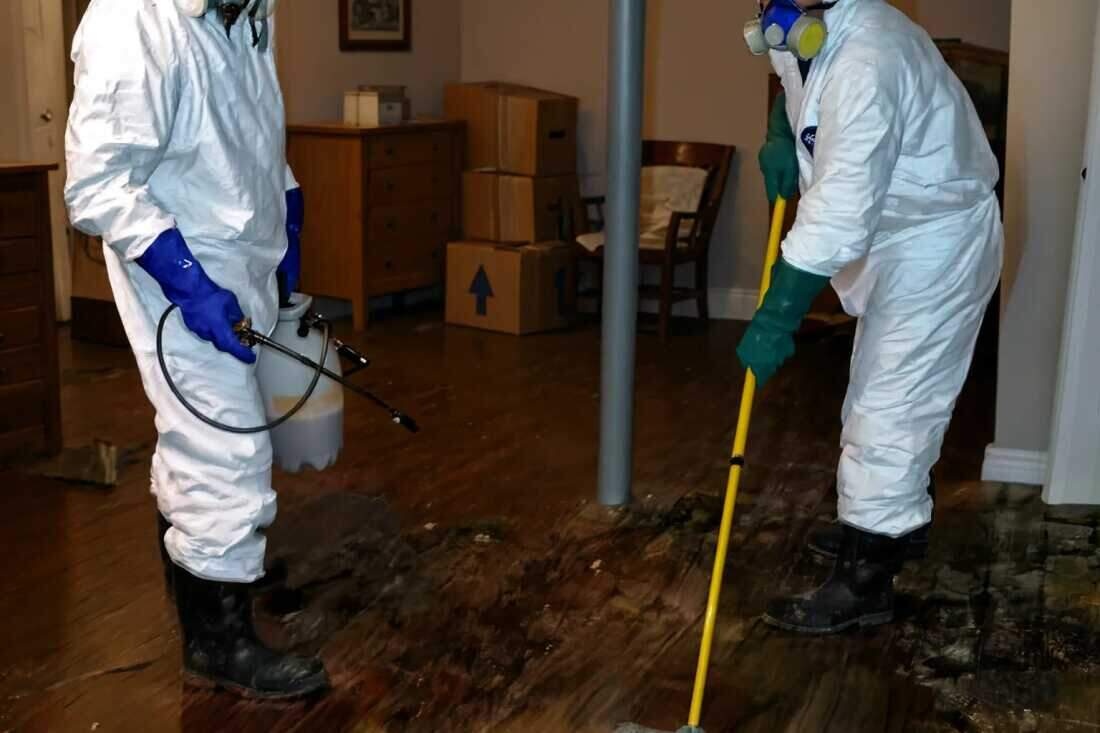
A sewer backup is the dirtiest call in this trade, and no mop and bucket is going to fix it. Black water contaminates whatever it touches the instant it touches it, so half of sewage cleanup is containing a health hazard, not just moving water. Our IICRC-certified Brooklyn crews suit up, pump out the sewage, cut and bag the carpet and drywall it ruined, then disinfect everything that stays to a sanitary standard. That's the part a Shop-Vac can't reach: the contamination, not the puddle.
What's included
- Black-water extraction — truck-mounted vacuums and submersible pumps pull sewage off the floor, out of the basement, and up from a flooded cellar drain that's still backing up.
- Tear-out of what soaked it up — carpet, pad, soaked drywall, and wet insulation get cut out and bagged for disposal, because porous material that drank sewage can't be made sanitary again.
- Decontamination & deodorizing — hospital-grade antimicrobials on every hard surface that stays, plus odor treatment so the smell doesn't sit in the joists and brick for weeks afterward.
- Drying to a meter reading — once it's sanitary, air movers and dehumidifiers bring the slab and walls down to a verified-dry number, so mold never gets a start in the cavity you can't see.
How the crew works the job
- A person answers and we roll
Call any hour and a live dispatcher takes your address and sends the nearest Brooklyn crew. From our Brownsville base we usually reach most of the borough in around 45 minutes, depending on traffic.
- Contain it before we touch anything
We seal off the affected room, suit up in PPE, and lay down a clean path so nobody tracks contamination into the dry part of the house. Stopping the spread is half a black-water job.
- Pump it out, take out what's lost
The sewage gets extracted, and the porous materials too saturated to save are cut out and bagged. Hard, non-porous surfaces stay and get cleaned; anything that absorbed black water goes.
- Disinfect, deodorize, then dry
Every surface that's left is treated with antimicrobials and the room is deodorized, then we run drying equipment to a metered reading before anyone moves back in.
Once the space reads sanitary it runs into structural drying, and if the moisture sat long enough, into mold removal. A backup that floods the cellar usually overlaps with basement flood cleanup, and the same visit covers both.
Questions we get
Is a sewer backup really that dangerous, or am I overreacting?
You're not overreacting. What backs up is Category 3 black water, and the bacteria, viruses, and parasites in it are what make black water damage a health hazard from the second it touches a surface, not just dirty-looking water. It's why our crews work in full PPE, and why most porous materials it soaks have to come out instead of being cleaned. Stay out of it, don't try to mop it, and keep kids and pets away until we've contained the room.
Can you save my carpet, or does everything down there get thrown out?
It comes down to what's porous and how far it spread. Tile, sealed concrete, and metal are hard, non-porous surfaces. They clean and disinfect fine and they stay. Carpet, pad, drywall, and insulation that absorbed black water generally can't be made sanitary again, so those get cut out and replaced. We'll show you exactly what has to go and why before we pull a single thing, and we keep the tear-out to what's actually contaminated.
Do you just pump it out, or is the disinfecting and drying part of the job too?
One crew, start to finish. Our sewage cleanup service covers the extraction, the tear-out of what can't be saved, disinfection, deodorizing, and drying to a verified reading. You're not coordinating a pump truck, a cleaning outfit, and a drying contractor on three schedules; everything we need rides on one truck.
Will my homeowner's insurance cover a sewage backup?
Often it depends on one line in your policy: a sewer- or drain-backup endorsement. A lot of older Brooklyn policies don't carry it by default, so it's worth checking yours. Either way, we photograph the loss, log the moisture readings, bill your insurer directly, and document everything so your carrier can decide what's covered. We can't promise an approval (that's the adjuster's call), but a thorough file gives the claim its best footing. Our insurance claims guide walks through it.
It's the middle of the night and the basement's filling — how fast can you get here?
A dispatcher picks up live, any hour, with no answering service and no callback in the morning, and sends the nearest crew right away. We typically reach most Brooklyn addresses in around 45 minutes, depending on the hour and where you are. With black water that speed is the whole ballgame, because the contamination keeps creeping the entire time it sits, so the call you make at 3 a.m. is the one that saves the most.
Black water is a different job from a clean-water leak
A burst supply line drops clean water you can pump and dry and largely keep. A sewer backup brings up the far end of the scale: what the IICRC S500 standard classes as Category 3 water damage, defined not by how much water there is but by what's in it. The bacteria, viruses, and parasites turn a flooded floor into a contamination problem, which is why this is work for a sewage cleanup company in PPE, not for a rented wet-vac. Contain it, haul out everything porous that can't be disinfected, decontaminate everything that can — that order is the line between black water remediation done right and a job that leaves a smell in the walls and mold a month later.
Older Brooklyn homes are especially exposed to sewage water damage. A lot of the borough still runs on combined sewer lines that carry waste and storm runoff in the same pipe, and in a heavy downpour that system overloads and pushes back up through the lowest opening in the house, usually a basement floor drain or a cellar toilet. In the row houses where the cellar floor sits below the level of the sewer main, there's nowhere for it to go but up into the finished room, and it pools fast. Sewer water removal is the quick half of the job — a submersible pump handles the standing backup. What decides whether the smell and the mold come back is everything after that: the slab, the foundation walls, and whatever was stored down there.
Reliable Brooklyn Water Damage Restoration treats sewage damage restoration as decontamination work first and drying work second: pump out, tear out what's beyond saving, disinfect what stays, then dry. That sequence never flips. Our own IICRC-certified crews and our own extraction and drying gear mean the crew that pumps your cellar at midnight is the same one that comes back to meter the slab dry. There's no business-hours version of this trade. Call (347) 906-9419 any hour and a person picks up.
Licensed, insured & trained to industry standards


Sewage backup? Call now
A Brooklyn crew is on call 24/7. Every hour the sewage sits, it soaks into more of what you own; the sooner we contain it, the smaller the tear-out.
Call (347) 906-9419