Water Damage Restoration in Canarsie, NY
Off Rockaway Parkway, a long soaking rain saturates the ground under a raised ranch, and water starts weeping in low along the block foundation while the floor drain backs up at the same time — a routine Canarsie call. Any hour, the phone is answered live.
Real jobs, on camera
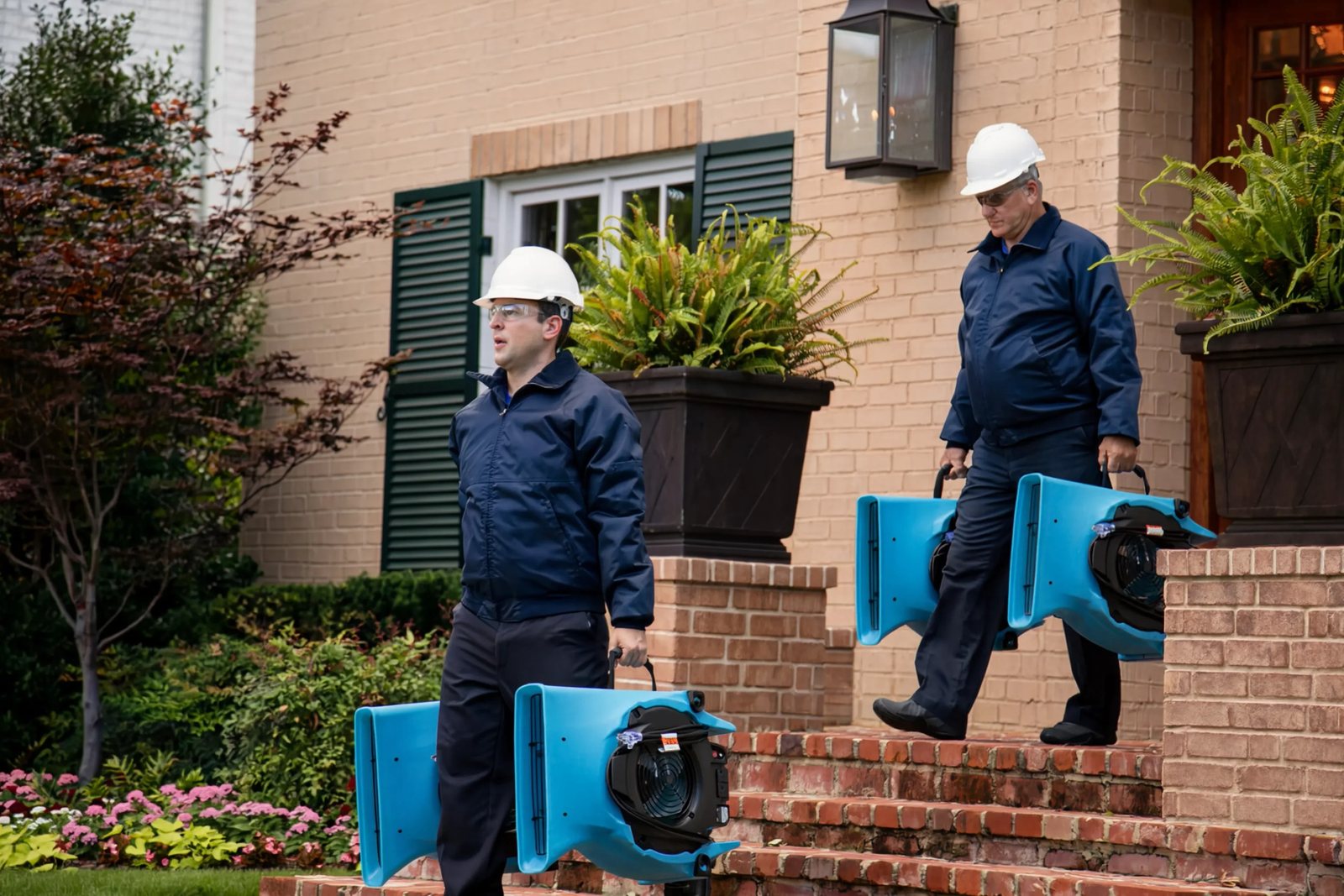
Short clips from real water damage jobs across Brooklyn — the same crew that responds in Canarsie: extraction, structural drying, and the gear we run on site.
The water problems we fix in Canarsie
Water damage restoration in Canarsie starts below grade more often than it starts in a wall, because this is some of the lowest, wettest ground in Brooklyn and the water tends to arrive from underneath. The postwar brick houses off Avenue L and Rockaway Parkway nearly all finished the basement into a den, a bedroom, or a rental, and that is the floor a high water table seeps into during a long rain and the floor the sewer backs up through when the storm sewer surcharges. Reliable Brooklyn Water Damage Restoration carries the whole loss with one residential crew, any hour: pump-out, structural drying, and, where dirty water came up the drain, the water damage cleanup that has to be contained and sanitized before anything dries. When the structure finally reads dry on a meter, the same crew handles the water damage repair that puts the walls and floors back.
Water Removal & Extraction
Standing water pumped and vacuumed out before it wicks into drywall and subfloor.
Mold Remediation
Contained removal of mold from flooding or slow leaks — plus the moisture fix.
Emergency Water Damage
A real person answers 24/7 and dispatches the nearest crew to your door.
Ceiling Water Damage
Stained, sagging ceilings from an upstairs or roof leak — found, dried, restored.
Structural Drying
Air movers and dehumidifiers set to a moisture map, monitored daily until dry.
Sewage & Contaminated Water
Safe cleanup and sanitizing of Category 3 water from backups and overflows.
Roof & Storm Damage
Leaks from storm-hit or aging roofs — traced, dried, and the ceiling restored.
Hardwood Floor Drying
Cupped or buckled boards dried in place where possible, before full replacement.
Carpet Water Damage
Soaked carpet and pad extracted and dried — or removed when it can't be saved.
Burst & Frozen Pipes
Fast response to burst or frozen supply lines — water stopped, extracted, dried.
Appliance & Water-Heater Leaks
Washer, dishwasher, and water-heater failures cleaned up and dried to the subfloor.
Common causes of water damage in Canarsie homes
Canarsie is about as low and flat as Brooklyn gets. The neighborhood was built out over old tidal marshland boxed in by Paerdegat Basin, Fresh Creek, and Jamaica Bay behind Canarsie Park, and much of it falls inside a FEMA flood zone, as the blocks near the bay learned the hard way when Sandy left one to six feet of water in basements across the neighborhood in 2012. The everyday version is quieter and comes from below. The water table under this reclaimed ground rides high, so a long soaking rain saturates the soil against the foundations before the storm sewer is anywhere near its limit, and the water pushes in low through block foundation walls and their mortar joints. Most of these houses sit on 1950s CMU foundations whose waterproofing gave out years ago, so a storm that barely dampens a slab in Park Slope has water weeping into a Canarsie cellar from the wall up.
The housing is what turns that into a real loss. Off Avenue L, Rockaway Parkway, and Flatlands Avenue the neighborhood runs block after block of postwar brick semi-detached homes, raised ranches, and two-family houses, and nearly all of them finished the basement into a den, a bedroom, or a rental, so the water soaks lived-in space and belongings, not a bare utility room. The second steady source is the combined sewer serving southeast Brooklyn: in a hard rain it surcharges and reverses up through basement floor drains and toilets, and that wastewater is Category 3 black water, contaminated the moment it surfaces. A backup like that needs containment and sanitizing, not a wet-vac and a box fan, which is why we confirm whether the water came up the drain or seeped through the wall before anything else, since a clean groundwater seep and a sewer surcharge get handled in completely different ways.
Our emergency response in Canarsie
A live person answers at any hour, no answering service, and the crew loads at our Brownsville base a short run to the northwest, so Canarsie is one of the closer neighborhoods we cover — figure roughly 40 minutes in ordinary traffic, which is the honest drive and not a scheduled slot, and longer when a storm has the Belt Parkway or the low blocks off Rockaway Parkway underwater. We classify the water before anything else, since a sewer backup is Category 3 and gets contained and sanitized before a single fan runs. Then we pump what is standing, extract what soaked into the slab, the subfloor, and the lower block walls, and set air movers and dehumidifiers on a moisture map, reading the meters daily until the framing and masonry hold dry numbers rather than a dry surface. Only then do we put the drywall, insulation, and flooring back, with the readings, photos, and dates filed for whoever your carrier sends.
Frequently asked questions
In the same storm my Canarsie cellar took water low along the wall and up the floor drain at once. Does one policy cover both?
Usually not, because they are two different losses under insurance rules even though they arrived together, and it catches a lot of owners here where the high water table and the combined sewer both push at the same time. Groundwater that seeps in through the foundation wall during a storm is treated as surface flooding, which a standard homeowner's policy excludes and which needs its own NFIP or private flood policy. The water that surged up the floor drain is a sewer backup, covered only if you carry a backup-of-sewer-and-drain endorsement, a rider plenty of Canarsie homeowners don't realize is separate until they file. A sudden burst pipe, by contrast, is the one a standard policy is most likely to answer. We don't rule on coverage; we pin down exactly how each part of the water got in, record the category, and log dated photos and moisture readings so your adjuster can sort the two. We document the loss; your carrier decides what's covered. Our insurance claims guide lays out the paperwork in the order an adjuster wants it.
My finished basement is only half below grade in a Canarsie raised ranch. Why does the water still come from below instead of a pipe?
Because on this reclaimed marshland the ground itself is the source. The water table sits high under Canarsie, so a long rain saturates the soil against the foundation and pushes moisture in low through the block wall and its mortar joints, even in a raised ranch where the basement is only partly sunk. That is different from a burst line, and it matters for the drying, because the water damage company you call has to read the block from the floor up, not just look for a leak overhead. A CMU foundation wicks and holds moisture far longer than the drywall in front of it, so the wet you can see at the base of the wall is usually a fraction of what soaked the block and the framing behind the finished wall. We meter the masonry and the studs as separate layers and dry both to a number, since stopping at the surface is what leaves a Canarsie basement growing mold behind fresh paint. Call (347) 906-9419 and give us your cross street.
My basement off Flatlands Avenue takes on water most heavy storms. Is it worth calling every time, or does the hidden moisture just build up?
It builds up, which is exactly why each storm is worth a call. When a Canarsie basement floods and gets pumped and fanned without commercial drying, moisture stays locked in the slab, the framing, and the block wall, and the next storm lays more on top of it, so the cavity is feeding mold long before anyone connects the musty smell to a leak. Getting the structure dried to a verified meter reading after each event is what keeps the damage from stacking storm over storm. What we can't do is stop the water from coming back — a basement this low that floods repeatedly needs a plumber's fix, usually a backwater valve against the sewer surcharge or a properly sized sump with a battery backup, and that work belongs to a licensed plumber, not a cleanup crew. Once the cellar is dry we'll tell you plainly whether what we saw came up the drain or seeped through the wall, so you know which fix breaks the cycle.
Licensed, insured & trained to industry standards


Water seeping up your Canarsie cellar wall? Call now.
A live person answers any hour, no answering service, and a Brooklyn crew rolls to Canarsie from our Brownsville base nearby. We're the restoration company that has worked these low, bay-side blocks before: we classify the water, pump it out, dry the block and framing to a meter reading, put back what got ruined, and document the loss for your carrier. Call (347) 906-9419.
Call (347) 906-9419