Water Damage Restoration in Staten Island, NY
A second-floor laundry hose splits in a New Springville townhouse, and by the time anyone is home the water has run down the shared wall into the attached unit next door. Whole rows of Mid-Island are built this way. Call any hour and a real person answers.
Real jobs, on camera
Short clips from real water damage jobs across Brooklyn — the same crew that responds in Staten Island: extraction, structural drying, and the gear we run on site.
The water problems we fix in Staten Island
Water damage restoration on Staten Island is really three jobs on one island, because the borough is not built like the rest of the city. The low East Shore floods from the bay in a storm; the townhouse rows across the middle send an upstairs leak sideways through a shared wall; and the detached houses on the hills hide a burst line inside finished space nobody wants torn up. What ties them together is the finished basement, which more homes have here than anywhere else in New York, sitting at the exact level the water reaches first. We run one residential crew from St. George to Tottenville for the whole loss, 24/7: water removal, structural drying, the mold cleanup where the water sat, and the water damage repair that puts the walls and floors back.
Water Removal & Extraction
Standing water pumped and vacuumed out before it wicks into drywall and subfloor.
Mold Remediation
Contained removal of mold from flooding or slow leaks — plus the moisture fix.
Emergency Water Damage
A real person answers 24/7 and dispatches the nearest crew to your door.
Ceiling Water Damage
Stained, sagging ceilings from an upstairs or roof leak — found, dried, restored.
Structural Drying
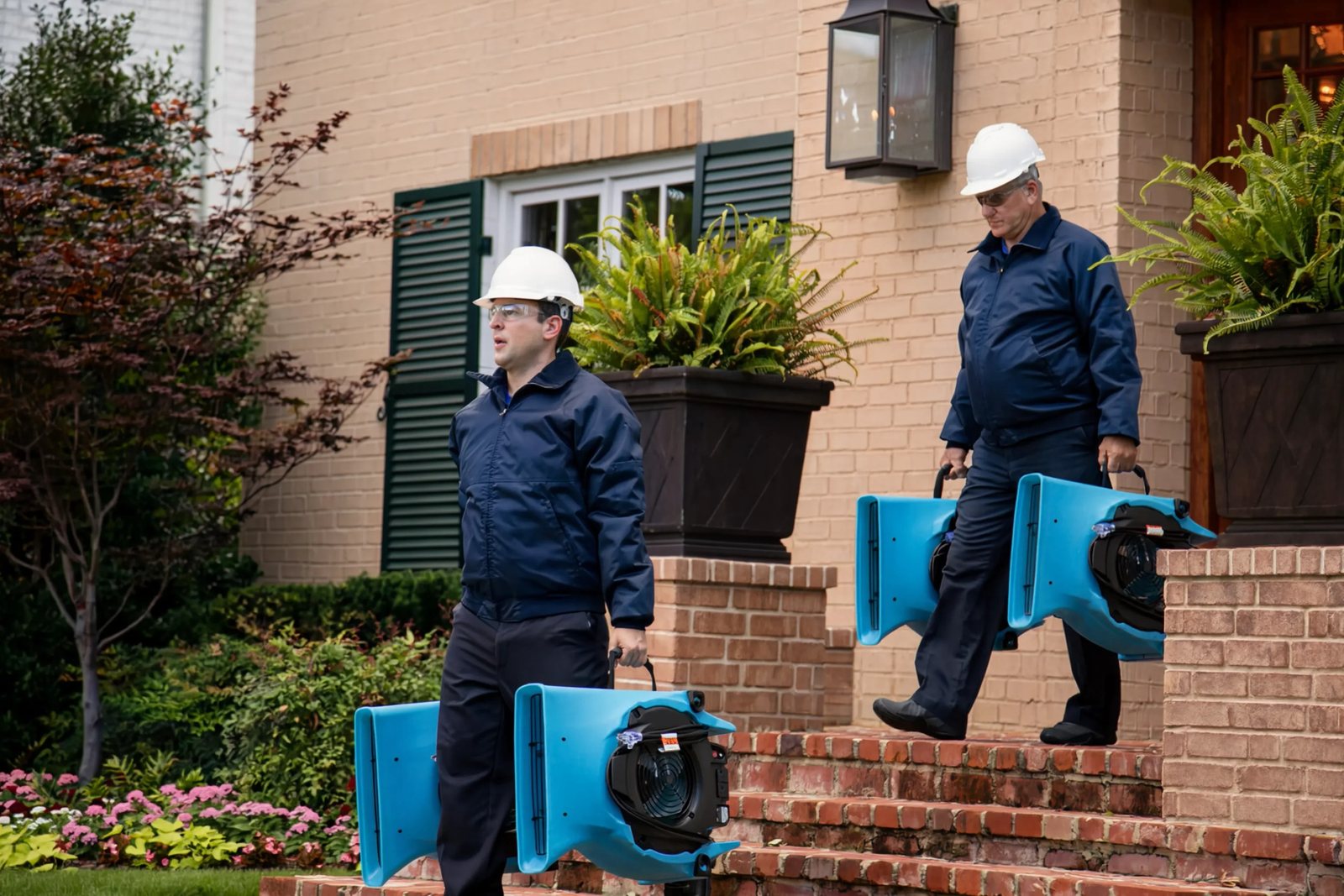
Air movers and dehumidifiers set to a moisture map, monitored daily until dry.
Sewage & Contaminated Water
Safe cleanup and sanitizing of Category 3 water from backups and overflows.
Roof & Storm Damage
Leaks from storm-hit or aging roofs — traced, dried, and the ceiling restored.
Hardwood Floor Drying
Cupped or buckled boards dried in place where possible, before full replacement.
Carpet Water Damage
Soaked carpet and pad extracted and dried — or removed when it can't be saved.
Burst & Frozen Pipes
Fast response to burst or frozen supply lines — water stopped, extracted, dried.
Appliance & Water-Heater Leaks
Washer, dishwasher, and water-heater failures cleaned up and dried to the subfloor.
Common causes of water damage in Staten Island homes
Staten Island is a borough of single-family houses, most of them detached or semi-detached, and far more of them finish the basement into a den, a bedroom, or a rental than the rest of the city does. Geography then splits the risk in two. The low East Shore, from Tottenville up through Great Kills, Oakwood, and Midland Beach, sits open to Lower New York Bay inside FEMA AE and VE flood zones, and Sandy drove a surge near fourteen feet through those streets in 2012. That water never fully backed off; blocks that used to flood once a decade now pump the cellar out several times a year, and every king tide on a full moon puts the bay back over the bulkheads. Surge soaks framing and subfloor from below and keeps pulling moisture long after the tide drops.
Away from the water the failures change. Across Mid-Island, whole rows of attached and semi-attached townhouses through New Springville and Heartland Village share a party wall, so an upstairs washing-machine hose or a second-floor bathroom leak crosses into the joined home next door before either owner sees a stain. On the hills of Todt Hill, Grymes Hill, and Emerson Hill the detached colonials fail from inside their own plumbing: a corroded supply line or a water-heater connection lets go and rides the framing down into finished space. And the older stretches of the borough still run a combined sewer that carries storm runoff and household waste in one pipe, so a hard rain overwhelms it and pushes contaminated water back up through basement floor drains. That backup is Category 3 black water, a genuine biohazard, and the water damage cleanup that follows is really decontamination: containment, sanitizing, and disposal before the drying can even start. Winter adds one more: the long exterior pipe runs these detached houses carry through garage walls, crawl spaces, and unheated mud rooms freeze in a cold snap and split on the thaw.
Our emergency response in Staten Island
A live person answers at any hour, no answering service, and the crew loads at our Brownsville base and takes the bridge onto the island. Staten Island is the one borough we reach only over the Verrazzano, so the drive is longer than the rest of our map and the toll and the bridge traffic set the clock, not us; we quote you the honest window on the phone rather than a time we can't stand behind, which is exactly why an early call saves the most. On a flooded basement we pump the standing water first, then extract what soaked into the slab and the lower walls. When it came up a drain we classify it as Category 3 and contain and sanitize before any dryer runs. Air movers and dehumidifiers then work a moisture map until the meter reads dry rather than dry to the hand, and only then does the repair close it out: the drywall, flooring, and finishes put back, with the readings, photos, and dates filed for whoever your carrier sends.
Frequently asked questions
I live in a New Springville townhouse and the water came from the attached unit next door, not from my side. Can you still help me, and whose problem is it?
Yes, and a shared-wall loss is one of the calls we take most on Mid-Island. Whole rows here are built as attached and semi-attached homes on one party wall, so your neighbor's leak keeps soaking into your studs and drywall no matter who fixes the pipe. The water damage company you're calling doesn't need to sort out fault before it starts: we meter the wall from your side, map how far the water traveled, dry your structure, and log every reading and photo under your own address so your file stands on its own. When your neighbor gives access, drying the shared cavity from both sides goes faster and means less to open up. Who pays in the end is for the two insurers to settle between themselves.
A supply line let go behind a wall and ruined the finished basement in my detached house up on the hill. Do you have to tear the whole level apart?
Usually not, if you call while the water is fresh. On the hills, a clean-water leak from a burst supply line or a failed water-heater connection can often be dried in place: we read the moisture down through the wall cavity and the subfloor, open only the pockets the meter says are wet, and run air movers and dehumidifiers until the framing reads dry rather than just the paneling. Drying in place is what keeps a finished den or a home office from becoming a full gut. On coverage, a sudden pipe failure like that is the kind of loss a standard homeowner's policy is most likely to answer, unlike storm flooding from the shore, which needs a separate flood policy. We document the loss; your carrier decides what's covered.
You're based in Brooklyn. Do you actually cover the whole island, or just the blocks near the bridge?
The whole island, St. George and the North Shore straight down to Tottenville and the South Shore, plus the East Shore flood blocks and the hill neighborhoods in between. We won't pretend the far end is around the corner, though: Staten Island is the one borough we reach only over the Verrazzano, so a run to the South Shore is the longest drive we make, and we tell you the honest window when you call instead of a number we can't hold to. A live person answers at (347) 906-9419 around the clock and gets the crew moving before you hang up. While we roll, shut the water at the valve or main if you can reach it, and stay clear of anything standing near the panel or outlets.
Licensed, insured & trained to industry standards


Water crossing the wall or filling the basement on Staten Island? Call now.
A live person answers any hour, and a Brooklyn crew rolls over the Verrazzano — a longer drive than the rest of the map, which is exactly why the sooner you call, the less the water takes. From St. George to Tottenville we pump and extract, dry the structure to a meter reading, put back what the water ruined, and document the loss for your carrier. Call (347) 906-9419.
Call (347) 906-9419