Water Damage Restoration in Manhattan, NY
A dishwasher line behind a shared kitchen wall lets go on the nineteenth floor of a West End Avenue co-op, and it is three ceilings down before the night doorman smells it. Vertical buildings send water a long way. Call any hour and a person answers.
Real jobs, on camera
Short clips from real water damage jobs across Brooklyn — the same crew that responds in Manhattan: extraction, structural drying, and the gear we run on site.
The water problems we fix in Manhattan
Water damage restoration in Manhattan is mostly a vertical problem. Prewar co-ops off West End Avenue, Midtown glass towers, converted SoHo lofts: the water starts on a high floor and rides a shared riser chase straight down through the stacked units below, so the apartment that leaks and the apartment that floods are rarely the same address. It takes a water damage company set up for that reality, and we run the whole loss under one crew, day or night: extraction, structural drying, mold cleanup if the water sat, and the repairs after. Half the work in a doorman building is logistics, and we run that side too.
Water Removal & Extraction
Standing water pumped and vacuumed out before it wicks into drywall and subfloor.
Mold Remediation
Contained removal of mold from flooding or slow leaks — plus the moisture fix.
Emergency Water Damage
A real person answers 24/7 and dispatches the nearest crew to your door.
Ceiling Water Damage
Stained, sagging ceilings from an upstairs or roof leak — found, dried, restored.
Structural Drying
Air movers and dehumidifiers set to a moisture map, monitored daily until dry.
Sewage & Contaminated Water
Safe cleanup and sanitizing of Category 3 water from backups and overflows.
Roof & Storm Damage
Leaks from storm-hit or aging roofs — traced, dried, and the ceiling restored.
Hardwood Floor Drying
Cupped or buckled boards dried in place where possible, before full replacement.
Carpet Water Damage
Soaked carpet and pad extracted and dried — or removed when it can't be saved.
Burst & Frozen Pipes
Fast response to burst or frozen supply lines — water stopped, extracted, dried.
Appliance & Water-Heater Leaks
Washer, dishwasher, and water-heater failures cleaned up and dried to the subfloor.
Common causes of water damage in Manhattan homes
Manhattan stacks its apartments, and its plumbing stacks with them. A single vertical riser feeds the same line of bathrooms and kitchens up an entire tower, so when a fitting or a supply branch fails on a high floor, the water follows the chase down through ceiling cavities and surfaces one, two, or three units below the break. In the prewar co-ops along West End Avenue and across the Upper East and West Sides, that water meets old lath-and-plaster ceilings that soak it up and begin to sag before the first brown ring even shows. In the postwar and newer towers it gets behind drywall and skim-coat and travels wide and fast. On any floor, an upstairs neighbor's dishwasher line or washing-machine hose can leave inches on your boards while you are still asleep.
The scale of these buildings is what makes a small failure expensive. When corroded risers finally forced a full replacement in one 495-unit Upper West Side co-op, the same aging pipe that triggers that kind of project is the pipe that lets go at 3 a.m. and wets six floors on the way down. There is also a New York City rule worth knowing: once a mold problem passes a modest square-foot threshold, a building's own porters and handymen are barred from clearing it, so the remediation has to go to a certified outside crew. Between the vertical spread, the historic plaster, and that threshold, the wet you can see is almost never the whole loss.
Our emergency response in Manhattan
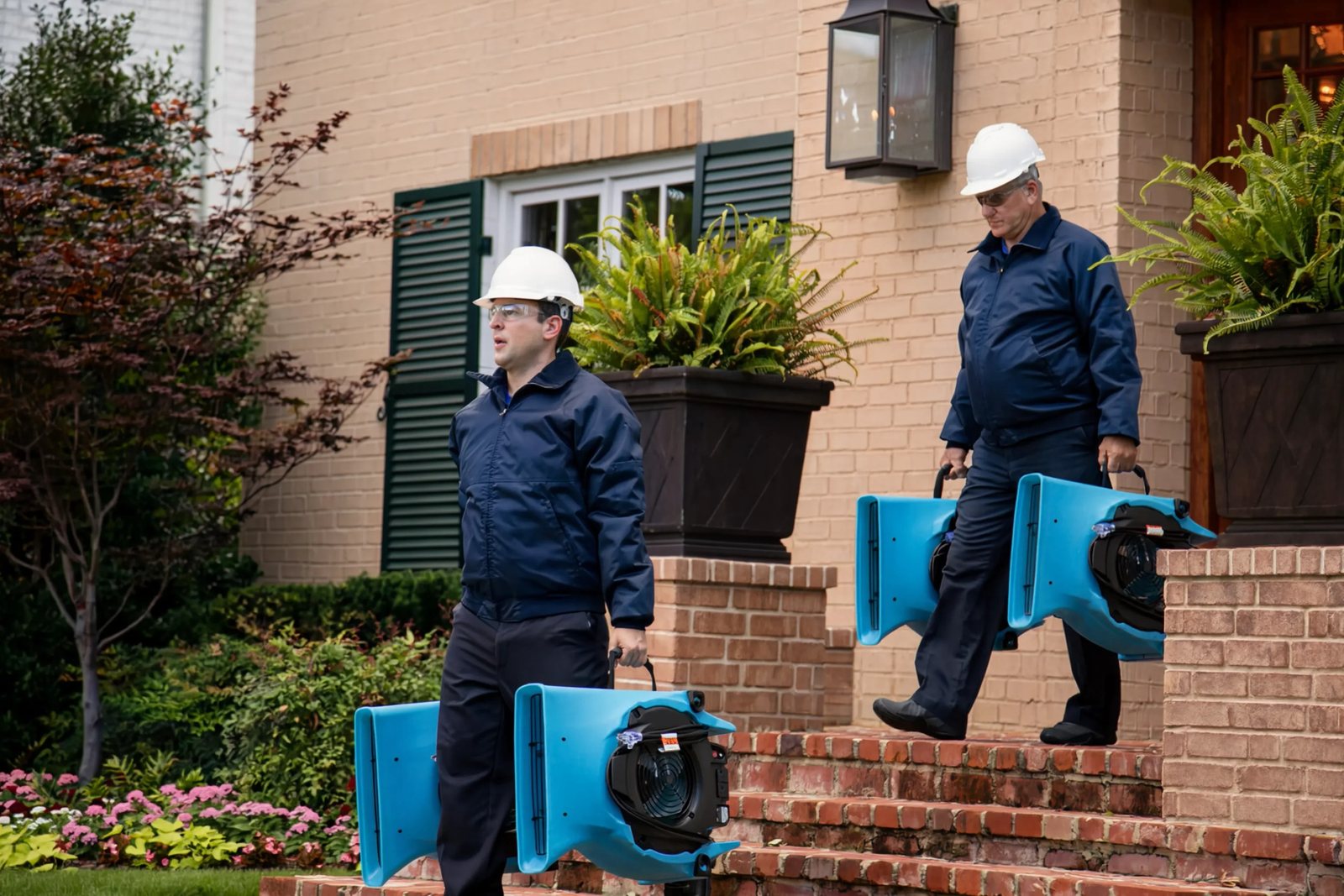
A live dispatcher answers at any hour, and the crew loads at our Brownsville base in Brooklyn. Getting into Manhattan means a bridge or a tunnel, so a river crossing and the traffic at that hour set the clock, not us — figure roughly 45 to 60 minutes as an estimate, never a promise. We treat the building side as part of the call: we sign in with the doorman, get a certificate of insurance to the front desk, and time the riser shutoff with the super so the source stops before a hose comes off the truck. Then the standing water gets pulled, air movers and dehumidifiers go onto the slab and up into the ceiling cavity, and we read the meters daily until the plaster and framing are genuinely dry, not just dry to the touch. Water damage repair closes it out: the soaked drywall and plaster we had to open go back, and each affected unit is documented on its own, so the managing agent and every owner's adjuster work from the same record.
Frequently asked questions
Our co-op board says no vendor touches a wall until it approves them and a COI is on file. Water is coming through my ceiling now. Do I really have to wait?
No, and waiting is the mistake. For an active leak the super or managing agent can authorize emergency extraction and drying right away, because every hour the cavity stays wet damages the building itself; the formal board sign-off catches up afterward. What the front desk almost always wants first is the certificate of insurance, and we send that ahead while the crew is still en route, so the doorman clears us on arrival instead of turning us away. Give us the managing agent's name when you call (347) 906-9419 and we start the paperwork before we start the drive.
A supply line failed four floors above me and now three apartments in the stack are soaked at once. Can you handle a loss that big?
Yes, and a shared riser is exactly the loss we bring enough crew and equipment for. In a tower the water does not stay on the floor it started on, so we set extraction and drying in every affected unit on the same dispatch rather than one apartment at a time, and we keep one moisture map across the whole stack so nothing dries in isolation. Each unit still gets its own photos, readings, and written scope, because every owner files a separate claim. Coordinating that across four apartments and a managing agent is the part a smaller water damage restoration company usually is not set up for, and it is most of what we do in Manhattan.
The leak started in the unit above mine. Whose policy actually pays for my apartment?
Usually three of them touch it, and we cannot decide the split for you. The building's master policy generally covers the riser or common element that failed; your own HO-6 covers your interior finishes and belongings; and the upstairs owner may carry liability if their appliance or fixture caused it. Whether you recover your deductible from the unit above or the corporation is a subrogation question the carriers settle among themselves. Our part is a dated record: the source, the path the water took, every wet surface, and daily moisture readings — so every adjuster in that chain works from the same facts. We document the loss; your carrier decides what it covers.
My ceiling keeps getting wetter but the neighbor directly above swears their floor is bone dry. How is that possible?
It is common, and it usually means the source is not the apartment right above you. Water off a shared riser, or a rooftop bulkhead or parapet, runs sideways along the concrete floor-deck before it finds a way down, so it can surface a unit or two away from where it actually entered. We trace the real wet path with a thermal camera and moisture meters and put it on paper, which tells the managing agent which stack to open and usually ends the back-and-forth between neighbors. Then we dry the cavity to a verified reading before it sags or starts feeding mold.
Licensed, insured & trained to industry standards


Water coming down through your Manhattan ceiling? Call now.
Call (347) 906-9419 the minute you find the water and a real person picks up, any hour. A Brooklyn crew heads across the river for water damage restoration in the towers and co-ops of Manhattan: we clear the doorman and COI, time the shutoff with your super, extract, dry to a meter reading, and document each unit for its own claim.
Call (347) 906-9419