Water Damage Restoration in Flatbush, NY
A supply line splits inside the wood-frame wall of a Prospect Park South Victorian, and the water rides the studs down to a deep cellar that never drains fast. That is a routine Flatbush call. A live person answers any hour, no answering service.
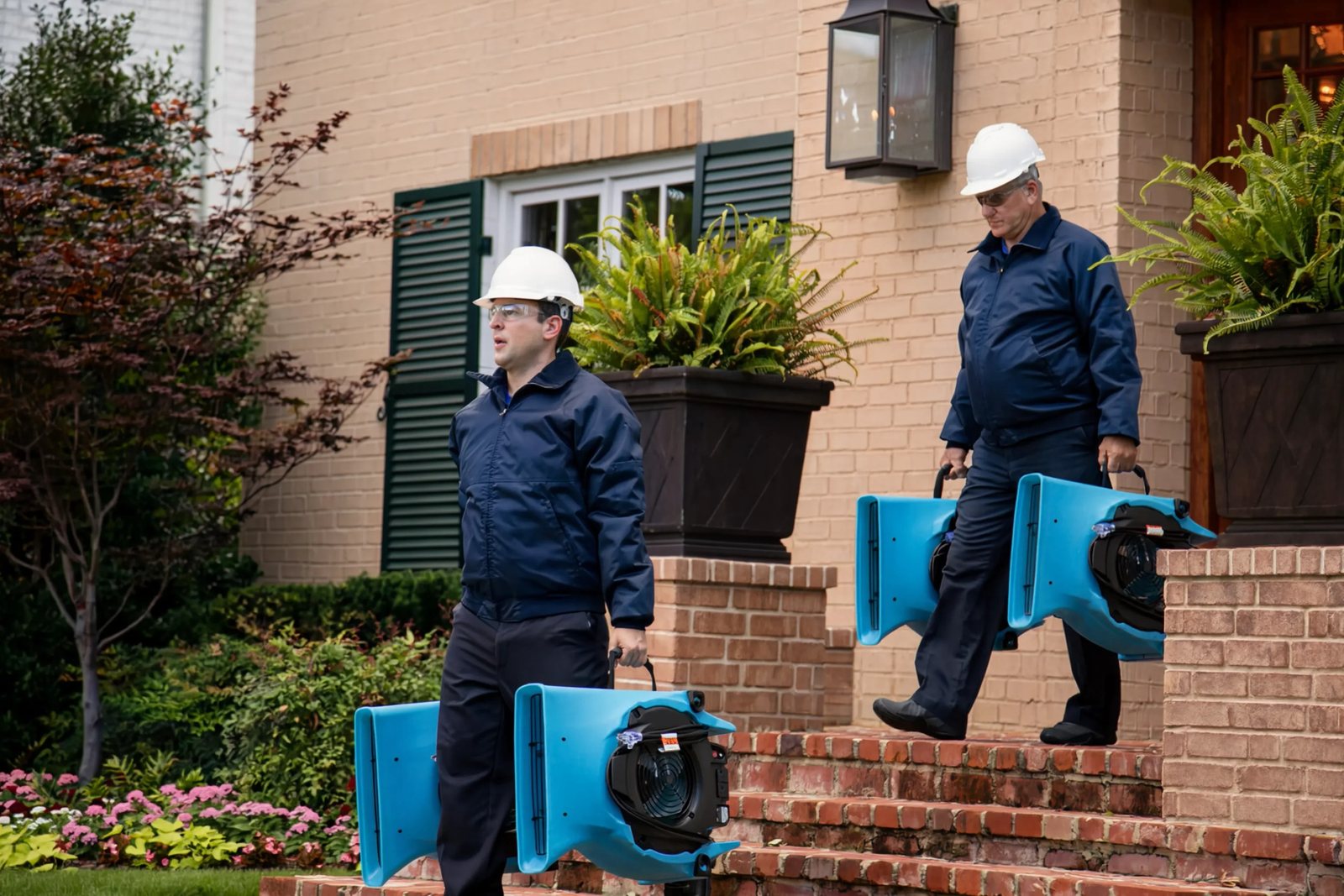
Real jobs, on camera
Short clips from real water damage jobs across Brooklyn — the same crew that responds in Flatbush: extraction, structural drying, and the gear we run on site.
The water problems we fix in Flatbush
Water damage restoration in Flatbush is shaped by housing you won't find much of elsewhere in Brooklyn: the big detached wood-frame Victorians of Ditmas Park and Prospect Park South, built between the 1900s and 1910s over deep cellars that were never meant to stay dry. A supply line lets go inside a framed wall and the water rides the studs down through the house; a storm loads the ground against the foundation and pushes up into a finished lower level. Along Church, Ocean, and Flatbush Avenues the prewar apartment houses fail the other way, sending an upstairs leak down through the plaster to the home below. Reliable Brooklyn Water Damage Restoration runs the whole loss with one crew, any hour: water removal, structural drying, mold cleanup where the water sat, and the water damage repair that puts the walls and floors back.
Water Removal & Extraction
Standing water pumped and vacuumed out before it wicks into drywall and subfloor.
Mold Remediation
Contained removal of mold from flooding or slow leaks — plus the moisture fix.
Emergency Water Damage
A real person answers 24/7 and dispatches the nearest crew to your door.
Ceiling Water Damage
Stained, sagging ceilings from an upstairs or roof leak — found, dried, restored.
Structural Drying
Air movers and dehumidifiers set to a moisture map, monitored daily until dry.
Sewage & Contaminated Water
Safe cleanup and sanitizing of Category 3 water from backups and overflows.
Roof & Storm Damage
Leaks from storm-hit or aging roofs — traced, dried, and the ceiling restored.
Hardwood Floor Drying
Cupped or buckled boards dried in place where possible, before full replacement.
Carpet Water Damage
Soaked carpet and pad extracted and dried — or removed when it can't be saved.
Burst & Frozen Pipes
Fast response to burst or frozen supply lines — water stopped, extracted, dried.
Appliance & Water-Heater Leaks
Washer, dishwasher, and water-heater failures cleaned up and dried to the subfloor.
Common causes of water damage in Flatbush homes
Flatbush is really two housing stocks that fail in different ways, and the first is nearly its own. The landmarked blocks of Prospect Park South, Ditmas Park, and Midwood Park hold hundreds of big detached wood-frame houses raised between the 1900s and 1910s: freestanding Victorians on Albemarle, Buckingham, and Rugby Roads, wide porches, three full stories over a deep cellar. Wood frame is the part that matters when a pipe fails. An aging galvanized supply line or a cracked cast-iron drain lets go inside a stud wall, and because the house is framed the water runs the studs and joists sideways and down before a stain ever shows a floor below. The cellars underneath were dug deep and drain slowly, so a hard rain that loads the soil against the old foundation walls pushes groundwater straight through the mortar into a lower level people now use as a den or a rental.
The avenues are the other Flatbush. Church, Ocean, and Flatbush Avenues and the side blocks off Cortelyou Road are lined with six-story prewar apartment houses, most still on the single vertical risers they were built with, so a fitting fails high in the stack and the water surfaces two or three floors down, and the tenant under the stain is rarely the one whose pipe let go. Many of these low blocks also sit over an older combined sewer that surcharges in a heavy storm and shoves grey water back up through the cellar floor drain. That backup is contaminated the moment it surfaces, so the water damage cleanup after it means containment and disinfection, not a wet-vac and a fan. Whatever the source, water left in a wall cavity a day or two starts feeding mold that costs far more than the leak did, which is why the job here is finding the water you can't see, not mopping the floor you can.
Our emergency response in Flatbush
A live person answers at any hour, no answering service, and the crew loads at our Brownsville base a short run to the east; figure roughly 45 minutes to most of Flatbush in ordinary traffic, which is the honest drive and not a scheduled slot. Water removal comes first: submersible pumps for a flooded cellar, then truck-mounted extraction for whatever wicked into the subfloor and the framed lower walls. In a wood-frame Victorian the wet travels farther through the studs than the surface shows, so we map the moisture before we open anything and read the meters daily until the framing holds dry numbers, not a dry face. Where the water sat long enough to feed mold, contained removal comes before any rebuild. Only then do we put the drywall, flooring, and trim back, with the readings, photos, and dates filed for whoever your carrier sends.
Frequently asked questions
The leak is inside a wood-framed wall of my Ditmas Park house, not behind brick. Does the whole wall have to come out to dry it?
Usually not, if the call comes in while the water is fresh. These Prospect Park South and Ditmas Park Victorians are wood-frame houses, so a burst supply line up in a wall runs the studs and joist bays sideways and down, and the wet footprint is almost always wider than the stain suggests and narrower than a full tear-out. The water damage restoration company you're calling should be reading that frame with a moisture meter, not guessing: we map exactly where the water traveled, open only the pockets the meter flags, and run air movers and dehumidifiers into those bays until they read dry all the way through. Drying the frame in place where the numbers allow is what keeps a plaster wall and its original trim from becoming a gut. Call (347) 906-9419 the hour you find it, and shut the water at the main first if you can reach it.
Water seeps in low along my cellar wall in every long rain, never up the drain. Is that on my homeowners policy the way a burst pipe would be?
Usually not, and it's a distinction that catches a lot of Flatbush owners with deep cellars. Groundwater that soaks through a foundation wall and its mortar joints during a long storm is seepage, which a standard homeowners policy typically excludes, and rising surface water needs its own flood policy. A sudden burst pipe, by contrast, is the loss a standard policy is most likely to answer, so the source of the water decides the carrier. We don't rule on coverage and won't promise what yours pays. What we do is pin down where the water actually entered, record the category, and log the scope with dated photos and daily moisture readings, so your adjuster works from facts. We document the loss; your carrier decides what's covered.
My finished cellar in Midwood Park is still holding water two days after the rain stopped. Is it too late to save what's down there?
Not automatically, but the clock is the whole story now. The cellars under these old Flatbush Victorians were dug deep and drain slowly, so water lingers here longer than it would in a shallow utility basement, and the longer it stands against framing and finished walls the more the odds tip toward replacement. Hard flooring, the lower few feet of drywall, and anything porous that stayed submerged for days usually come out; framing and subfloor we can dry back to a meter reading generally stay. We'll pump what's left, meter the materials, and tell you plainly on the first visit which side of that line each thing falls on, room by room, before anything gets torn out. The sooner the drying starts, the more of the room lands on the salvageable side.
Licensed, insured & trained to industry standards


Water tracking through a Flatbush wall or filling the cellar? Call now.
A live person answers any hour, and a Brooklyn crew rolls from our Brownsville base nearby. We read the frame with a meter, pull the water out, dry the studs and cellar to a verified reading, save the original plaster and trim where the numbers let us, and put the loss in writing for your carrier. Call (347) 906-9419.
Call (347) 906-9419