Carpet Water Damage Restoration in Brooklyn, NY
A washing machine hose lets go in a Flatbush row house, and by morning the wall-to-wall squishes underfoot. We extract the water, swap the pad, and dry water-damaged carpet to a metered reading, or tell you straight when it's not worth saving. Call any hour.
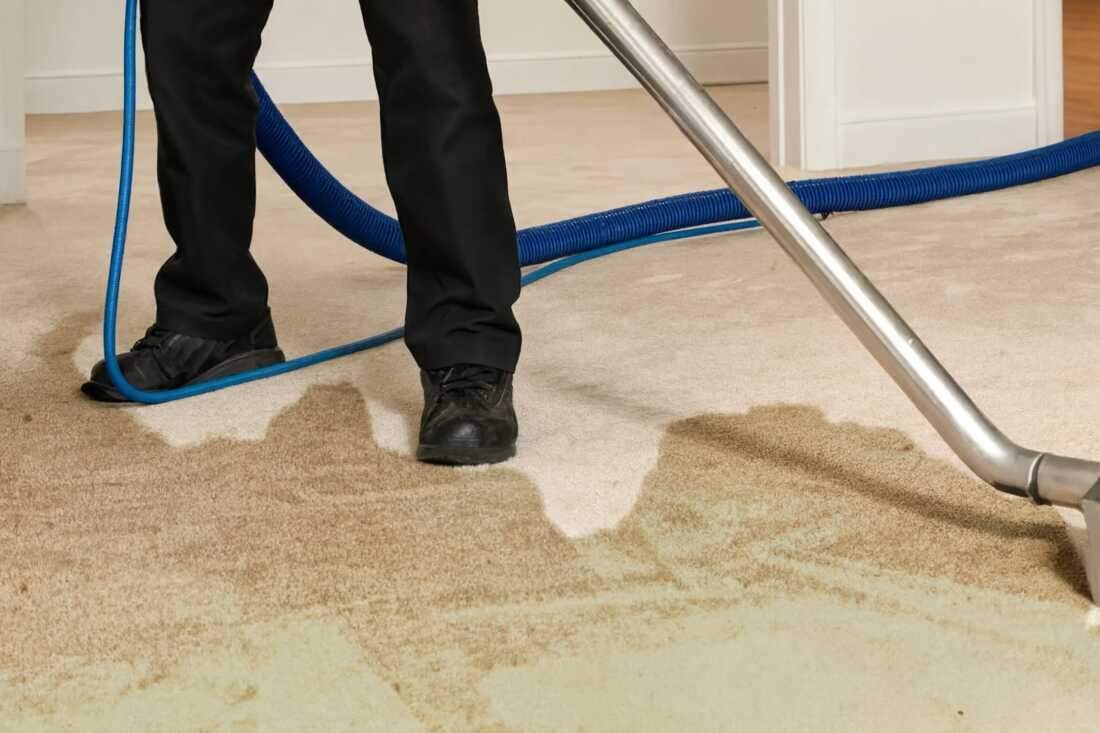
Wet carpet won't dry on its own. It holds water against the pad and the subfloor until both start to rot. Carpet water damage is restoration work, not surface cleaning, and Reliable Brooklyn Water Damage Restoration treats it that way: truck-mounted extraction from the carpet face and the pad, the carpet floated over air movers so it dries from both sides, and the subfloor metered before anything gets called done. A clean-water soak caught the same day usually ends with the carpet saved. A sewer backup ends with the carpet and pad bagged and hauled, and we tell you which job you have before the first tool comes off the truck.
What we do for a soaked carpet
- Truck-mounted extraction — deep passes over the carpet face and the pad beneath it, pulling out the gallons a shop vac leaves behind.
- Pad check & carpet lifting — the pad is a sponge that costs a fraction of the carpet, so it usually goes: we lift the carpet off the tack strip, bag the wet pad, and open the subfloor to the air.
- Floated, metered drying — air movers float the carpet so it dries from both sides while a dehumidifier pulls the humidity down; the gear leaves at a dry meter reading, not a touch test.
- Rug drying, sanitizing & odor — a water-damaged rug gets rolled and dried flat before its dye bleeds into the floor beneath it; carpet that sat wet long enough to smell gets an antimicrobial treatment.
How a carpet call goes
- A real person answers and dispatches
A technician picks up day or night; there's no answering service to get past. Tell us what let go and how far the water has spread, and the nearest crew rolls. From our Brownsville base we usually reach most of Brooklyn in around 45 minutes, depending on traffic.
- Extract and grade the water
Truck-mounted vacuums pull the water out of the carpet and the pad while we grade what soaked it: clean supply water, gray wash water, or sewage. That grade decides what gets dried and what gets bagged.
- Lift the carpet, open the floor
The carpet comes up, the wet pad goes into bags, and the subfloor gets its own reading, because water trapped under a sealed carpet doesn't evaporate; it soaks in.
- Dry to a number, then re-stretch
Air movers and a dehumidifier run until the carpet, tack strip, and subfloor all read dry on a moisture meter. Then new pad goes in and the carpet is power-stretched back into place so it lies flat, without ripples or loose seams.
Once the carpet is lifted and the subfloor is open, the drying runs straight into structural drying. If the water came up through a backed-up drain or sat for days, it leads into sewage cleanup or mold removal. One Brooklyn crew carries the whole chain.
Questions we get
Can my carpet be saved, or does it have to come out?
It depends on what the water was and how long it sat. Clean supply water caught inside a day (a burst line, a tub overflow, a washing machine hose) usually means carpet water damage repair rather than replacement: we extract, put in new pad, dry the carpet floated, and re-stretch it. A sewer backup is Category 3 water, and that carpet comes out no matter how new it is, because contamination soaks into the backing where no cleaning can reach. We tell you which case you're in before anything gets pulled up.
How long does it take to dry a water-damaged carpet?
Two to four days on most jobs, with the air movers and dehumidifier running around the clock. What moves the number is how much water reached the pad and the subfloor, not the carpet itself: face fibers dry in hours, the layers under them don't. We pull the gear when the meter reads dry underneath, because a carpet that feels dry on top can still be sitting on a wet pad, and that's the carpet that smells musty two weeks later.
The carpet already smells musty — is it too late to save it?
Sometimes not, but the window is closing. Mold in carpet from water damage starts in the backing and the pad, the layers you can't see, within about 24 to 48 hours of staying wet, and the musty smell is it getting started. Caught at that stage, we can often still extract, treat the carpet with an antimicrobial, and dry everything down to a clean reading. Once mold has visibly grown into the backing, that section comes out instead, and we'll show you the underside so you can see why.
Will insurance pay for water-damaged carpet?
Often, when the cause was sudden and accidental: a burst supply line, a dishwasher hose that let go, an overflow from the unit above. On most homeowner's and HO-6 policies, wall-to-wall carpet counts as part of the dwelling and an area rug as contents, so the two land in different buckets of the same claim. We photograph the soaked carpet, pad, and subfloor, log the moisture readings, and bill your insurer directly. Your carrier decides what's covered, not us; our job is to hand the adjuster photos and meter numbers instead of guesses. See our insurance claims guide.
Why the first day decides whether the carpet survives
The thing that costs Brooklyn homeowners their carpet is waiting a day to call. Carpet water damage looks like a surface problem: blot it, run a fan, done. But by the time the pile feels wet underfoot, the water has already gone through the backing into the pad and started wicking into the subfloor, and that lower stack is where carpets are actually lost. Within a day or two it starts to smell. Not long after, the pad breaks down and mold moves into the backing. Called the same day, carpet water damage restoration is usually a save: extraction, a new pad, two or three days of metered drying, and the carpet goes back down. Left over a weekend, the same room is far more often a tear-out and a replacement bill.
A lot of the people who call ask for water damage carpet cleaning, and the honest answer is that cleaning is the wrong tool. A carpet cleaner washes the face fibers and leaves the pad, and the pad is where the water lives. What a soaked carpet needs is extraction and drying from underneath: the carpet up off the tack strip, the wet pad out, air moving across both sides, the subfloor checked until it reads dry. The water itself sets the limits on what we can keep. Clean supply water extracts and dries. Gray water from a washer or dishwasher drain gets an antimicrobial on the way. Sewage is Category 3 under the IICRC standard, and a sewage-soaked carpet gets bagged and hauled, never dried in place, because no amount of drying makes it safe to walk barefoot on again.
A good share of our carpet work comes out of finished basements in the row houses of Crown Heights and Flatbush, where the wall-to-wall sits straight on a slab that keeps wicking moisture for days after the visible water is gone, and where a hard rain can push the sewer back up through the floor drain into the lowest carpeted room in the house. That slab is why the wet-vac-and-box-fan weekend so often ends in a musty carpet by Thursday: the surface dries, the concrete under it doesn't. Reliable Brooklyn Water Damage Restoration runs its own IICRC-certified crews and its own extraction and drying gear, dispatches from Brownsville, and covers all of Brooklyn plus Queens, Manhattan, the Bronx, and Staten Island. Call (347) 906-9419 any hour and a technician picks up live.
Across Brooklyn & NYC
We restore water-damaged carpet across: Brownsville · East New York · Bedford Stuyvesant · Crown Heights · Flatbush · Bushwick · Williamsburg · Park Slope · Bay Ridge · Canarsie · Coney Island · Mill Basin · Queens · Manhattan · The Bronx · Staten Island.
Licensed, insured & trained to industry standards


Save your carpet — call now
A Brooklyn crew is on call 24/7 for carpet water damage. Every hour the pad sits wet, the odds of a save drop; extraction tonight beats a replacement next month.
Call (347) 906-9419