Water Damage Restoration in Coney Island, NY
A nor'easter tracks up the shore, and by dawn a ground-floor apartment off Surf Avenue has taken brackish water across the slab while the cellar fills through the floor drain below. That is a routine Coney Island call. A live person answers any hour.
Real jobs, on camera
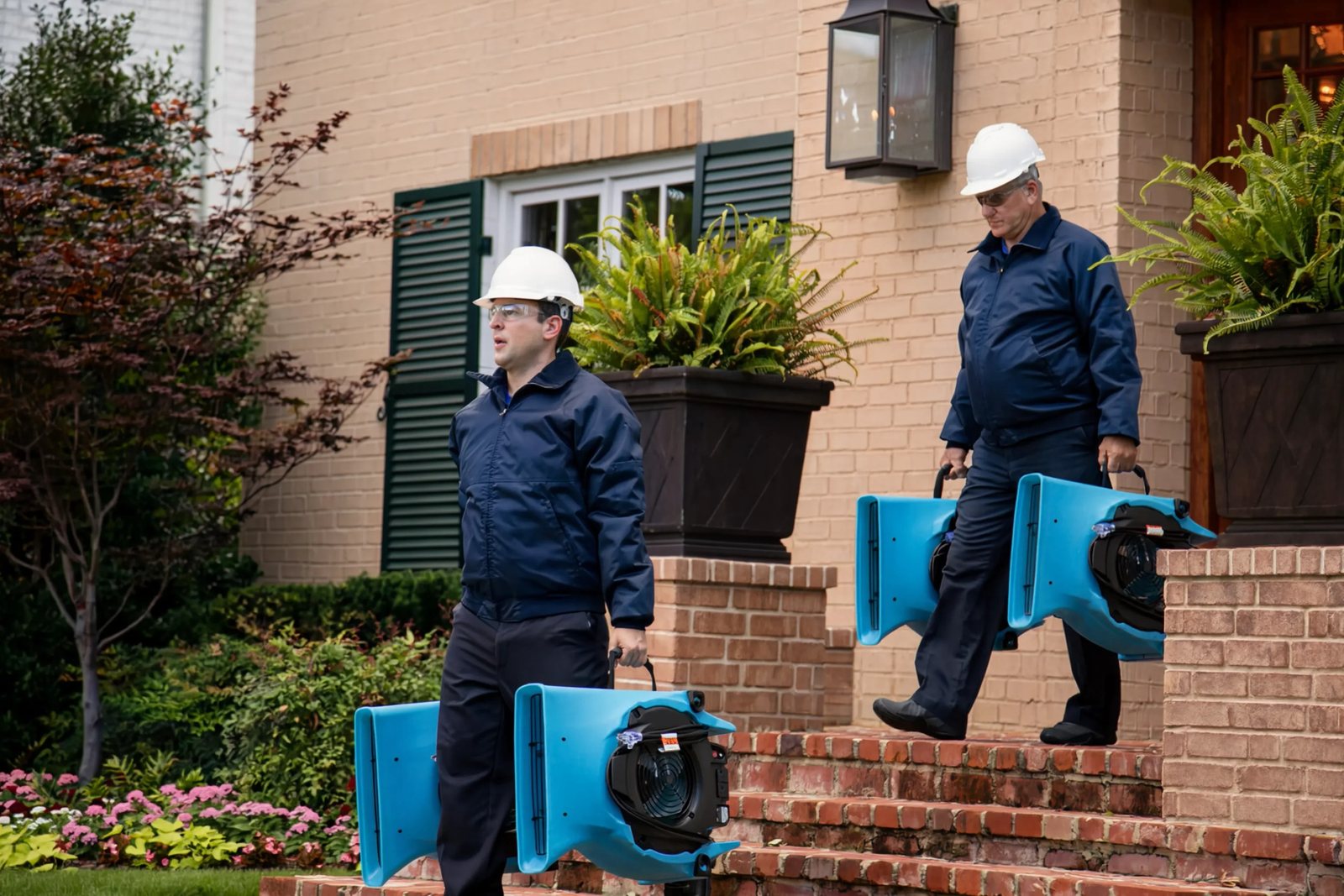
Short clips from real water damage jobs across Brooklyn — the same crew that responds in Coney Island: extraction, structural drying, and the gear we run on site.
The water problems we fix in Coney Island
Water damage restoration in Coney Island reads differently than it does inland, because on a barrier peninsula at sea level the water arrives from below at least as often as it drips from a burst line above. A failed riser in a Surf Avenue tower is a clean-water job; a surge that pushes up through the slab, or a floor drain reversing when hard rain lands on a high tide, is a contaminated one. Reliable Brooklyn Water Damage Restoration runs both under one crew, 24/7: we pump and extract, dry the masonry and framing to a metered reading, and when the water came up dirty the water damage cleanup means flushing the salt and sanitizing before anything closes back up.
Water Removal & Extraction
Standing water pumped and vacuumed out before it wicks into drywall and subfloor.
Mold Remediation
Contained removal of mold from flooding or slow leaks — plus the moisture fix.
Emergency Water Damage
A real person answers 24/7 and dispatches the nearest crew to your door.
Ceiling Water Damage
Stained, sagging ceilings from an upstairs or roof leak — found, dried, restored.
Structural Drying
Air movers and dehumidifiers set to a moisture map, monitored daily until dry.
Sewage & Contaminated Water
Safe cleanup and sanitizing of Category 3 water from backups and overflows.
Roof & Storm Damage
Leaks from storm-hit or aging roofs — traced, dried, and the ceiling restored.
Hardwood Floor Drying
Cupped or buckled boards dried in place where possible, before full replacement.
Carpet Water Damage
Soaked carpet and pad extracted and dried — or removed when it can't be saved.
Burst & Frozen Pipes
Fast response to burst or frozen supply lines — water stopped, extracted, dried.
Appliance & Water-Heater Leaks
Washer, dishwasher, and water-heater failures cleaned up and dried to the subfloor.
Common causes of water damage in Coney Island homes
The peninsula carries water on three sides: the Atlantic off the boardwalk, Gravesend Bay, and Coney Island Creek behind it. All of it sits barely above the tide line. Sandy proved what that geography does: a storm tide near fourteen feet broke over the boardwalk in 2012 and swept in from the creek at the same time, and every strong nor'easter since has been a smaller run of the same thing. The 1960s brick high-rises and NYCHA towers along Surf, Neptune, and Ocean Parkway take it in the ground-floor units and the basement mechanical rooms; the older row houses and Sea Gate bungalows near Mermaid Avenue take it up through the slab and the foundation walls. On this peninsula the water reaches you from underneath as readily as from a pipe overhead.
Salt is what sets a job here apart from an inland one. Brackish surge leaves residue soaked into framing, subfloor, and the CMU block foundations these buildings sit on, and that salt keeps pulling moisture out of the sea air for weeks after the tide drops, so a floor that reads dry to the hand can crown anyway, and a wipe-and-fan dry-out only hides the problem. Masonry holds that moisture far longer than the drywall above it, which is why the meter, not the surface, decides when we pull the gear. The other steady source is the combined sewer under south Brooklyn: when a hard rain lands on a high tide it surcharges and reverses up through cellar floor drains, and that backup is Category 3 water: a biohazard that has to be contained and sanitized on its own terms.
Our emergency response in Coney Island
A live person answers at any hour, and the crew loads at our Brownsville base and usually runs the peninsula in around 45 minutes on a normal day, depending on traffic. Treat that as the drive, not a promise, and add to it when a storm has the Belt Parkway or the avenues off the boardwalk underwater. The water gets classified before anything else, because a surge or a floor-drain backup is Category 3 and gets contained and sanitized before a single fan switches on. We pump the standing water, extract what soaked into the slab and the lower walls, and where salt came in we rinse it out so the structure will actually let go of the moisture. Air movers and dehumidifiers then run against the masonry on a daily meter reading, since block sheds humidity slowly here. The water damage repair closes it out: soaked drywall, insulation, and flooring cut out and put back, and the high-water line, the readings, and the photos go into one file your carrier can work from.
Frequently asked questions
The water that came into my Coney Island unit was salty. Does that change how you dry it out?
It changes a lot. Brackish surge water leaves a salt residue behind that keeps pulling moisture out of the sea air and quietly corrodes metal, fasteners, and wiring long after the visible water is gone, so drying alone leaves the structure damp and the corrosion working. We rinse and neutralize the surfaces the salt water reached before we dry, and because coastal surge is treated as contaminated, the porous materials it soaked: carpet, pad, the lower wall sections — come out rather than dry in place. On the CMU block foundations common down here that flush matters, since salt trapped in masonry is what makes a below-grade unit read wet for weeks.
My apartment is on an upper floor in a Surf Avenue tower, so how did it grow mold from a flood that only hit the ground?
It happens across these towers because the flood knocks out the building, not just the ground floor. Sandy drowned the boilers, pumps, and elevators in the basement mechanical rooms of nearly every high-rise on the peninsula, and when those go down the whole tower loses heat and hot water for days or weeks. Humidity then spikes in every unit, not only the flooded ones, and any moisture that tracked up the stairwells and riser chases feeds it. An upper-floor apartment can grow mold from vapor alone that way. If your place went musty and damp in the weeks after a storm, it is worth having us meter it.
My ground-floor place flooded from the storm surge. Does my homeowners policy cover it, and do you come out while the storm is still going?
Two honest answers. On coverage: storm surge and rising tidal water are flood losses, which fall under a separate NFIP or private flood policy; a standard homeowners or HO-6 policy almost always excludes them, and much of Coney Island sits in a FEMA high-risk zone where flood coverage is effectively required for a mortgage. A burst pipe or an internal sewer backup may fall under your regular policy instead, so the source decides the carrier. On timing: we are a water damage restoration company, not a storm-rescue outfit, so we do not wade into an active surge while the water is still rising — that is a life-safety situation for the city's emergency services. We move in once the water recedes to pump out, flush the salt, and dry the structure, documenting the loss so your adjuster has the record. Your carrier decides what's covered; our part is making the file complete.
My cellar off Mermaid Avenue has flooded in two storms already. Is it even worth restoring again?
Restoring the space is worth it; repeating it without changing what lets the water in is money spent twice. We dry and rebuild what's salvageable and document each event for your records, but we'll also tell you plainly what we saw, whether the water came up the floor drain as a combined-sewer backup or seeped through the foundation from the high water table, since the two call for different fixes. The lasting one is a plumber's job: a backwater valve on the house drain for a sewer surcharge, or a sump and foundation work for groundwater. We'll tell you which your cellar looks like so the next storm isn't another cleanup. Call (347) 906-9419 and give us your cross street.
Licensed, insured & trained to industry standards


Salt water across your Coney Island floor? Call now.
Once the tide drops and a ground-floor unit or a cellar off Surf or Mermaid is left standing in brackish water, a Brooklyn crew rolls from Brownsville, any hour, answered live. We pump out, flush the salt, dry the masonry to a meter reading, and document the loss for your flood claim. Call (347) 906-9419.
Call (347) 906-9419