Water Mitigation in Brooklyn, NY
A supply line splits inside the wall of a Flatbush prewar on a Friday night. By Monday the water is under three rooms of oak flooring. Caught early, that's a mitigation job, not a renovation. One call, any hour, and a Brownsville crew is on the road.
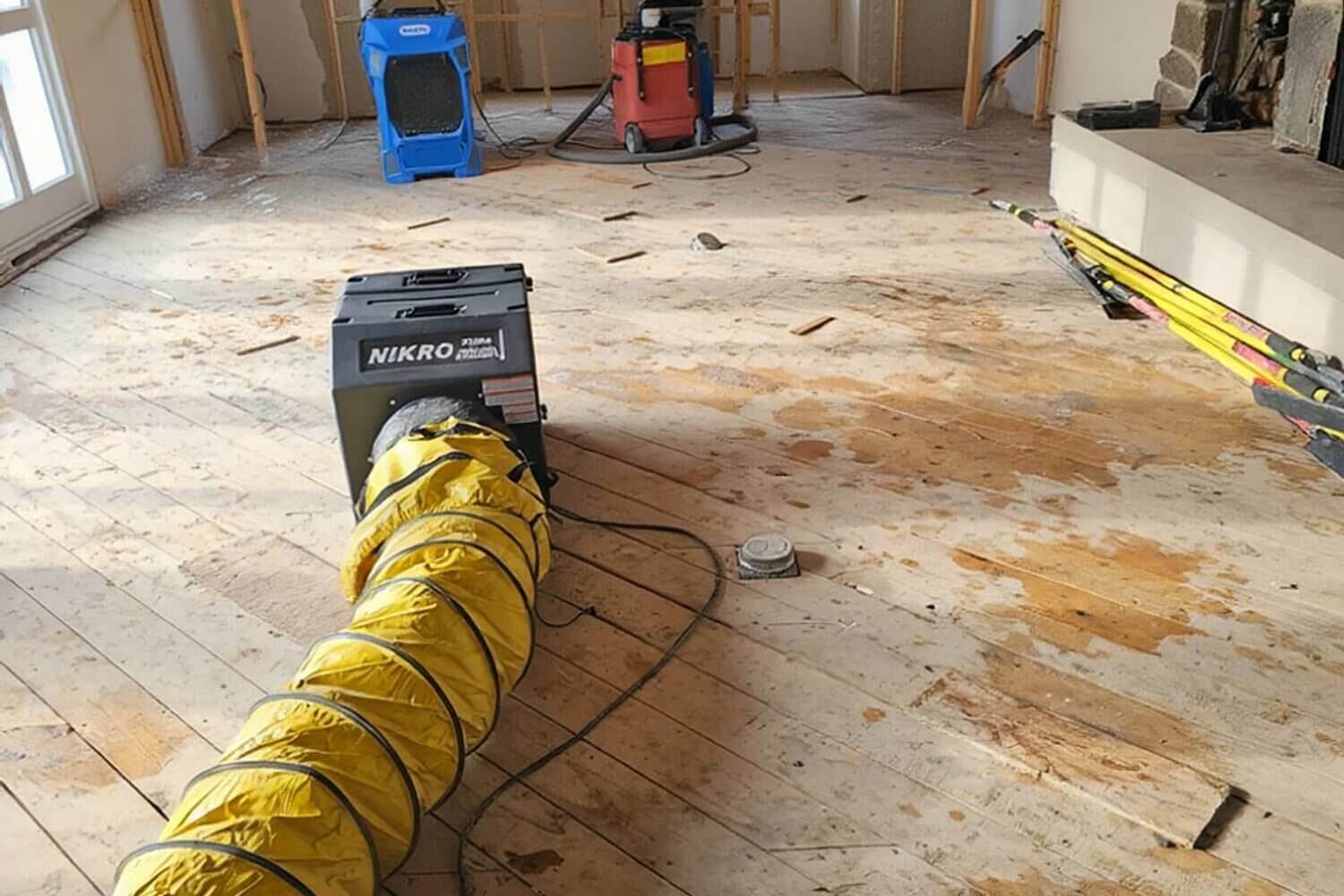
Water mitigation is the emergency half of a water loss: kill the source, pull the water out, and dry the building before the damage compounds. Reliable Brooklyn Water Damage Restoration answers every emergency water mitigation call with its own crew and gear. We contain the wet rooms so moisture can't cross into dry ones, cut out only what can't be saved, and keep a meter on the walls until the numbers say dry. What we save in those first hours is what you don't rebuild in month two.
What we do when we get there
- Source off, power checked — we find the shut-off, cut any circuit the water reached, and get standing water up before it wicks another foot up the drywall.
- Containment — poly sheeting across the doorways keeps humid air out of the dry rooms, so the loss stays the size it was when we walked in.
- Selective tear-out — soaked drywall, wet insulation, and delaminated flooring come out; nothing salvageable goes in the dumpster. Debris is bagged and hauled the same visit.
- Metered drying — air movers and a dehumidifier run while a Tramex meter tracks the walls and subfloor day by day, and the gear comes out when the structure reads dry inside, not just at the surface.
How a call goes, start to finish
- We answer and dispatch
A real person picks up, day or night, takes your address, and sends the nearest crew. From our Brownsville base we usually reach most of Brooklyn in around 45 minutes, depending on traffic and where you're calling from.
- Make safe, stop the source
We shut the running water down and check for electrical hazards before anyone steps in. Containment goes up before extraction starts, so the dry side of the apartment stays dry.
- Extract, tear out, document
We pump out the standing water, take down what's past saving, and photograph and meter everything as we go for the claim file.
- Dry to a verified reading
Air movers and dehumidifiers run while we log readings daily; repairs start once the walls and subfloor hit their dry targets and hold them.
Mitigation hands off straight into structural drying, and when the water sat for days before anyone found it, into mold removal. If the leak is still running as you read this, our emergency water damage line puts a dispatcher on the phone and a crew on the road.
Questions we get
What does a water mitigation company actually do?
We stop a loss that's still in progress. A water mitigation company shuts down the source, pulls the standing water, cuts out the soaked materials that won't dry, and runs drying equipment until the structure reads dry on a meter. We're not the rebuild contractor. Mitigation is what keeps a one-room leak from becoming a whole-floor teardown, and everything we find gets photographed and logged so your insurer can see exactly what happened.
What's the difference between mitigation and restoration?
Two different jobs, and usually two different line items on the same claim. Mitigation is the stop-the-bleeding work: source off, water out, the soaked materials cut back, and the structure dried down and verified. Restoration is everything that goes back afterward: new drywall, new flooring, paint. Plenty of outfits sell water mitigation and restoration as one package, and that's fine, but the part that can't wait is the mitigation. Every day a building spends wet while you compare rebuild quotes gets added to the rebuild.
Can I really get a crew out at 3 a.m.?
Yes. A technician answers the phone live, not an answering service taking messages for the morning shift. Overnight is when a loss does its quiet work: by sunrise the subfloor has soaked up whatever the surface was holding, and mold's countdown is already running. If you're standing in water right now, or you hear it running somewhere it shouldn't be, waiting for daylight is the expensive option.
Will insurance cover the mitigation?
Usually, when the cause was sudden and accidental: a burst pipe, a failed appliance hose, a radiator that gave out. Homeowner's, HO-6, and renter's policies generally treat emergency mitigation as part of the covered loss. We photograph everything as we find it, log the readings, and bill your insurer directly. We document the loss; your carrier decides what's covered. Our insurance claims guide walks through how the process usually goes.
The water drained away on its own. Do I still need mitigation?
More often than not, yes. Water that disappears from the surface hasn't left the building: it's sitting in the subfloor, the bottom plates of the walls, and the insulation, and it can stay there for weeks. We meter those materials instead of guessing. If the readings come back dry, we say so and leave your walls alone; if they don't, we dry the cavities now, while this is still a drying job and not a mold job.
Day one decides the loss
A leak caught and dried inside a day usually ends as a patch and a paint job. The same leak left a week is torn-out walls, cupped hardwood, and a mold colony sitting on top of the water damage. That gap is what water damage mitigation is for: get in early, stop the spread, and dry the structure to a meter reading an adjuster can look at, instead of sealing up a wall that's still damp behind the paint. Reliable Brooklyn Water Damage Restoration runs its water mitigation services out of Brownsville around the clock, because the size of that gap is decided on day one, not day three.
There's a reason your policy uses the word. Nearly every homeowner's contract expects the owner to take reasonable steps to keep a covered loss from getting worse, and the adjuster who reads the claim looks for exactly that. So the mitigation gets documented while it happens: photos of the source and the high-water line, a moisture map of every wet wall, daily drying logs, and a line-item scope your carrier can follow. What's covered is always the carrier's call, not ours. Our job is handing them a file where nothing is missing and nothing is padded.
Brooklyn's row-house construction gives water a route most homeowners never think about: the party wall. Floor joists on both sides of the block pocket into that shared masonry, and a bad enough leak can track along the joist ends and surface as a stain on the neighbor's ceiling. It's why we map how far the water actually traveled before deciding what comes out — the real footprint routinely runs past the room where the puddle was, and in a row house it can run past your property line. Containing, metering, and drying that full footprint is what keeps a one-house problem from becoming a two-house one.
Crews dispatch from 86 Thatford Ave in Brownsville and cover the whole borough, from Canarsie two-families to Park Slope brownstones, plus Queens, Manhattan, the Bronx, and Staten Island when the call comes from outside Brooklyn. A pipe doesn't check the clock before it fails, so the dispatch desk doesn't either: call (347) 906-9419 at any hour and a technician picks up live.
Across Brooklyn & NYC
We handle water mitigation across: Brownsville · East New York · Bedford Stuyvesant · Crown Heights · Flatbush · Bushwick · Williamsburg · Park Slope · Bay Ridge · Canarsie · Coney Island · Mill Basin · Queens · Manhattan · The Bronx · Staten Island.
Licensed, insured & trained to industry standards


Stop the damage now — call 24/7
A Brooklyn crew is standing by around the clock. The sooner mitigation starts, the less you lose.
Call (347) 906-9419