Water Mitigation in Brownsville, NY
A tub overflows two floors up in a Tilden Houses apartment, and the water soaks your ceiling before the tenant even notices. We run 24/7 from our Brownsville base on Thatford Ave, so the crew is close, and we dry the structure to a meter.
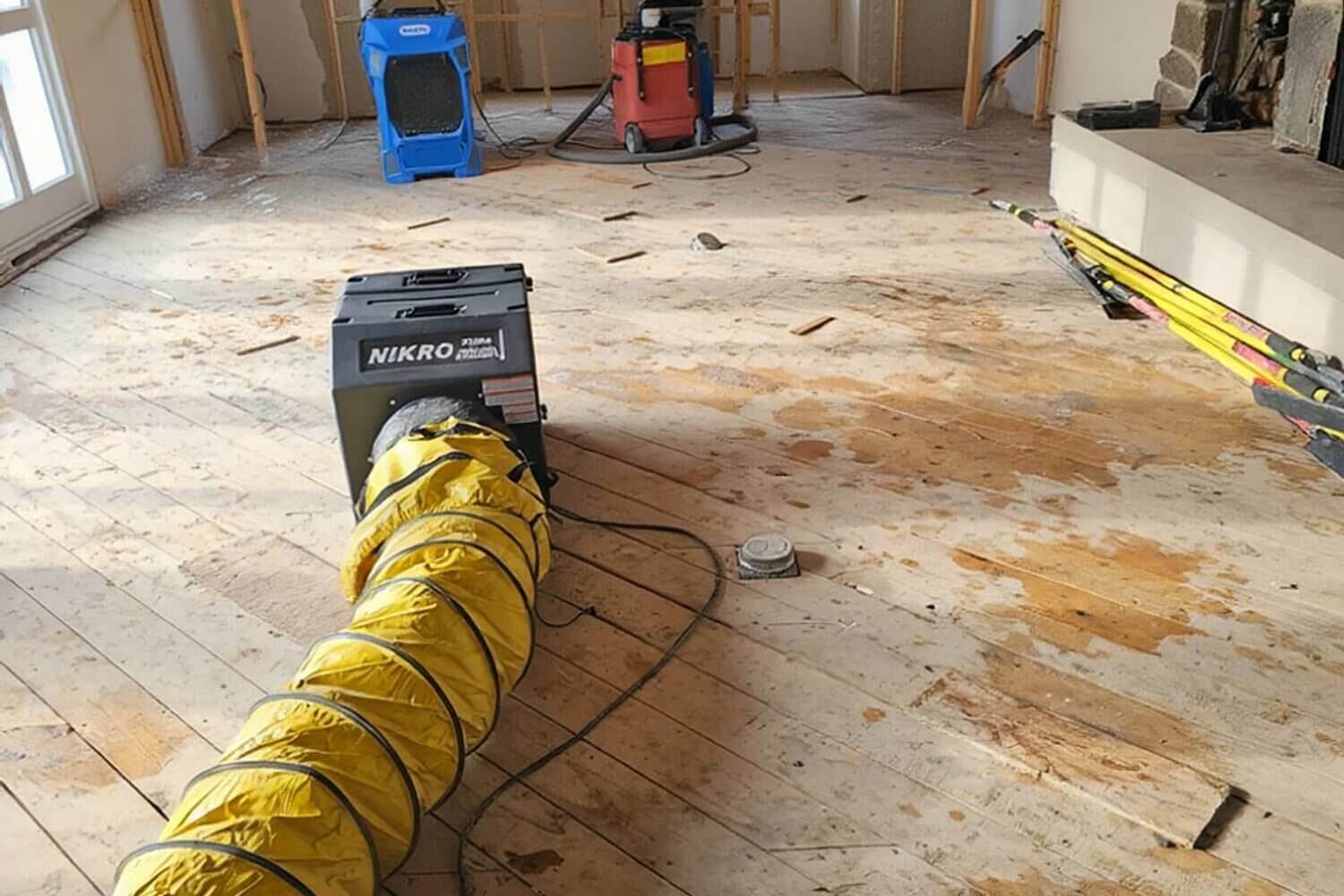
Water mitigation is the emergency work that keeps a Brownsville leak from ending up a gut renovation, and it is the part that decides how big the repair gets. It is not the rebuild. It is the first hours after a line fails, when a water mitigation company pulls the standing water out, seals off the wet rooms so the damage stops migrating into the next apartment, strips out only the drywall and insulation that will not dry, and runs air movers and dehumidifiers until the walls and subfloor read dry on a meter. Reliable Brooklyn Water Damage Restoration dispatches that crew from 86 Thatford Ave, in the middle of Brownsville.
The building stock here is what makes speed matter. Brownsville holds roughly eighteen NYCHA developments packed between Pitkin and Linden — Van Dyke, Tilden, Howard, Brownsville Houses and the rest — and each one runs a single plumbing riser that serves a whole stack of apartments down a dozen floors. One failure up top sends water through ceiling after ceiling, often soaking framing two floors down before a stain ever shows. Off Mother Gaston the old brick row houses add their own version: original cast-iron drains that clog and back up through the cellar. That hidden travel is why our water damage mitigation starts with a moisture meter and containment instead of a mop, and it is the whole difference between a patch and a teardown.
What we cover in Brownsville
- Kill the source, then pump it out — we shut the riser or valve feeding the leak and clear the standing water with truck-mounted and submersible pumps before it climbs the drywall.
- Wall off the spread — in a NYCHA stack a leak wants to keep dropping, so we seal the wet apartments and dry them as a group instead of chasing it one unit at a time.
- Take out only what is lost — saturated drywall, soaked insulation, and delaminated flooring get cut back to a clean edge; everything that can dry stays put and saves you the rebuild.
- Dry to a number, not a hunch — our water mitigation services close with air movers, dehumidifiers, and a daily meter log, so equipment leaves only when the walls and subfloor read dry.
Full detail on this service: Water Mitigation in Brooklyn · or see every water damage service we provide in Brownsville.
Common questions in Brownsville
What is the difference between water mitigation and restoration?
Mitigation is the emergency phase, restoration is the rebuild. Mitigation is what happens in the first hours: we stop the source, pull the water, seal off the wet rooms, take out the soaked materials that will not dry, and run the structure down to a metered reading. Restoration is the drywall, flooring, and paint that go back afterward. We run the full mitigation and meter it dry, so when a rebuild starts it goes on framing that reads dry behind the wall, not just dry to the touch.
The leak started in a neighbor's apartment in my NYCHA building. Do I still get someone out, and who is responsible?
You get a crew either way, and we start before anyone sorts out fault. Standing water does not wait for a liability answer, so we extract and dry your unit no matter which apartment the riser leak began in. Responsibility for the pipe and the repair is a separate question between the tenants, the development, and the carriers, and we cannot decide it for you. What we do is document each affected unit on its own and keep your record clean of the building work order, so nobody's file gets tangled with anyone else's.
What should I do in the minutes before your crew arrives?
Shut the water at the valve or main if you can reach it, and stop using any drain that is backing up. If the panel is dry and you can get to it safely, kill power to the wet rooms, because standing water and outlets are a bad mix. Lift what you can carry up off the floor, and shoot a few photos of the water line before anything moves. Then call (347) 906-9419 — a real person picks up, and we roll from Thatford Avenue.
There is no standing water, just a musty smell and a soft patch on the wall. Is that worth a call?
It usually is. In these buildings the water you can see is a fraction of the water that is there. A slow riser seep or a leak behind plaster tracks along the framing and pools in the wall cavity, so a soft spot and a musty smell often mean the structure has been wet for a while. We bring a moisture meter and a thermal camera to map the real wet footprint, then dry the cavity down before it becomes mold. Catching it at the soft-patch stage is far cheaper than gutting the wall three weeks later.
What decides the cost, and can you tell me a price over the phone?
Not accurately over the phone, because the price tracks the job. What drives it is how far the water spread, how many units it reached, how much material has to come out, and how many days of drying the framing needs. A single soaked room dries in a few days; a riser failure that ran three floors down a stack is a bigger scope. When a water mitigation company gives you a firm number sight unseen, it is guessing. We would rather look, meter the wet, and give you a scope you can hand to your adjuster — and we bill the insurer directly where the policy allows.
Licensed, insured & trained to industry standards


Water coming through the ceiling in Brownsville? Call now.
A real person answers 24/7, and our crew rolls from Thatford Avenue, minutes from most of Brownsville. Every hour the water sits, it climbs another wall and soaks more framing — so the call you make now is the one that saves the most. We pump it out, wall off the spread, dry the structure to a meter, and document the loss for your carrier. Call (347) 906-9419.
Call (347) 906-9419