Water Damage Restoration in Mill Basin, NY
A nor'easter pushes the canal up behind a National Drive house, and the tuck-under garage on the water side takes it first — over the slab and up the floor drain at once. That is a routine Mill Basin call, and a live person answers any hour.
Real jobs, on camera
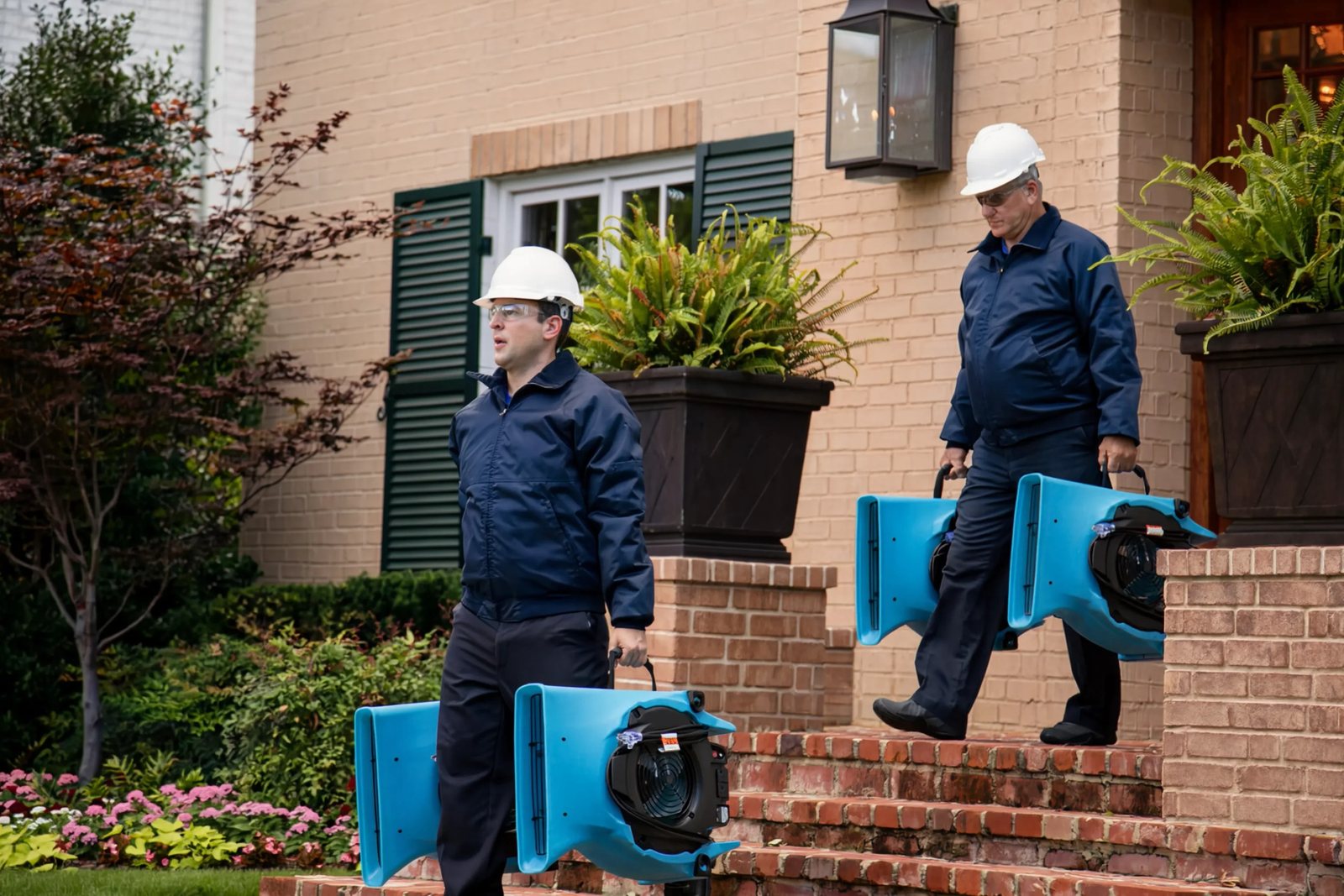
Short clips from real water damage jobs across Brooklyn — the same crew that responds in Mill Basin: extraction, structural drying, and the gear we run on site.
The water problems we fix in Mill Basin
Water damage restoration in Mill Basin is a waterfront job on quiet water: the big detached and semi-detached houses here back onto the man-made canals that finger off Jamaica Bay, many with a private dock or a bulkhead at the end of the yard, and most were built mid-century with a finished basement and a tuck-under garage sitting right at the water line. That is the level the canal reaches first, over the grade and up the floor drain both. Reliable Brooklyn Water Damage Restoration sends the same residential crew through every stage, any hour — pump-out, structural drying, sewage and mold cleanup, and the water damage repair that puts the walls and floors back.
Water Removal & Extraction
Standing water pumped and vacuumed out before it wicks into drywall and subfloor.
Mold Remediation
Contained removal of mold from flooding or slow leaks — plus the moisture fix.
Emergency Water Damage
A real person answers 24/7 and dispatches the nearest crew to your door.
Ceiling Water Damage
Stained, sagging ceilings from an upstairs or roof leak — found, dried, restored.
Structural Drying
Air movers and dehumidifiers set to a moisture map, monitored daily until dry.
Sewage & Contaminated Water
Safe cleanup and sanitizing of Category 3 water from backups and overflows.
Roof & Storm Damage
Leaks from storm-hit or aging roofs — traced, dried, and the ceiling restored.
Hardwood Floor Drying
Cupped or buckled boards dried in place where possible, before full replacement.
Carpet Water Damage
Soaked carpet and pad extracted and dried — or removed when it can't be saved.
Burst & Frozen Pipes
Fast response to burst or frozen supply lines — water stopped, extracted, dried.
Appliance & Water-Heater Leaks
Washer, dishwasher, and water-heater failures cleaned up and dried to the subfloor.
Common causes of water damage in Mill Basin homes
Mill Basin is a peninsula of made land, filled marsh cut through with the fingered canals that branch off Jamaica Bay, so the neighborhood is defined by its waterfront: block after block of detached and semi-attached houses off National Drive, Strickland Avenue, and the numbered East 60s streets, many with a private dock or a bulkhead where the backyard meets the canal. That setting is also the risk. The houses sit low on a high water table, most of the peninsula fell into the FEMA AE flood zone after the post-Sandy remapping, and the lowest point of a canal-side house is usually a tuck-under garage at grade with the finished basement right behind it. When a nor'easter or a spring tide raises the basin, the water comes over the grade and in through the garage and window wells at the same time, and on the many block foundations whose waterproofing gave out years ago it wicks straight through the wall. A sump built for ordinary rain does not keep pace with a canal that is pushing back.
The other steady source arrives from underneath the street. In a hard rain the combined sewer serving southeast Brooklyn overloads and pushes wastewater back up through floor drains and toilets, and on a canal block that often happens in the same storm that is raising the basin, so a single event puts water in from the yard and up the drain together. That backup is Category 3 black water, contaminated the moment it surfaces and a genuine biohazard, so the water damage cleanup runs as decontamination: the space sealed, porous material bagged and hauled, hard surfaces sanitized before drying starts. It matters here that the canal water is brackish: the salt it leaves in framing, subfloor, and the block wall keeps pulling moisture out of the air and corrodes the metal connectors in the structure long after the tide drops, which is why we identify what actually reached a surface before we decide whether it dries in place or comes out.
Our emergency response in Mill Basin
A live person answers at any hour, no answering service, and the crew loads at our Brownsville base a run to the northwest; figure roughly 45 minutes to Mill Basin in ordinary traffic, which is the honest drive and not a scheduled slot, and longer when a storm has the Belt Parkway or the low canal blocks underwater. On a canal-side call the water often comes from two directions at once, so we start at the lowest standing water, pumping and extracting the tuck-under garage and the basement together rather than as separate jobs. When it came up the drain we classify it as Category 3 and contain and sanitize before a single fan runs, and where brackish canal water reached a surface we rinse the salt out so the structure will actually let go of the moisture. Air movers and dehumidifiers then work a moisture map, metered daily until the slab, the block, and the framing read dry rather than dry to the hand. Only then does the repair close it out, with the readings, photos, and dates filed for whoever your carrier sends.
Frequently asked questions
The canal comes right up to my bulkhead. When the basement floods, is that water coming over the back or up from below?
On a canal-side Mill Basin lot it is usually both at once, which is exactly why the drying is harder than a plain rainstorm. When the basin rises against your bulkhead the yard saturates and the water pushes in low through the foundation wall and the window wells, while the same high tide surcharges the combined sewer and sends it back up the floor drain. The two meet in the tuck-under garage and the basement, and because it is brackish bay water, the salt soaks into the framing, the subfloor, and the block and keeps drawing moisture for weeks after the visible water is gone. A bulkhead and a dock do not stop groundwater — they just mark how close the water starts. We meter how high it climbed and dry the structure to a number rather than to the touch, because a surface that feels dry over salted block is still wet inside. Shut the water at the main only if a pipe is also involved, and call (347) 906-9419 the hour you find it.
The garage under my house floods before the basement does. Does that whole lower level have to be torn out?
Not automatically, and what comes out depends on how dirty the water was and how long it sat, not on the square footage. In these Mill Basin houses the tuck-under garage sits at grade on the canal side, so it takes the water first and the finished basement fills right behind it through the shared wall. We pump and extract both together, then meter the garage slab, the basement block, and the framing as separate layers to see what actually soaked. Clean water caught early can often be dried in place; brackish canal water and a sewer backup are contaminated, so the porous materials they reached — the lower drywall, insulation, carpet and pad — come out, while the structure we can dry back to a verified reading stays. We tell you which side of that line each thing falls on before anything is cut, room by room.
My neighbor two doors down the canal got their whole basement covered and I was barely paid anything. Same storm — how does that happen?
It usually comes down to how each of you is insured, not to the water, and it is a common surprise on these blocks. Most of Mill Basin sits in the FEMA AE flood zone, where the coverage that answers a rising-canal flood is a separate NFIP or private flood policy, not your standard homeowners policy — and an NFIP policy insures the building and its contents under different limits and caps improvements to a finished basement, so two neighbors on the same canal can land in very different places depending on their limits and what they carried. A sudden burst pipe or a failed water heater, by contrast, is the kind of loss a standard homeowners policy is most likely to answer, and a sewer backup is covered only if you carry the backup rider that is sold separately. We do not rule on coverage and cannot promise what any policy pays; what the restoration company handling the loss owes you is a file the adjuster cannot argue with — the high-water mark, the water category, dated photos, and a moisture log from the first visit. Our insurance claims guide walks through what an NFIP adjuster looks for.
The canal went back down on its own and the basement looks dry. Do I still need a crew, or will fans handle the rest?
You still need it metered, because on a Mill Basin canal block a dry-looking surface is the least reliable part of the picture. The water table here stays high year round, so the ground never lets the block wall dry hard the way it would inland, and brackish water pushes salt deep into the framing and subfloor that a household fan will never reach. The fan dries the face while the cavity behind it stays wet, and in the warm months a colony can take hold in a day or two down there. We read the structure with a moisture meter, pull the drying equipment only when the readings say it is dry all the way through, and note the salt where the canal reached, so a basement that was rinsed with bay water is not left quietly corroding and feeding mold behind fresh paint.
Licensed, insured & trained to industry standards


Canal over the bulkhead and water in the garage in Mill Basin? Call now.
A live person answers any hour, no answering service, and a Brooklyn crew rolls to Mill Basin from our Brownsville base nearby. We pump the garage and basement out together, rinse the salt, dry the block and framing to a meter reading, put back what the water ruined, and document the loss for your flood claim. Call (347) 906-9419.
Call (347) 906-9419