Structural Drying & Dehumidification in Brooklyn, NY
The burst pipe is fixed and the floor looks dry, but the plaster in a Flatbush prewar holds water for days after the surface stops shining. We set air movers and dehumidifiers, meter the walls daily, and pull the gear only when the numbers say dry.
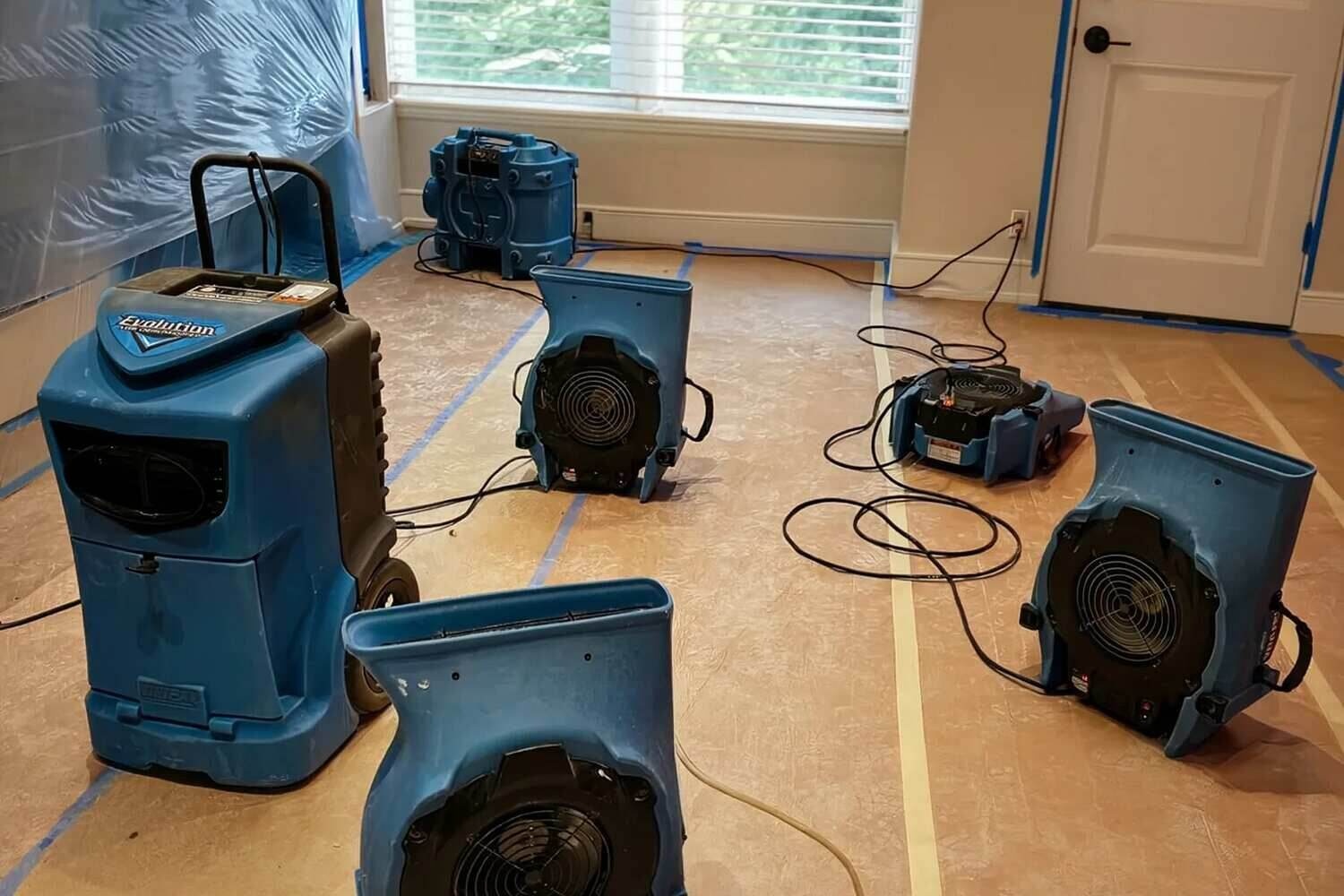
Structural drying is what keeps a water loss from coming back as warped floors and mold. Once the standing water is out, gallons more stay soaked into drywall cavities, under the hardwood, and deep in the subfloor. None of it evaporates on its own. Reliable Brooklyn Water Damage Restoration treats drying as a trade of its own: our vans carry the air movers, low-grain dehumidifiers, and moisture meters, and a technician runs them until the building reads dry inside, not just at the surface.
What we set up and why
- Air movers and dehumidifiers — high-velocity air movers lift the moisture off your walls and floors, and low-grain dehumidifiers pull it out of the air before it settles back in.
- Moisture mapping — a thermal camera and a penetrating moisture meter find the water hiding behind plaster and under the subfloor, so we dry the hidden pockets you'd never spot by eye and nothing damp gets sealed up.
- In-place and cavity drying — wall-cavity injection and floor drying mats pull water straight out of the assembly, which often saves the hardwood and the drywall from a full tear-out.
- A meter reading every day — we log the moisture in your walls and subfloor, visit after visit, and don't call the job finished until the structure hits a verified dry standard, with the numbers documented for your claim.
How a drying job runs, day to day
- Map the wet first
Before any equipment goes down, we scan with a thermal camera and a moisture meter to find every damp pocket, including the ones behind the wall, and set a baseline reading for each one.
- Size and place the equipment
Air movers and dehumidifiers go in sized to the wet load. Too few and the job drags for a week; too many wastes your power for nothing. Getting the count and the placement right is most of the work.
- Come back daily and adjust
A Reliable Brooklyn technician returns each day to re-read the moisture, shift air movers as zones dry out, and log the numbers, the same record your adjuster wants to see.
- Prove it's dry, then pull out
When the meter confirms your subfloor, walls, and framing all hit a dry standard, we take the equipment out and hand you the final readings. Nothing damp goes back behind a wall.
Drying picks up where water removal leaves off and runs as part of full water mitigation. If the meters show the water sat long enough to start a problem, we move into mold removal before it spreads. One Brooklyn crew carries it the whole way through.
Questions we get
How many days will the equipment be running in my house?
Most homes dry in three to five days, but it comes down to how much water there was, what got soaked, and what it's made of. The plaster and old hardwood in a lot of Brooklyn buildings hold moisture far longer than modern drywall, so a prewar apartment can run a day or two past a newer one. We re-check every zone daily, so the gear comes out the day your structure actually reads dry, not on a fixed schedule, and not while it's still damp behind the surface.
Can't I just run box fans and a dehumidifier I rent from the hardware store?
You can move some air, but you won't dry the building. Box fans push room air around without pulling moisture out of the materials, and a rental dehumidifier for water damage can't keep pace with a real loss. It's built for a damp basement, not a flooded one. The bigger problem is that without moisture mapping you can't see the water trapped in the wall cavities and the subfloor, so the room looks fine while mold quietly takes hold underneath. Our air movers, low-grain dehumidifiers, and daily meter readings dry the structure itself and prove when it's done.
How do you know the inside of the wall is actually dry?
We don't go by touch. We go by the meter. A penetrating moisture meter reads the actual moisture content inside the drywall, the framing, and the subfloor, and we compare it against a dry baseline taken from an unaffected part of the same material. When every monitored point sits at or below that target on back-to-back visits, the structure is dry. That's the number we document and the number that tells us it's safe to close the wall back up.
Will my insurance pay for the drying?
Drying after a sudden, accidental water loss (a burst pipe, a failed supply line) is usually part of a covered claim, and the daily readings work in your favor: they show the carrier exactly how wet it was and exactly how it came down. We log the moisture from baseline to dry standard, bill your insurer directly, and document the loss so your adjuster can decide what's covered. We can't promise an approval, but a file with numbers behind it gives it the best shot. See our insurance claims guide.
Why a verified dry reading is the whole point
The most expensive mistake in a water loss is calling it done because the floor feels dry under your foot. Water never just sits where you can see it. Within hours it wicks up the drywall, runs along the top of the floor joists, and settles into the subfloor and the back of the cabinets, where it can hold for a week or more. Seal that up and you get buckled hardwood, peeling paint, and mold three weeks later, on top of a repair you thought was finished. Done right, a water damage drying company treats the building as one system: moisture mapping to find every wet pocket, the right balance of air movers and dehumidifiers to pull the water out of the materials themselves, and daily readings that prove the structure is dry before the equipment leaves and the rebuild starts. That's the difference between drying the room and drying the building.
Older Brooklyn housing makes this its own kind of job. Prewar plaster and lath hold water differently than drywall and dry slower, so the meter matters more, not less. In a row house with a finished cellar below the sewer line, a combined-sewer backup pushes water up through the floor drain and into the lowest, most-finished room, and that water gets behind the framing and under the slab where a wet-vac never reaches. We drop a dehumidifier sized to the space, set air movers along the wet walls, and map the moisture in the slab and the foundation wall until it reads dry. Skip that and the mold comes back through the same baseboard every season. Handle the wet you can see and the wet you can't, dry the cavity, and the loss stays a repair instead of a teardown.
Reliable Brooklyn Water Damage Restoration runs metered water drying services for homeowners in Brownsville, East New York, Bed-Stuy, Crown Heights, Flatbush, Bushwick, Williamsburg, Park Slope, Bay Ridge, Canarsie, Coney Island, Mill Basin, and across Brooklyn, plus Queens, Manhattan, the Bronx, and Staten Island. We're an IICRC-certified crew running our own air movers, dehumidifiers, and moisture meters, and we document the numbers from baseline to dry standard. Call (347) 906-9419 any hour and a technician will pick up.
Licensed, insured & trained to industry standards


Dry it right the first time — call now
Every van we send, day or night, carries the air movers, dehumidifiers, and moisture meters that real structural drying takes. Wet framing doesn't announce itself until the mold does. Get the meters in first.
Call (347) 906-9419