Water Mitigation in Bedford Stuyvesant, NY
A steam radiator return line corrodes through in a Halsey Street brownstone during a January cold snap, and the water seeps into the parlor-floor plaster before it ever reaches the floor. We meter the cavity, dry it out, and save the original plaster we can.
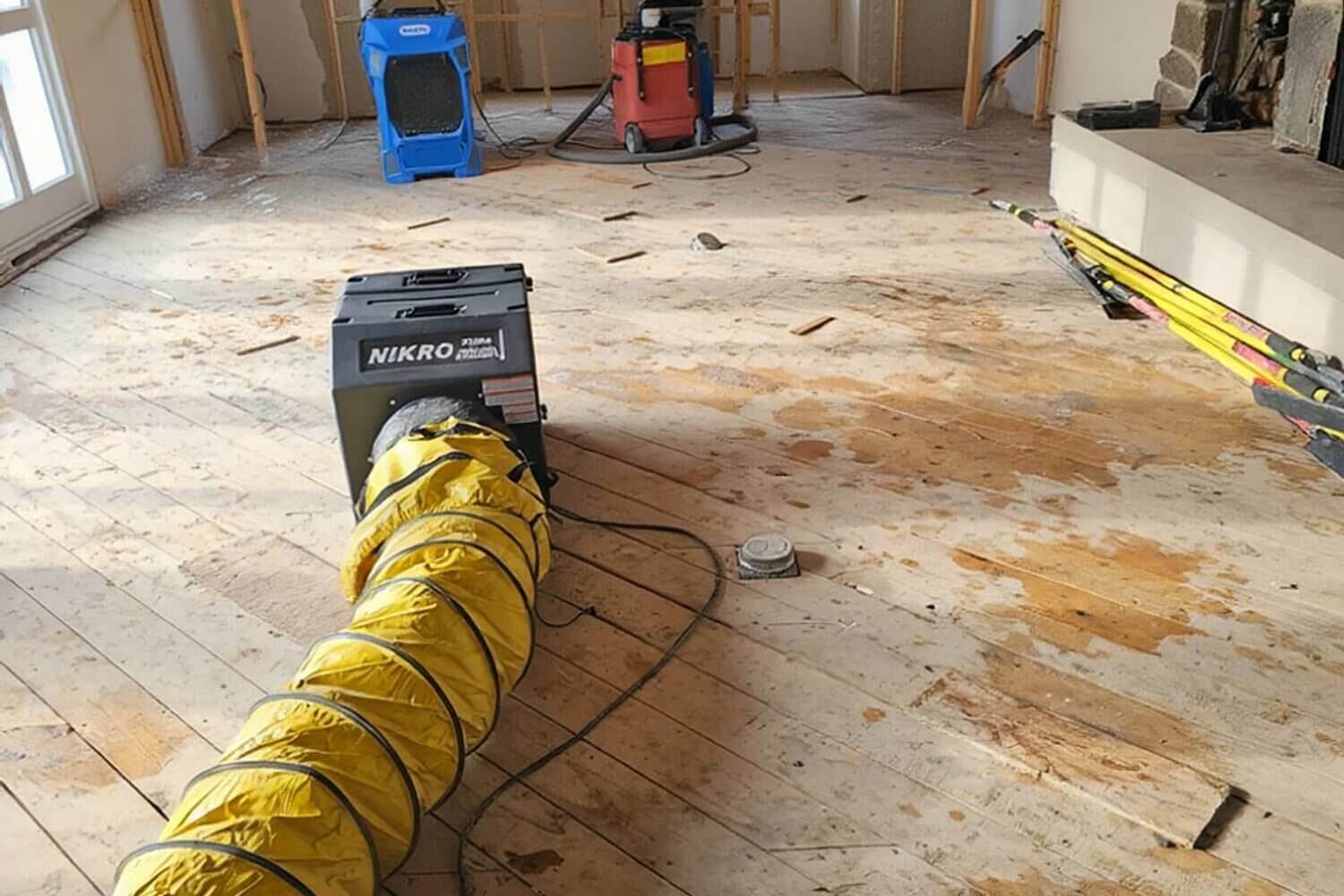
Bedford Stuyvesant holds one of the largest runs of intact prewar brownstones in the city, and that is exactly what shapes water mitigation here. The heating systems are often original steam, the ceilings are lath and plaster, and the supply branches can still be old galvanized pipe. A radiator return that corrodes through in the heating season, or a slow branch failure two floors up, does not flood a room. It wicks into the joist cavity, loosens the plaster keys from the lath one floor down, and saturates old-growth framing that reads bone dry on the surface long after it has soaked through. Getting the water out and the cavity dried before that happens is the whole point.
We send an IICRC-certified crew from our Brownsville base, usually inside about 45 minutes depending on traffic, and the phone is answered live around the clock by someone on the crew, never a service. On site the crew meters the joist bays and wall chases, sets containment, and opens only the plaster that has genuinely failed, because tearing out sound original material is its own loss. Our own air movers and dehumidifiers run to a metered dry target rather than a visual guess. This is the part homeowners underestimate about water damage mitigation in an old brownstone: the drying is slow and the record has to be exact, because dense plaster and masonry give up moisture over days, not hours. We photograph and document the loss so your carrier can decide what is covered.
What we cover in Bedford Stuyvesant
- Find the source, stop the water — a corroded radiator return or a failed supply branch gets isolated and shut, and any standing water comes up before it soaks further into the framing.
- Cavity injection drying — small access holes near the baseboard let us push warm dry air into the joist bays and wall chases without gutting a sound wall.
- Original plaster saved where it can be — sound, keyed plaster gets dried in place; only the sagging or de-bonded sections come down.
- Daily readings, documented — we meter the masonry and old wood each day and pull the equipment only at dry standard, with every reading logged for your claim.
Full detail on this service: Water Mitigation in Brooklyn · or see every water damage service we provide in Bedford Stuyvesant.
Common questions in Bedford Stuyvesant
The leak is on my steam heating line, not a water pipe. Does homeowner's insurance treat that differently?
The water damage itself is usually handled the same way — a sudden failure of a steam radiator, a return line, or a boiler feed is generally a covered loss on a homeowner's or dwelling policy, the same as a burst supply pipe. What can differ is the source repair, and an adjuster wants the cause identified clearly, so we note whether it was the heating system or the domestic water in your file. The distinction matters most in a brownstone, where original steam lines fail during cold snaps. We document the loss; your carrier decides what is covered.
Can you dry the parlor-floor plaster without tearing it open, in the middle of heating season?
Often, yes. We map the wet zone with a moisture meter and thermal imaging first, then drill small access holes into the plaster and inject warm dry air into the cavity behind it, patching the holes once the framing reads dry. That preserves far more original lath and plaster than a full demo. Heating season actually helps a little, since the warm dry building air speeds evaporation, but dense old plaster still gives up moisture slowly, so we plan on several days and meter it daily rather than rushing it.
The water ran across my original hardwood before we caught it. Can the floor be saved?
Frequently, if it is caught early and the water was clean. We pull a baseboard, set a floor-drying system that pulls moisture from above and below, and meter the boards daily as they release it. Old-growth hardwood in a Bed-Stuy brownstone is dense and worth the extra drying days when the readings say it will recover. Boards that have already cupped hard, lifted, or blackened from sitting wet generally come out, but we make that call with a meter on the wood itself, not by how it looks on the first day.
My upstairs tenant's leak came through into my unit. How do you keep the record straight between us?
We document each unit as its own loss — separate photos, separate moisture readings, and a separate materials list — even when it is one leak and one building. That way the upstairs claim and your claim stay clean if more than one policy or party is involved, and nobody's file gets tangled with the building work order. We start extracting and drying the inside of every affected unit right away; the question of who is responsible for the pipe is a separate matter we cannot decide for you. Call (347) 906-9419 and a real person answers, any hour.
Licensed, insured & trained to industry standards


Water in your Bed-Stuy brownstone? Call now.
Reach an IICRC-certified Brooklyn crew live, 24/7, from our Brownsville base. We stop the source, dry the cavity to a metered standard, save the original plaster we can, and document the loss for your insurer. Call (347) 906-9419.
Call (347) 906-9419