Water Mitigation in Manhattan, NY
A steam-heat riser springs a pinhole behind an Upper East Side prewar wall, and the leak wets three units before the super can bleed the line down. We clear the doorman and COI, pull the water, and dry to a meter while the board still debates the pipe.
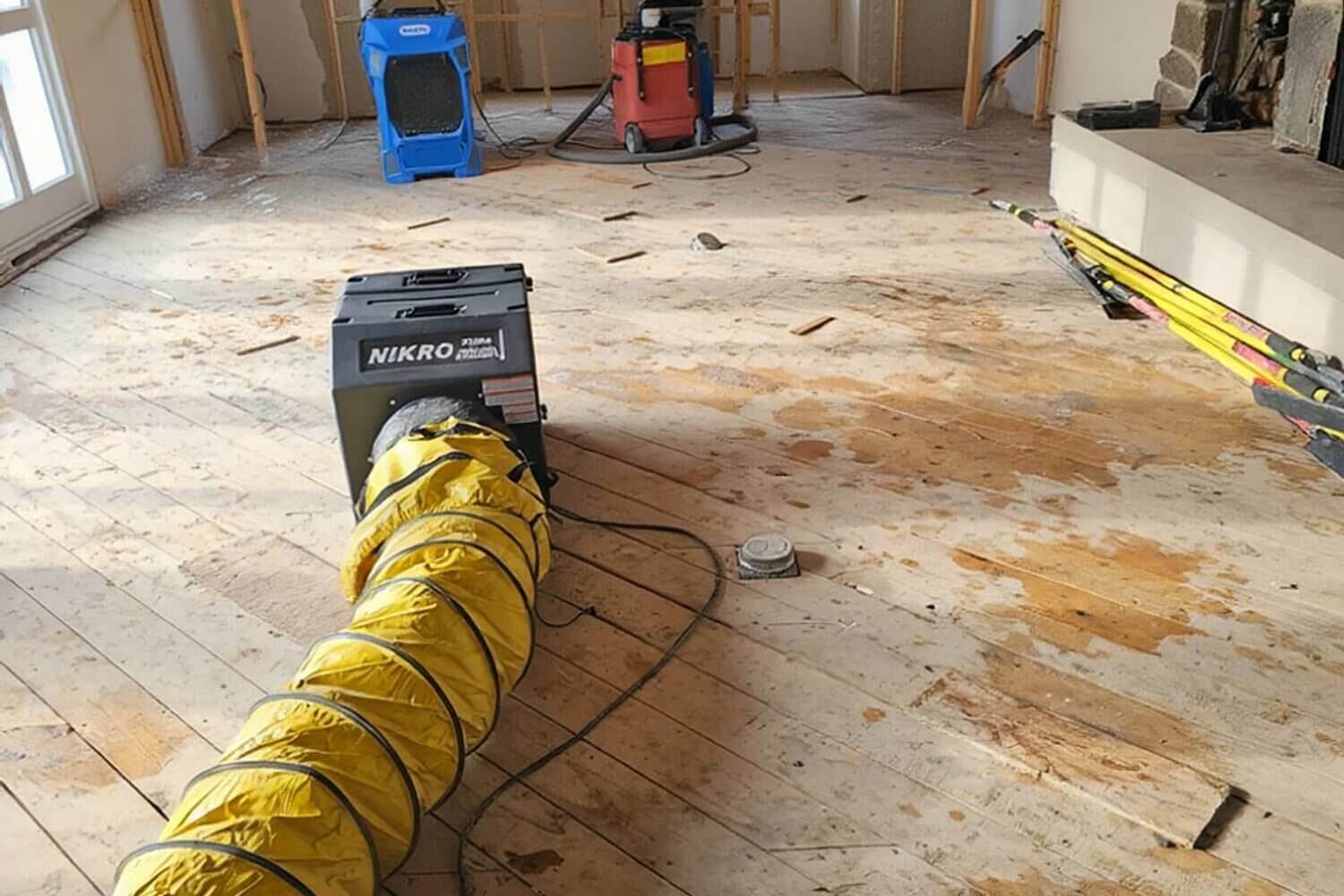
Water mitigation in Manhattan is as much a logistics job as a drying job. The prewar co-ops of the Upper East and Upper West Sides run steam-heat risers and domestic supply mains inside shared chases, so a single failed joint or a corroded steam return can wet a stack of apartments before anyone reaches a shutoff. Every unit in the water's path files its own claim, and the source often cannot be stopped until the managing agent authorizes the riser to come down. The emergency work — extracting the standing water and drying the structure — cannot wait for that, so we start on the interior the moment we are through the door.
We handle that constraint every week. Our crew coordinates access and shutoff timing directly with supers, managing agents, and boards, carries the certificate of insurance the building keeps on file, and documents each affected apartment on its own so no adjuster is untangling one shared report. This is where a real water mitigation company earns its keep in a high-rise: we pump out what is standing, pull only the plaster and drywall that genuinely will not dry, and meter the prewar hardwood and plaster daily so nothing damp gets sealed back into a wall. A crew leaves our Brownsville base and usually reaches Manhattan in 45 to 60 minutes depending on the hour, and a real person answers the phone at any of them. We document the loss; your carrier decides what it covers.
What we cover in Manhattan
- Building access cleared — we get past the doorman, put our COI on file, and time the riser or valve shutoff with the super so the source stops before a hose comes off the truck.
- Extraction up and down the line — portable and truck-mounted units pull water from soaked floors, ceiling cavities, and the unit below before it tracks further down the chase.
- Original finishes saved where they can be — sagging plaster and saturated ceiling insulation come out; the prewar parquet and keyed plaster that will dry stay put and get dried in place.
- A file per apartment — each unit gets its own photos, scope, and daily meter log, so every owner and the building each file a claim an adjuster can read on its own.
Full detail on this service: Water Mitigation in Brooklyn · or see every water damage service we provide in Manhattan.
Common questions in Manhattan
The leak is on a steam-heat riser, not a water supply line. Does that change the mitigation?
The drying is the same; the source and the shutoff differ. A steam riser or its return line has to be bled and cooled down by the super before it stops feeding the leak, where a domestic supply line just needs the valve closed. Either way the water already in your ceiling and walls is soaking the plaster and framing right now, so we start extracting and drying the interior while the building handles the heating line. We note the source type in your file, because a steam-system failure and a supply-line break can be adjusted differently and the record should be exact.
The riser is the building's but the damage is inside my Manhattan co-op. Whose policy pays for the drying?
Usually two policies split it. The building's master policy covers the riser repair and the common elements, while your HO-6 unit-owner policy covers the drying, demolition, and rebuild of everything inside your walls — flooring, plaster, cabinets, finishes. We document the source and the interior damage as separate line items, so your adjuster and the managing agent each see their own portion, and you can often pursue the building or the unit above for your deductible afterward. Bring us your declarations page; we bill the unit-owner claim directly. We document the loss; your carrier decides what it covers.
Can you save the prewar parquet, or does a soaked floor always come out?
Clean water caught within a day or two often lets us save parquet by drying it from above and below rather than tearing it up. We pull a baseboard, set an injection mat or floor-drying system, and meter the boards daily as they release moisture. Parquet that has already cupped hard, lifted off the subfloor, or sat in contaminated water generally cannot be brought back and comes out. We make that call with a meter on the wood itself, not by how it looks on day one, because prewar flooring is worth the extra drying days when the readings say it will recover.
How does access work at 2 a.m. in a doorman building?
We deal with it constantly. When you call, we take the building's name and ask what the front desk requires: most Manhattan co-ops and condos want a certificate of insurance on file and a heads-up to the super or managing agent before a crew comes up. We carry our COI and can send it ahead so the doorman lets us in without a standoff in the middle of the night. If a riser shutoff needs the super, we coordinate that timing directly so the source is stopped before extraction starts. Call (347) 906-9419 and a crew heads your way.
Licensed, insured & trained to industry standards


Riser leak soaking your Manhattan unit? Call now.
A crew is on the road to Manhattan, 24/7, with a real person on the line. We clear the doorman and COI, time the shutoff with your building, extract the water, dry the structure to a meter reading, and document each affected unit for its own claim. Call (347) 906-9419.
Call (347) 906-9419