Water Mitigation in Williamsburg, NY
A corroded branch joint behind a Graham Avenue wood-frame walk-up weeps into the ceiling for a week before a brown ring shows and the plaster sags. By then the joists are soaked. We map the real wet footprint and dry it before the ceiling is a total loss.
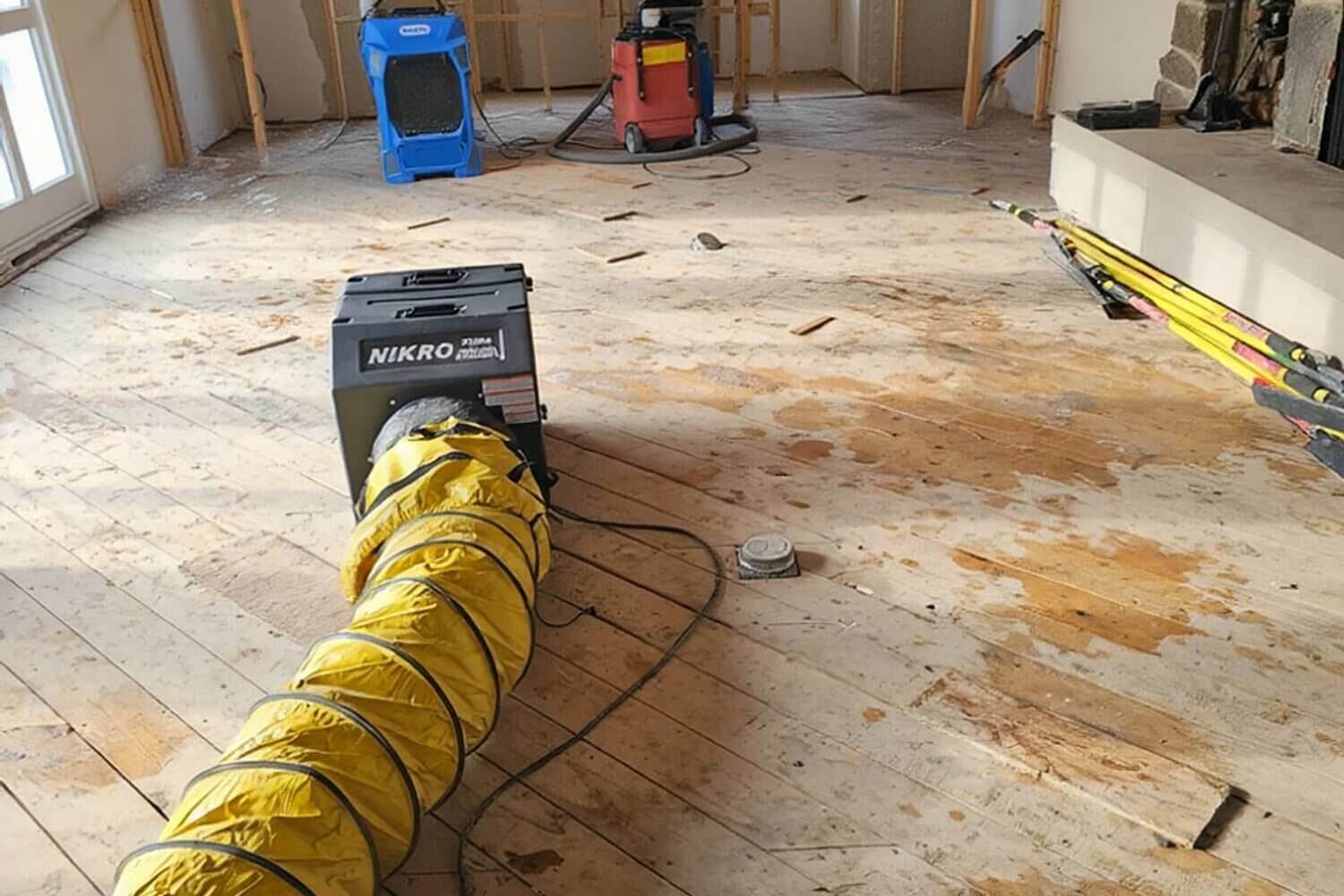
Water mitigation in Williamsburg splits cleanly between the new construction and the old. The glass condo towers that went up along Kent and Wythe after the 2005 rezoning fail young: a builder-grade appliance hookup or an under-torqued riser fitting lets go behind a wall that is barely ten years old, and because those units stack on a shared plumbing chase, the water drops through the apartments below before the resident who caused it is even home. The wood-frame walk-ups off Graham and Metropolitan run the slow version — a corroded galvanized branch drips into a plaster ceiling for days, quiet, until it sags. Water damage mitigation has to answer both: the fast vertical flood and the hidden slow soak.
We start where the water is worst, not where it started. In a tower we coordinate the riser or valve shutoff with the building before a hose comes off the truck, then extract from every unit the leak reached and meter each one on its own, since every owner files a separate claim. In a walk-up we map the wet plaster and joist bays with a meter and thermal camera and dry the cavity through small openings rather than gutting a sound ceiling. As a water mitigation company we run our own extraction and drying gear from a Brownsville base, IICRC-certified, and a real person answers at (347) 906-9419 any hour. We document the loss; your carrier decides what it covers.
What we cover in Williamsburg
- Shutoff timed with the building — in a Kent or Wythe tower we coordinate the riser or valve shutoff with the super so the source is stopped before we pull a drop of standing water.
- Cavity drying for a slow leak — a walk-up ceiling that soaked for days gets mapped with a meter and thermal camera, then dried through small access holes instead of a full tear-down.
- Take out only what is lost — sagging plaster, soaked insulation, and delaminated flooring come out to a clean edge; sound framing and intact finishes stay and dry in place.
- A file per apartment — each unit the leak reached gets its own photos, scope, and daily meter log, so every owner and the building each file a claim an adjuster can read on its own.
Full detail on this service: Water Mitigation in Brooklyn · or see every water damage service we provide in Williamsburg.
Common questions in Williamsburg
My Williamsburg condo is only eight years old and a pipe already failed. Does the building's warranty or my policy handle the drying?
Your HO-6 unit-owner policy generally covers the emergency drying and the interior rebuild no matter how new the building is; a construction warranty, if any is still in force, is a separate and slower fight over the defective fitting itself. Do not wait on either to start mitigation — the water is soaking framing now. We extract and dry your unit right away and document the failed component, the water path, and every wet material, so if you or your board later pursue the builder or the unit above, the evidence is already captured. We document the loss; your carrier decides what it covers.
A slow leak soaked my walk-up ceiling on Graham Avenue for days before I noticed. Is the framing ruined?
Usually not ruined, but it has to be dried properly, because a slow soak drives moisture deep into the joists and the plaster keys. We map how far the water spread with a meter and thermal camera, pull down only the plaster that has sagged or lost its bond, and dry the joist bays through small openings. Wet blown-in or batt insulation comes out, since it holds water against the wood and loses its value anyway. Sound framing dries in place. The risk with a slow leak is mold, not collapse, so metering the cavity dry before we close it is the whole point.
The water ran across the wide-plank floors and new finishes in my Williamsburg condo. How much of that comes back?
More than you might fear if it was clean water caught early, but the newer finishes have their own quirks. Engineered wide-plank flooring, which most of these condos use, can delaminate at the glue layer once it soaks, so we meter it and dry from above and below rather than assuming it survives. Floating floors often trap water underneath and have to be lifted at an edge to dry the subfloor. Solid finishes and sealed surfaces usually clean and dry in place. We make each call with a meter on the material, not by its look on day one, and we log what comes out so your claim shows exactly why. We document the loss; your carrier decides what it covers.
My building management is slow to shut a riser leak coming through my ceiling. Can I call you myself?
Yes, call (347) 906-9419 directly and a real person answers, no service in between. We come assess your unit, extract the standing water, and start drying to protect your floors and belongings while the building coordination catches up. We cannot shut a shared riser without the super or management, but we can contain the damage inside your apartment and hand you a written record of where the water is entering and how far it has spread. That record protects you if the building drags its feet.
Licensed, insured & trained to industry standards


Water through your Williamsburg ceiling? Call now.
A Brooklyn crew answers live 24/7 and rolls from Brownsville with its own gear. We time the shutoff with your building, extract, dry the structure to a meter reading, and document each affected unit for its own claim. Call (347) 906-9419.
Call (347) 906-9419