Water Mitigation in Park Slope, NY
An upstairs tub overflows in a Berkeley Place brownstone, and the water runs down the original pine staircase and pools in the garden-floor rental below before anyone upstairs shuts the tap. We dry the stair and the floors it soaked without pulling boards that can still be saved.
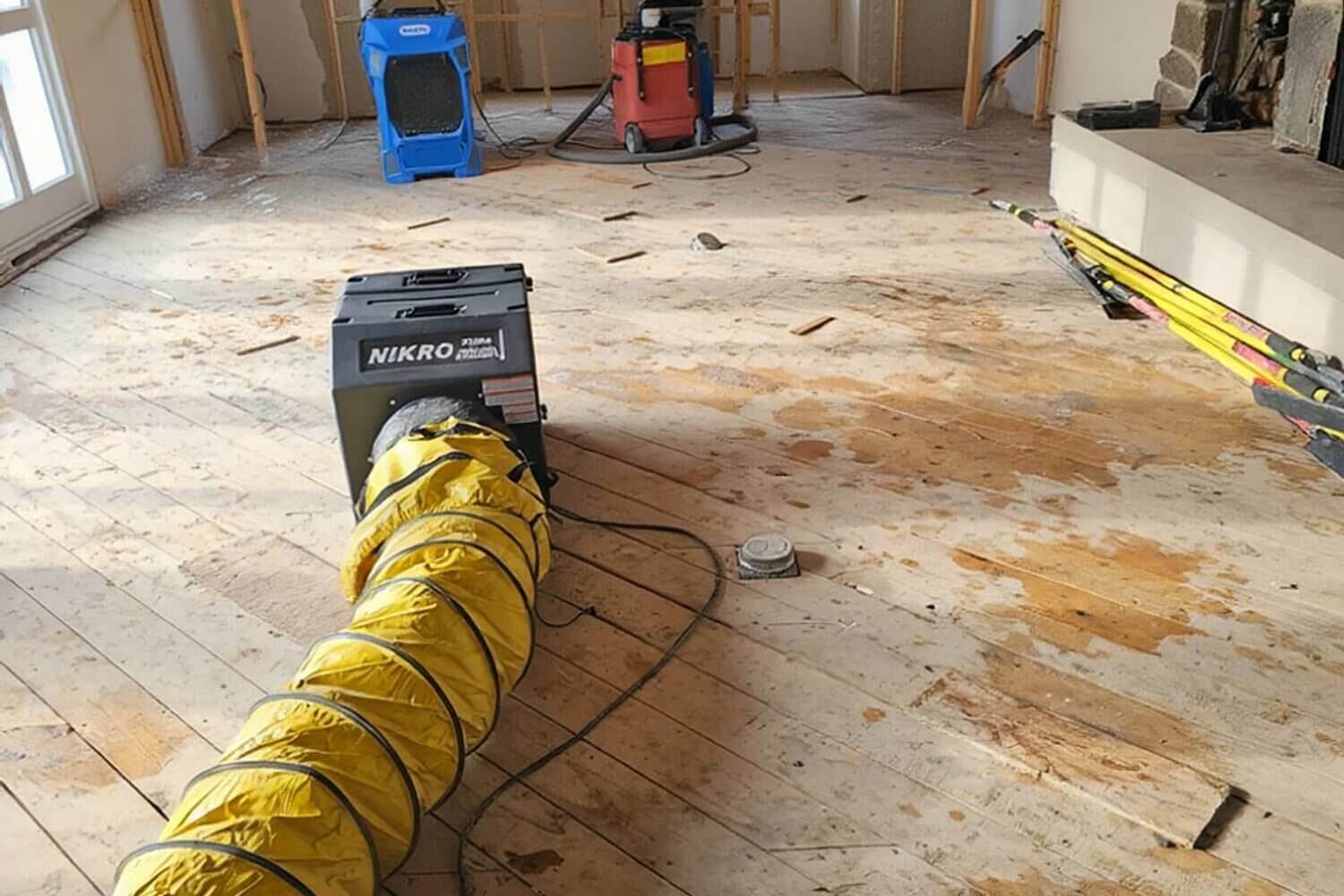
Park Slope brownstones are full of material you cannot re-buy at a lumberyard, and that changes what water mitigation means here. Parlor-floor oak runs unbroken from the front parlor to the back, plaster crown and ceiling medallions sit overhead, and the garden floor is almost always finished into a family room or a rental. When an upstairs branch line fails or a tub runs over, the job is less about ripping things out and more about getting old-growth wood and keyed plaster dry before the wood cups and the plaster lets go. Construction along Flatbush Avenue has also been tied to basement flooding in nearby brownstones, so the cause is not always inside your own walls.
We work deliberately because the finishes demand it. Before anything opens, we read the joist cavities and the backs of the baseboards with a meter, then pull standing water off finished garden-floor floors without tearing up boards a reading says will recover. Our water mitigation services close on a number, not a hand-test: air movers and dehumidifiers run until the framing and subfloor hit a verified dry standard, and we log every reading and photograph the whole loss for your insurer as we go. A crew dispatches from a Brownsville base, usually reaching the Slope in around 45 minutes depending on traffic, and a real person picks up at (347) 906-9419 at any hour. We document the loss; your carrier decides what it covers.
What we cover in Park Slope
- Source off, water off the finished floor — we shut the branch or valve feeding the leak and lift the standing water off garden-floor flooring before it wicks up the baseboards and into the walls.
- Original wood dried in place — parlor oak and a pine staircase get a floor-drying system that pulls moisture from above and below, so boards that will recover stay put instead of coming out.
- Plaster kept where it is sound — we cavity-dry behind keyed lath-and-plaster through small access points and take down only the sections that have sagged or lost their bond.
- Dried to a verified reading — we meter the wood, plaster, and subfloor daily and pull the equipment only at dry standard, with every reading logged for your file.
Full detail on this service: Water Mitigation in Brooklyn · or see every water damage service we provide in Park Slope.
Common questions in Park Slope
Water ran down my original staircase and across the parlor oak in my Park Slope brownstone. Can the boards be saved?
Often, if it was clean water and we get on it early. Because the parlor run is unbroken, we pull a baseboard and slide a floor-drying system that draws moisture from above and below the boards, metering them daily as they release it. Old-growth oak and a pine staircase are dense and worth the extra drying days when the readings say they will come back. Boards that have already cupped hard, lifted at the seams, or blackened from sitting wet generally have to come out, but we make that call with a meter on the wood itself, not by how it looks on the first day.
My garden-floor rental flooded during a wet stretch and there is construction on the block. Who pays for the mitigation?
It turns on where the water came from, which is exactly why we document the source so carefully. Water that entered through a rear or foundation wall during heavy rain is often treated as surface or groundwater and may fall under separate flood coverage rather than a standard homeowner policy. But if nearby excavation cracked a wall or altered the drainage and pushed water in, that can shift responsibility toward the construction party, and your documented readings and photos become the record for that argument. We map and photograph the entry point and the full wet footprint so whoever ends up covering it has a clear file. We document the loss; your carrier decides what it covers.
Will the drying equipment damage the original plaster in my Park Slope brownstone, and how many days does it run?
Plan on several days rather than hours, because dense old plaster and old-growth wood give up moisture slowly and we dry to a metered target, not a deadline. The equipment does not hurt sound plaster; air movers and dehumidifiers pull humidity out of the air, and we keep them positioned so they are not blasting a fragile ceiling directly. In fact drying the cavity promptly is what protects the plaster, since plaster that stays wet is what sags and de-bonds. We meter the walls, ceiling, and floors every day and pull the gear only once the numbers hold at dry.
It is the middle of the night and water is coming through my Park Slope ceiling. Will a real person answer?
Yes. A technician answers the phone live, any hour, not an answering service taking a message for the morning. Overnight is when a brownstone leak does its quiet damage — by sunrise the joist cavity and the plaster below have soaked up whatever was running. While you wait, shut the water at the fixture or the main, put a bucket under the drip, and move anything you can off the wet floor. Then call (347) 906-9419 and we roll from Brownsville.
Licensed, insured & trained to industry standards


Water down through a Park Slope brownstone? Call now.
A Brooklyn crew answers live 24/7 and rolls from Brownsville with its own drying gear. We stop the source, dry original wood and plaster in place where the meter says they will recover, and document the loss for your insurer. Call (347) 906-9419.
Call (347) 906-9419