Water Mitigation in Mill Basin, NY
A high tide backs up the canal behind a Whitman Drive house, and the basement takes water two ways at once: over the grade and up through the floor drain. We pump the volume out and start drying before it climbs the walls.
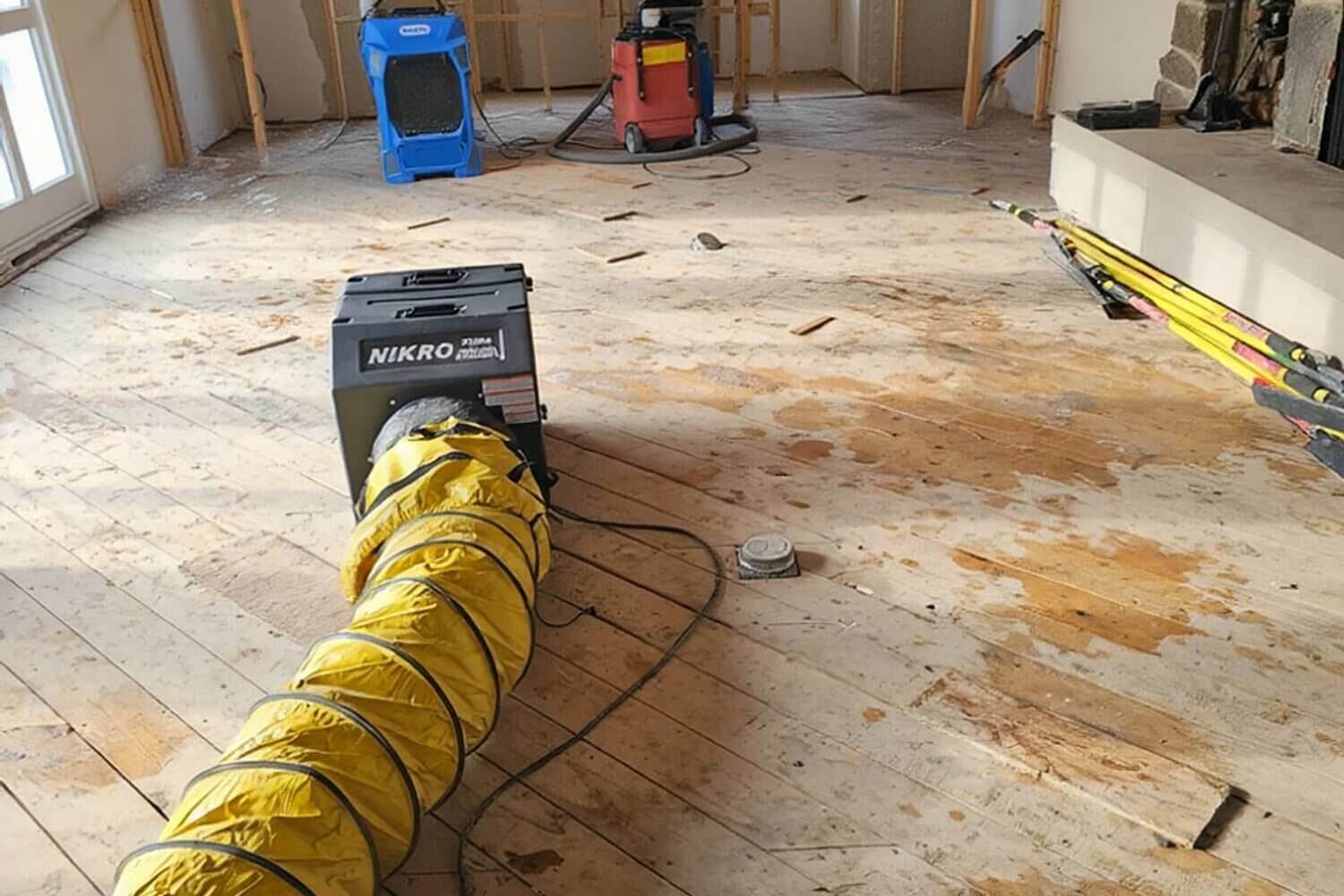
Mill Basin sits low against the tidal canals that finger off Jamaica Bay, and most of its single-family homes were built mid-century with basements and attached garages close to a high water table. When a storm or a high tide raises the basin, those spaces take water from two directions at once: over the outside grade and up through the floor drain as the sewer backs up. Nearly every property here falls inside an AE flood zone, so NFIP documentation is part of the job from the first hour, not something bolted on at the end. Emergency water mitigation in Mill Basin means stopping the spread, pumping out the volume, and drying the structure to a metered target before mold sets in.
We run it with equipment sized for the water. As a water mitigation company we carry truck-mounted extraction built for a flooded Mill Basin cellar, not just a portable unit, and we dispatch from a Brownsville base — usually about 45 minutes out, traffic depending. The crew pumps the standing water, checks the category, since a canal-and-sewer flood is contaminated rather than clean, and removes only the porous materials that cannot be saved. Then air movers and dehumidifiers run against the framing and the slab until the readings confirm dry. A real person answers at (347) 906-9419 at any hour, and we record the high-water mark, the source, and every reading for your file. We document the loss; your carrier decides what it covers.
What we cover in Mill Basin
- Volume out with truck-mounted power — extraction sized for a flooded cellar clears the standing water fast, before it wicks higher into the framing and the finished walls.
- Garage and basement as one job — when both took water at once, we work the whole lower level together and document each area on its own for the claim.
- Contaminated materials removed — a canal-and-sewer flood is Category 3, so soaked drywall, insulation, and flooring come out and the surfaces that stay get disinfected, not just dried.
- Dried and documented for NFIP — air movers and dehumidifiers run to a metered dry standard, with the high-water mark, category, and daily readings logged the way a flood claim needs.
Full detail on this service: Water Mitigation in Brooklyn · or see every water damage service we provide in Mill Basin.
Common questions in Mill Basin
My Mill Basin basement floods in bad storms and I carry an NFIP flood policy. What documentation does my adjuster actually need?
A flood claim runs on proof, so we build the file the adjuster expects: dated photos of the high-water mark on the walls before anything is removed, a room-by-room record of the damaged materials and their depth, moisture readings, and an itemized scope of what came out and why. You will also want a personal-property inventory of damaged contents for the contents side of the policy, and to file your proof of loss within the NFIP deadline. We hand you the loss documentation to attach to that filing. What we do not do is decide the payout: the carrier and the flood program do that from the record we provide.
The canal flooded my finished basement and the floor looks dry now. Is there still a problem?
Almost certainly. A surface that looks dry means nothing on a Mill Basin cellar, because the water sits locked in the wall cavities, behind the baseboards, and under the flooring, and the high water table keeps the ground around the foundation damp. That trapped moisture feeds mold over the following weeks whether or not the floor feels dry underfoot. We meter the hidden assemblies rather than trusting the surface, dry them to a verified standard, and bring the room's humidity down. On top of that, a canal flood was contaminated water, so anything porous it soaked needs removal, not just drying.
My garage and basement both took water at once. Do you handle the whole property or just one area?
The whole lower level. A canal flood does not respect the wall between an attached garage and the basement — it fills both, and drying one while the other stays wet just lets moisture migrate back. We extract and dry the garage and the basement together as one connected job, but we document each area on its own, with separate photos, readings, and materials lists. That keeps the claim clean if the policy treats the garage and the living space differently, and it makes sure nothing wet gets left behind a wall between them.
What should I do before your crew gets to my Mill Basin home?
Stay out of the flooded level until the power to it is off — canal water is contaminated and standing water with live outlets is dangerous. If the panel is dry and reachable, cut power to the basement and garage; if not, wait for us or an electrician. Do not run the furnace or any basement appliance that got wet. If you can do it safely from dry ground, shoot photos of how high the water reached before it drops, since that high-water mark matters for the flood claim. Then call (347) 906-9419 and a real person answers.
Licensed, insured & trained to industry standards


Canal flood in a Mill Basin cellar? Call now.
A Brooklyn crew answers live 24/7 and rolls from Brownsville with truck-mounted extraction sized for a flooded cellar. We pump it out, remove and disinfect what the water contaminated, dry the structure to a metered reading, and document the loss for your NFIP claim. Call (347) 906-9419.
Call (347) 906-9419