Hardwood Floor Water Damage in Staten Island, NY
The water heater in the lower level of your Todt Hill house lets go while everyone's asleep, and forty gallons find the wide-plank oak in the finished den before the tank stops draining. We answer live and set drying mats over that floor the same visit.
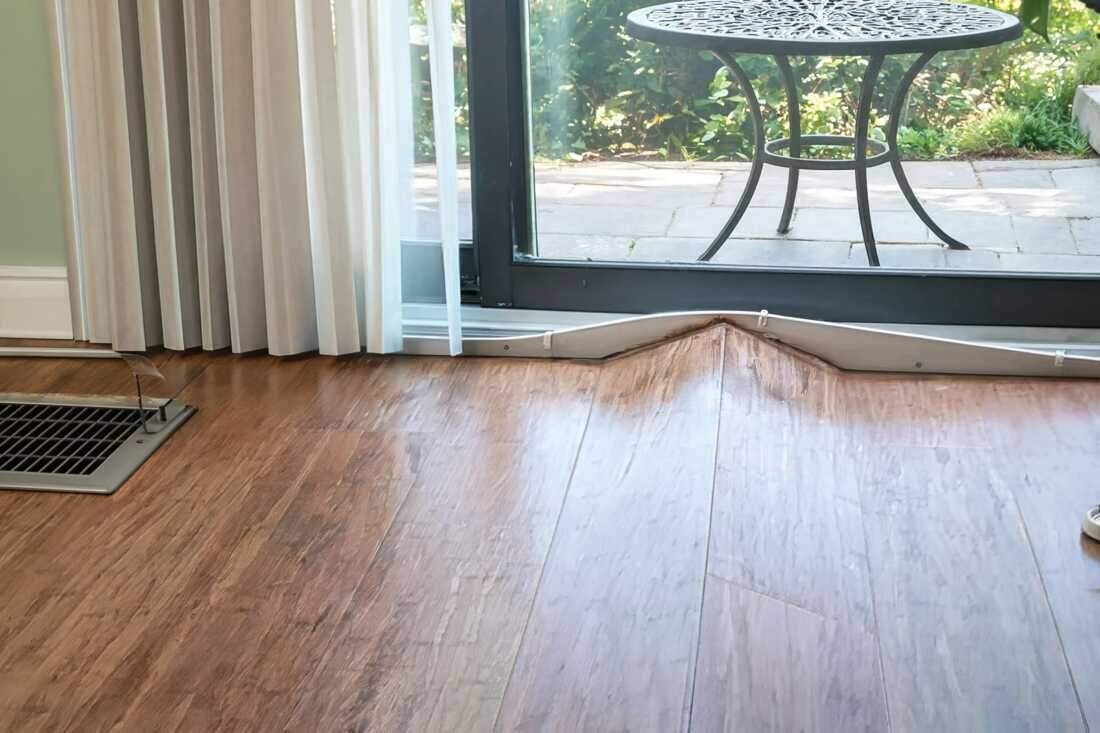
On Staten Island's hills, from Todt Hill to Grymes Hill and Emerson Hill, a lot of the detached houses finish the walk-out lower level into real living space with solid wide-plank oak underfoot, and that is the floor a failed water heater or a split washer line drowns first. Forty gallons out of a ruptured tank spreads fast across a flat floor and sinks into the seams, and because these houses sit into a slope, the water pools at the low wall and wicks back into the subfloor from there. Wide boards cup harder than narrow strip does, too: there is more width across each plank for the wet underside to swell against the drier top, so the ridges you feel underfoot come up pronounced.
Reliable Brooklyn Water Damage Restoration runs this from our Brownsville base, and the trip over the Verrazzano is usually about an hour, bridge and where on the island depending. You reach a real person when you call, not an answering service. A crew clears the standing water, then meters the wide oak and the subfloor as two layers and sets vacuum mats to pull the moisture up through the boards. Most clean-water floors dry in place without a full tear-out, but hardwood floor water damage repair on wide plank takes patience, because the extra width holds water longer and has to release it evenly or the board checks. We log readings daily and only pull the gear when the wood hits target. When a section is past saving, we show you the numbers behind that call rather than guess.
What we cover in Staten Island
- Vacuum mats on wide plank — sealed panels draw water up through solid boards so the floor stays down; wide oak cups hard, and mat drying is what settles it back flat.
- Two-layer moisture metering — a pin meter reads the finished oak and the subfloor separately, so the wet that pooled at the low wall gets dried to a real target underneath, not just on top.
- Cupping drawn back even — staged drying keeps a wide board from checking as it gives up water, settling the swollen edges down before they crown or crack.
- Board replacement when it's the only fix — planks buckled loose or split come up, get matched to the wide-plank stock, and are sanded and refinished into the field.
Full detail on this service: Hardwood Floor Water Damage in Brooklyn · or see every water damage service we provide in Staten Island.
Common questions in Staten Island
My water heater dumped a full tank onto the den floor. Since it's clean water, can the oak just be dried in place?
Usually yes, and a water heater is one of the better cases. Tank water starts clean, so caught the same day it's a drying job, not a demolition — mats over the wet run, metered daily, and a light refinish once the wood reads dry. Two things decide it. One is time: left a day or two, clean water picks up soil from the flooring and turns gray, and porous material it soaked may then need to come out. The other is depth — forty gallons that pooled at a low wall on a hillside can drive deep into the subfloor, so we meter the layer beneath before promising anything. Call and a crew heads over the Verrazzano.
Does wide-plank oak dry differently than the narrow strip floors most people have?
It does, and it's why we don't rush it. A wide board has more surface across its width for the wet underside to swell against the drier top, so it cups more pronounced and holds water longer than a narrow strip does. Dry it too fast and the outer face shrinks ahead of the core, which can check or split the plank. We stage the drying slower on wide oak, meter it daily, and let the moisture come out evenly across the full width. The payoff is a board that settles flat as one piece and takes a refinish, instead of one that dries hard on top and stays humped underneath.
My finished level opens to a crawlspace under the rest of the hillside house. Does that need drying too?
Often, yes, and it's easy to miss. In a house built into a slope, water that reaches the finished floor can run along the subfloor into an adjoining crawlspace, and a damp, closed crawlspace feeds moisture right back up into the wood above it — you dry the room, the floor reads better, then it creeps back because the space beneath is still wet. We meter into the crawlspace and set a dehumidifier there if the readings call for it, so the whole assembly the water touched dries, not just the finished surface you can see.
How do you decide which boards you can save and which have to be replaced?
The meter decides, not a hunch. Boards that only absorbed moisture and cupped almost always come back on solid 3/4-inch oak, so those we dry and later refinish. Boards that buckled loose from the subfloor, split along the grain, or took on contaminated water are past saving and get lifted and replaced. We read every plank and the subfloor on day one and show you the numbers, so you know which sections fall where before any work starts — no floor comes up until the reading says it has to.
Licensed, insured & trained to industry standards


Wide-plank oak cupping in your Staten Island home?
Call (347) 906-9419 now and a Brooklyn crew heads over the Verrazzano — a live person answers any hour. We extract the standing water, meter the oak and the subfloor, and dry water-damaged wood floors in place wherever they can be saved, with every reading logged for your carrier.
Call (347) 906-9419