Hardwood Floor Water Damage in Bay Ridge, NY
A supply line in an outside wall splits during a Bay Ridge cold snap and floods the parlor-floor oak by morning, before you're even awake. Get drying mats down before those boards cup and check in the dry winter heat that's already pulling the wood apart.
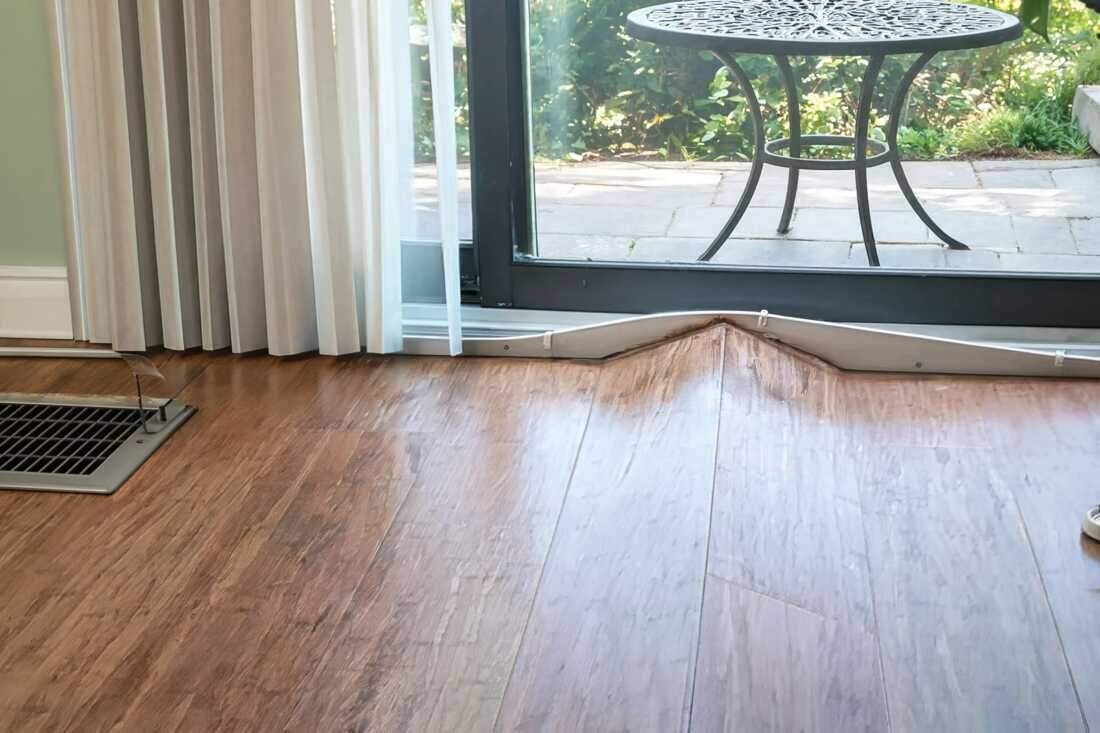
Bay Ridge hardwood takes water in two seasons and two ways. In winter, the brick row houses off the numbered streets run supply lines through uninsulated exterior walls, so a hard January freeze splits a pipe overnight and dumps water across the parlor-floor oak when it thaws. The rest of the year the trouble is below grade: plenty of homes here finished the basement with hardwood or engineered wood, and a backed-up sewer line near the Narrows sends water up through the floor during a heavy rain. Dry indoor heat then makes a winter loss worse, drawing moisture out of each board's face faster than its core and forcing the uneven cupping that ends in cracks.
We repair water-damaged hardwood floors here as two problems at once in winter: pull the water fast, then fight the cold while we dry. A dehumidifier loses efficiency below roughly 60°F, and the wood itself moves more slowly when it's cold, so we size the equipment and add air movers to the real conditions instead of a textbook. A pin meter reads each board and the subfloor separately, readings get logged daily, and hardwood floor water damage repair closes only when the wood hits its actual seasonal target, not when the surface feels dry. We're roughly 45 minutes out from our Brownsville base, and a real person answers around the clock, including the 3 a.m. February calls.
What we cover in Bay Ridge
- Vacuum-mat floor drying — sealed panels pull trapped water up through the boards so the parlor-floor oak stays in place instead of getting torn out.
- Cold-weather dehumidification — equipment rated for chilly basement air below 60°F, plus extra movers, so a January freeze doesn't stall the dry-down mid-job.
- Board-by-board metering — each plank and the subfloor read separately against the wood's real winter target, so mats come up only when the number holds, not the surface.
- Board replacement, then refinish — planks that buckled off the subfloor or split come up, get matched to the surrounding oak, and are sanded and finished into the field so the patch disappears.
Full detail on this service: Hardwood Floor Water Damage in Brooklyn · or see every water damage service we provide in Bay Ridge.
Common questions in Bay Ridge
A pipe burst in my Bay Ridge row house during a freeze and soaked the parlor-floor oak. Does the cold make drying take longer?
It usually does. Cold air holds less moisture, which sounds helpful, but dehumidifiers lose efficiency below about 60°F and the wood itself gives up water more slowly in the cold, so a winter burst-pipe floor often runs a day or two longer than the same job in July. We bring dehumidifiers rated for lower ambient temperatures, keep the room as warm as we practically can, and add air movers to make up the difference. The mats stay down until the meter confirms the boards and the subfloor have hit their target, however long that takes. Rushing it with heat is what checks and splits a floor drying in dry winter air.
My finished basement has hardwood and water backed up through the floor drain. Can that floor be saved?
It depends on what was in the water. A clean supply-line break is one thing; a sewer backup near the Narrows is Category 3, grossly contaminated, and that changes the plan. Finished wood we extract and treat quickly can sometimes be salvaged, but the porous layers under it — the subfloor sheathing and the bottom plates that soaked up contaminated water — are usually flagged for removal under IICRC S500. We assess each layer on its own and treat the subfloor with antimicrobial before any drying, because drying over contamination just seals it in. Clean-water oak and sewage-soaked oak look similar on the surface and get handled very differently underneath.
Will my Bay Ridge homeowner's policy cover a frozen-pipe floor?
A sudden, accidental pipe burst is one of the more commonly covered events on a standard policy, and the resulting hardwood damage usually rides along with it. The catch in a cold snap is heat: carriers can deny a frozen-pipe claim if the house was left unheated and empty, on the theory that the freeze was preventable. We document the burst location, the moisture mapping, and the daily drying log so the file reads as a sudden failure rather than neglect. Your carrier decides what's ultimately covered; our job is to hand the adjuster a clear, dated record to decide on, and where the policy allows, to bill it directly.
My Bay Ridge co-op has the postwar 3/4-inch strip oak, not the fancy prewar stuff. Does that dry and refinish the same?
It dries the same way and, honestly, it's forgiving to work with. The solid 3/4-inch strip oak laid in the postwar co-ops and attached houses here is dense, thick, and has plenty of wood above the tongue to sand into, so a floor caught while it's cupping almost always dries flat and takes a light refinish. It's also readily matched if a few boards are past saving, unlike the irreplaceable prewar stock a few neighborhoods over — new strip oak of the same width blends into a field cleanly. We still meter it board by board and dry to the species target; the plainer floor just gives us more room to work than a hand-laid one does.
Licensed, insured & trained to industry standards


Frozen pipe over your Bay Ridge hardwood? Call now.
Call (347) 906-9419 day or night and reach a live Brooklyn crew, not an answering service. We extract, run dehumidifiers sized for cold basement air, meter the oak and subfloor, and dry the boards in place where they can be saved, with the loss documented for your carrier. Winter heat pulls a wet floor apart fast, so the sooner the mats are down, the more boards come through flat.
Call (347) 906-9419