Hardwood Floor Water Damage in East New York, NY
The upstairs tenant's tub overflows in your two-family off Pennsylvania Avenue, and the water finds the floor register and pours down onto the parquet in the parlor below. We answer live and set drying mats before those tiles lock into a cupped shape.
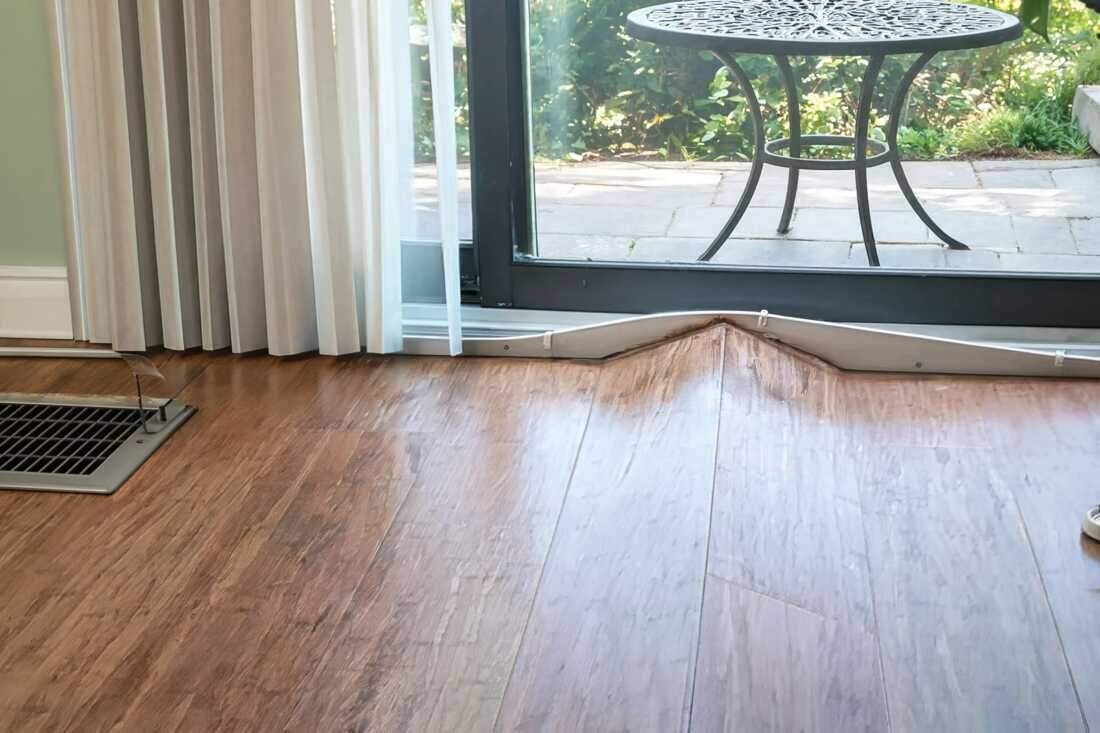
A big share of the water-damaged hardwood floors we dry in East New York sit in two-family houses where an upstairs overflow lands on the floor below. A tub left running, a toilet that overflows, a washer hose off the second-floor kitchen: the water pours through a floor register or a ceiling seam and pools on the parlor oak of the unit underneath. Many of the postwar brick houses on these blocks were finished with parquet tile, the little factory squares of oak fingers set in a checkerboard, and water gets into them through every seam between the squares. The tiles cup and their corners lift, and the pattern that makes the floor is exactly what lets the damage spread across the room.
We answer live, day or night, with no answering service in between, and a Brooklyn crew loads truck-mounted extraction and metering gear we own. On site we pull any standing water, read the parquet and the subfloor as two layers, and set vacuum mats to draw the moisture up through the wood rather than tearing a tiled floor out. Hardwood floor water damage repair on parquet tile is deliberate work: each square has to give up its water evenly or one tile curls while its neighbor stays flat, so we meter daily and dry to the wood's real target. We photograph the source and log the readings; we document the loss, and your carrier decides what it covers. From our Brownsville base we usually reach East New York in around 45 minutes, traffic depending.
What we cover in East New York
- Vacuum mats over the tile — sealed panels lift water up through parquet squares and the many seams between them, so the floor dries in place instead of coming up tile by tile.
- Parquet and subfloor metering — a pin meter reads the oak fingers and the layer beneath, so nobody calls a tiled floor dry off the one square you can see.
- Cupping settled square by square — even drying eases the lifted corners back down before a tile curls off its adhesive for good.
- Tile replacement kept clean — squares past drying come out individually, matched to the surrounding parquet, and refinished into the field so the checkerboard reads unbroken.
Full detail on this service: Hardwood Floor Water Damage in Brooklyn · or see every water damage service we provide in East New York.
Common questions in East New York
The water came from my upstairs tenant's tub overflowing. Is that clean water, or does it change what has to come out?
A clean tub or supply overflow starts as Category 1 water, so caught the same day it's a drying job: the parquet gets extracted, matted, and dried in place with little demolition. What changes it is time and where it traveled: left a day or two, that clean water picks up soil from the flooring and the ceiling it ran through and degrades toward gray, and if it passed through an old plaster ceiling on the way down it can carry that with it. A toilet overflow with waste in it is contaminated from the start and handled differently. We test and log the water class the minute we arrive, so what stays and what goes is decided on evidence.
My parlor has the old parquet tile squares. If some are ruined, can single tiles be swapped without redoing the whole floor?
Usually, yes — that's one advantage of a tiled floor. Individual squares that curled off their adhesive or split can be lifted out and replaced without disturbing the field around them, then the repair is sanded and refinished into the surrounding parquet so the checkerboard reads continuous. Matching the oak-finger pattern and the finish is the fussy part, and an exact color match on a floor that's aged decades takes blending. We dry and save whatever we can first, since a saved original tile always beats a new one, and only replace the squares the meter says are past drying.
How long does a parquet tile floor take to dry after an overflow like this?
Plan on several days to about a week under the mats. Parquet tile is a mosaic of short oak pieces over adhesive, and each seam has to release its moisture at the same steady pace or a tile dries too fast and curls. That means no shortcuts — pushing it hard is how you lose squares that would otherwise have settled flat. We meter the tiles and the subfloor every day and hold the drying even, pulling the equipment only when both layers read at their dry target. If the water reached carpet or a pad in another room, those dry faster than the wood, on their own timeline.
What drives the cost of repairing a water-damaged parquet floor?
Three things, mainly: how much of the floor can be dried versus replaced, whether the subfloor under it got wet too, and the size of the area that stayed cupped past drying. Drying in place and refinishing is far cheaper than tearing out and relaying, so we push every salvageable tile toward drying first. Matching and blending replacement squares into an aged parquet pattern takes labor, and any subfloor repair underneath adds to it. We meter first and show you which sections dry and which don't, so the scope — and the number your carrier sees — rests on the readings, not a rough guess.
Licensed, insured & trained to industry standards


Parquet cupping in your East New York home? Call now.
A Brooklyn crew answers live 24/7 and rolls from Brownsville with extraction and drying gear. Call (347) 906-9419. We pull the standing water, meter the parquet and subfloor, and dry your water-damaged wood floor in place where it can be saved, with the loss logged for your claim.
Call (347) 906-9419