Hardwood Floor Water Damage in Coney Island, NY
A nor'easter pushes bay water into a Sea Gate bungalow, or a riser lets go high in a Surf Avenue tower and rides down the deck. Either way the oak cups by morning, and if the water was salty, it won't dry on its own. We answer live.
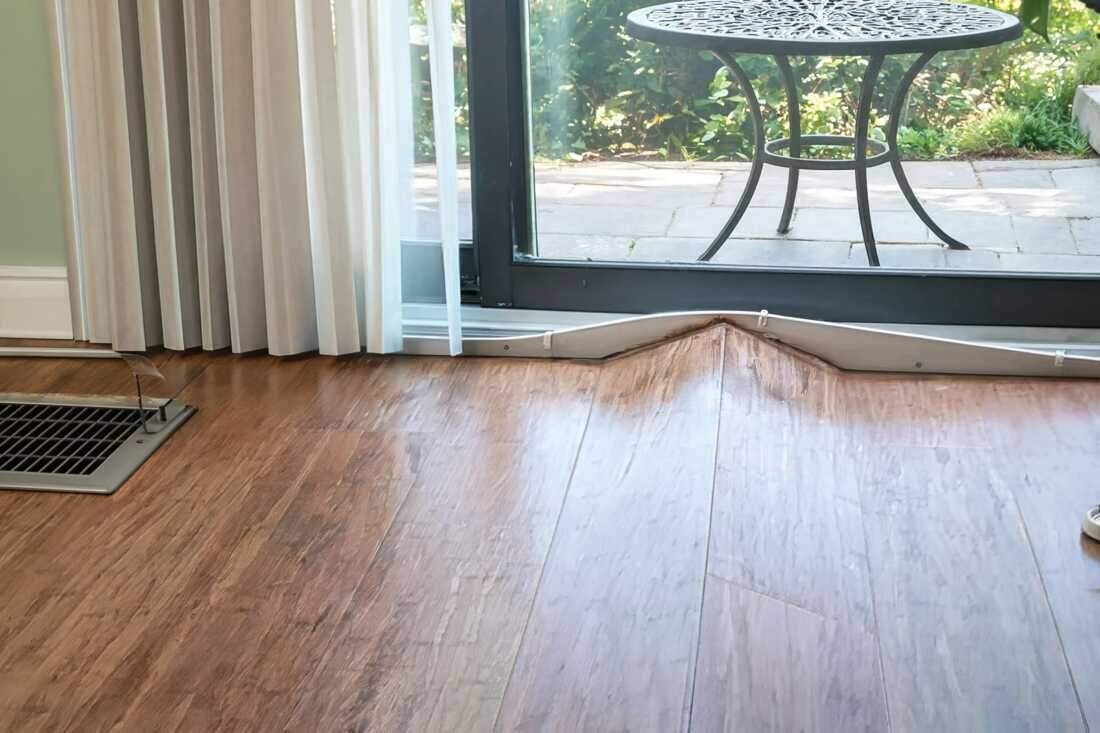
Coney Island floors take water two very different ways, and the salt is what sets this neighborhood apart. In the beachfront bungalows and Sea Gate homes, storm surge and a high tide push brackish water up through the slab and the framing from below, the same path that gutted ground floors during Sandy. In the towers along Surf and Neptune, it's old cast-iron risers and supply lines giving out and sending clean water across an apartment before anyone's home. Clean water and salt water look alike on the boards; they don't dry alike underneath.
Salt is the reason a surge floor won't just dry out. Salt soaked into the grain keeps drawing moisture out of the sea air long after the flood drains, so a floor that reads dry to the hand can sit wet for weeks and crown anyway. So we repair water-damaged hardwood floors here by flushing the salt residue out first, then metering every board against its species target and running heavier dehumidification to hold the room dry while the wood lets go. Hardwood floor water damage repair after a surge is a rinse-then-dry job, not a plain dry-out. You get a daily moisture log, and we record whether the source was surge, a sewer backup, or a pipe — because a flood policy and a homeowner policy handle those three very differently. From our Brownsville base we usually run the peninsula in roughly 45 minutes, traffic depending, and a live person answers any hour.
What we cover in Coney Island
- Salt rinse before drying — we flush the residue out of the grain first, so the wood actually releases its moisture instead of pulling more back from the salt sea air.
- Vacuum drying mats — sealed panels pull trapped water up through the planks, saving the floor where it can be saved rather than tearing it out.
- Board-by-board metering — every plank and the subfloor get a reading, so we dry deep to the real target and prove it on a daily log, not on how the surface feels.
- Replace and refinish only what's lost — buckled or contaminated planks come out and get matched into the field; the rest stays and gets sealed back up.
Full detail on this service: Hardwood Floor Water Damage in Brooklyn · or see every water damage service we provide in Coney Island.
Common questions in Coney Island
My Sea Gate floor took bay water in a nor'easter and there's white residue on the oak. Is the floor gone?
Not automatically. The surface residue cleans off; the real trouble is the salt that soaked into the grain, because it keeps pulling moisture from the air and can hold the boards wet long after the room reads dry. We rinse the salt out, meter deep into each plank, and run extended dehumidification to bring the moisture content down to the species target and keep it there. If the boards dried in time and aren't split or buckled, sealing and refinishing the floor is often realistic. Salt also corrodes the nails and any metal in the assembly, so we check the fasteners too. We read each room off the meter, not a guess.
A pipe failed in my Surf Avenue high-rise and soaked the hardwood. How fast should I call?
The same day if you can. Clean tap water is far kinder to oak than salt surge, but it still wicks under the finish within hours and starts the cupping. In a tower the leak also tends to find the deck and travel into the unit below, so the faster we extract and set mats, the smaller the job stays for everyone in the line. We answer the phone live around the clock and can usually reach Coney Island from Brownsville in roughly 45 minutes, traffic depending. Being clean water, it's the one case here that dries in place without a salt rinse first.
Will insurance pay for my Coney Island floor after a coastal flood?
It depends on how the water got in. Storm surge and tidal flooding fall outside a standard homeowner policy and go through a separate flood policy, while a burst pipe usually runs through the homeowner side, and much of Coney Island sits in a FEMA high-risk zone where flood coverage is effectively required for a mortgage. That distinction decides which carrier you file with, so we document the high-water line, the salt residue, dated photos, and moisture readings, and write up the source. We log the loss thoroughly; your carrier decides what's covered, and where the policy allows we bill it directly.
My apartment is on an upper floor in a Surf Avenue tower, so why did my oak cup after a flood that only hit the ground?
Because the flood takes down the building, not just the ground floor. A big surge drowns the boilers and pumps in the basement mechanical rooms, and when those go the whole tower loses heat for days or weeks. Humidity then spikes in every unit, and unheated, damp air is exactly what pushes a hardwood floor to swell and cup even where no water reached it. Any moisture that tracked up the stairwells and riser chases adds to it. So an upper-floor oak floor can cup from vapor alone after a storm. If yours went cupped or the apartment stayed musty in the weeks after a flood, it's worth having us meter the boards and the air, because drying the room is what settles them back.
Licensed, insured & trained to industry standards


Coney Island floor cupping? Call before the salt sets.
A real person answers 24/7, never a service. We bring our own mats, meters, and dehumidifiers, flush the salt from the grain, dry the boards to a verified reading, and document the loss for your carrier. Salt trapped in the wood keeps it wet for weeks, so the sooner it's rinsed and metered, the more of your floor comes back. Call (347) 906-9419.
Call (347) 906-9419