Basement Flood Cleanup in Bushwick, NY
A plumbing stack corrodes through inside a converted Morgan Avenue factory building and drains a full floor of water down onto the wide cellar slab below. That is a routine Bushwick call. We pump it out, clean up the wreckage, and dry the space before mold sets in.
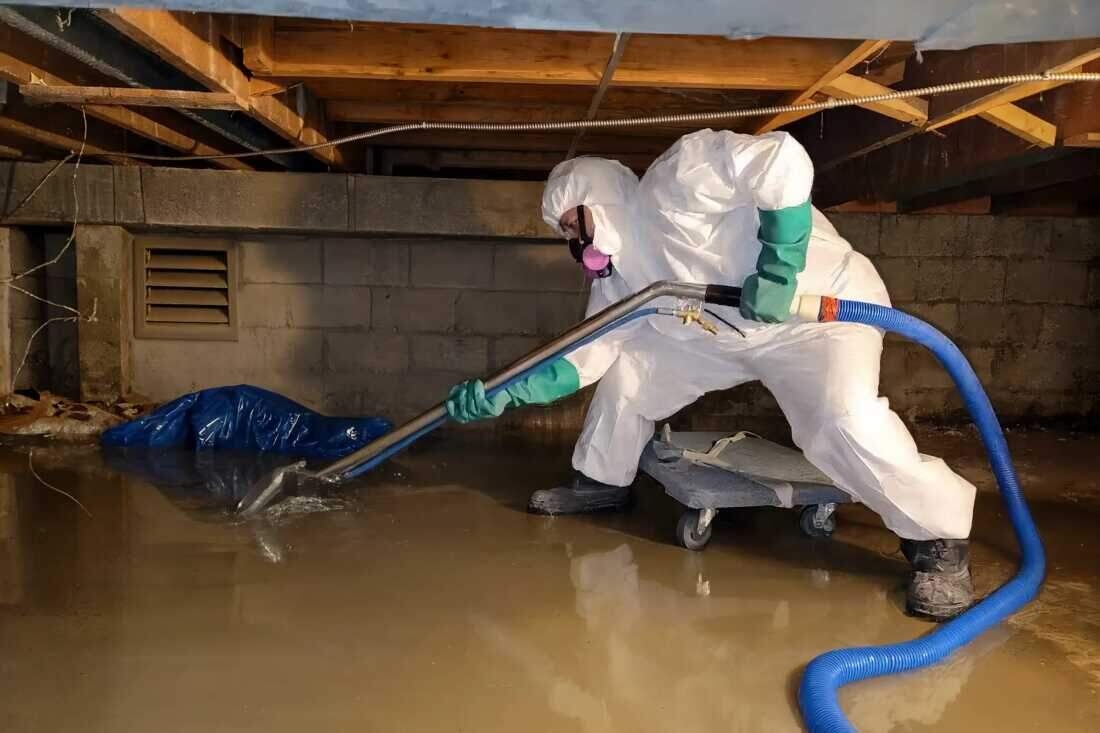
Basement flood cleanup in Bushwick keeps running into the same building type: the old factory or warehouse turned into lofts. From Morgan and Bogart over to the Knickerbocker Avenue blocks, these conversions sit on a broad below-grade level that once held machinery and now holds tenant storage, a boiler, and rows of gear, and that wide-open slab is where water pools when a corroded stack lets go upstairs or a supply line splits inside a wall. The water spreads flat and fast across bare concrete, so by the time anyone traces the sound, a large flooded basement is already soaking storage and creeping into the framing. Our basement flood cleaning service takes it end to end: pump-out, muck-out, disinfection, and metered drying, all under one crew.
Concrete is the catch. People assume a slab cannot be hurt by water, so a basement flood cleanup company that just wet-vacs the surface and walks calls it done — but a slab holds moisture deep in the pour and against the cold-joint at the base of the walls, and that trapped water feeds mold in the sill and anything porous sitting on the floor. We answer live at any hour, never an answering service, and roll from our Brownsville base, usually into Bushwick in around 25 to 35 minutes depending on traffic. We pump the standing water, disinfect if it came up a drain, and run drying gear until a meter says the slab and the base of the walls actually read dry.
What we cover in Bushwick
- Clear the standing water — submersible and truck-mounted pumps pull the water off a wide Bushwick cellar slab, working the low spots and the base of the walls where it collects.
- Muck out and haul away — soaked tenant storage, ruined cardboard, and the silt a flood spreads across the floor come out so the slab is clear enough to dry.
- Clean and disinfect — the surfaces the water touched get cleaned and sanitized, and if the flood came up a drain we treat it as Category 3 contamination rather than mopping it away.
- Dry the concrete to a number — air movers and dehumidifiers run on the slab and the base of the walls until a moisture meter confirms the concrete has given up its water, not just dried on top.
Full detail on this service: Basement Flood Cleanup in Brooklyn · or see every water damage service we provide in Bushwick.
Common questions in Bushwick
A stack let go on an upper floor of my converted Bushwick loft and the water ended up down in the cellar. How do you dry a space that big?
We scale the gear to the slab. On a wide below-grade level in one of these factory conversions we pump the standing water first, then set enough air movers and dehumidifiers to cover the whole floor and read the concrete on a meter across the room, not just at one spot. Water that fell from an upper floor also soaks whatever it passed through on the way down, so we check the framing and the ceiling below the break too. The room leaves dry to a reading, not dry because it looks dry.
It is a concrete floor. Do you really need to dry it, or can I just pump the water and open the doors?
Concrete needs drying, and it is the part people skip. A slab looks dry on top while it is still holding water deep in the pour and against the cold-joint where the floor meets the wall, and that trapped moisture is what feeds mold in the sill and anything porous left on the floor. Pumping and airing it out gets the surface, not the slab. We run dehumidifiers and meter the concrete until the reading comes down, which is the difference between dry and dry-looking.
The flooded level is shared storage for the whole loft building. Will insurance cover the cleanup?
It depends on the cause and on how the building is set up. A burst supply line or a failed appliance is sudden and accidental and usually falls under a policy; a drain or sewer backup is often excluded without a backup rider. In a converted building the shared cellar may sit under the building's own coverage while a tenant's stored goods sit under a renters policy, so more than one carrier can be involved. We document the loss unit by unit where storage is separated — photos, meter readings, a drying log — and bill the insurer directly where allowed. Your carrier decides coverage. See our insurance claims guide.
Is a real person actually answering in Bushwick at 2 a.m., or will I get a callback?
A real technician answers live, any hour, with no answering service in between. You tell us the address and what is flooding, and we dispatch the nearest crew right then. From our Brownsville base a Bushwick call is usually around 25 to 35 minutes depending on traffic. While we drive, shut the water at the valve if you can reach it and start carrying whatever is still dry up off the cellar floor. Call (347) 906-9419 and someone picks up.
Licensed, insured & trained to industry standards


Cellar flooding under your Bushwick loft? Call now.
A live person answers 24/7, and our crew rolls from Brownsville, usually into Bushwick in around 25 to 35 minutes depending on traffic. Every hour the water sits on the slab, it soaks deeper into the concrete and the framing and takes more of the room with it. We pump it out, clean up the wreckage, dry the concrete to a meter, and document the loss for your carrier. Call (347) 906-9419.
Call (347) 906-9419