Basement Flood Cleanup in Crown Heights, NY
A cloudburst overwhelms the sewer under Eastern Parkway and the shared basement of your six-unit building floods around the boiler and the tenant storage bins. We pump the cellar out, disinfect what the backup touched, and dry the slab and block walls to a meter reading.
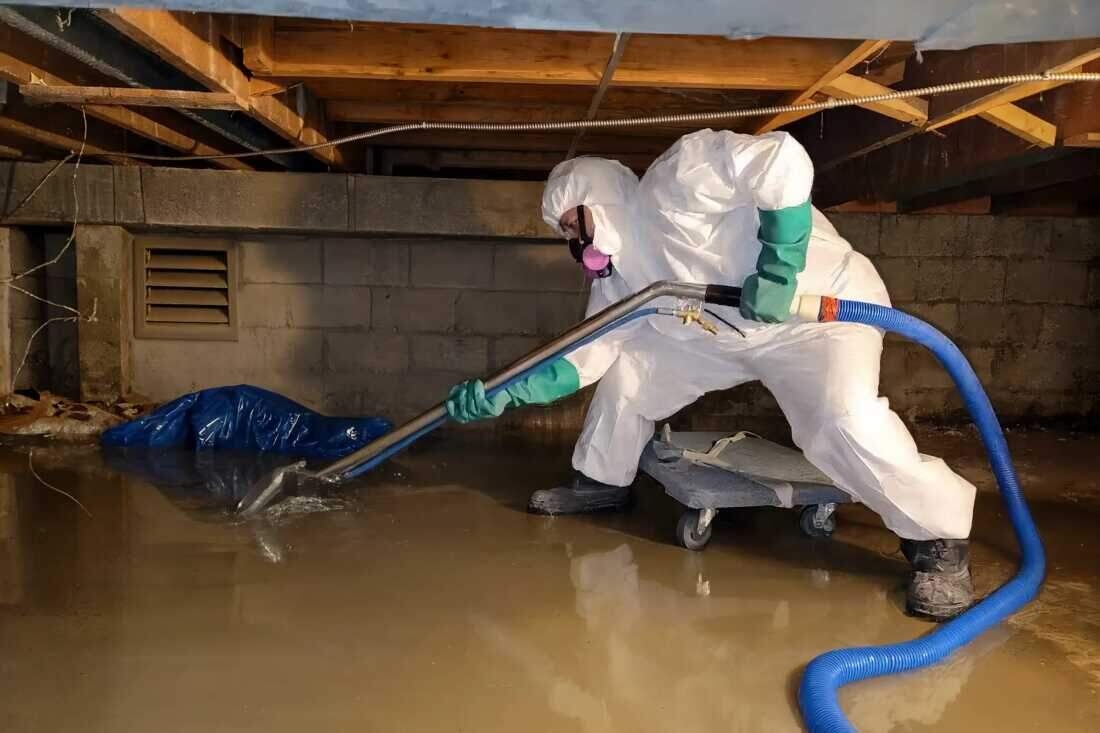
In the prewar apartment buildings that line Eastern Parkway, Nostrand, and Franklin, basement flood cleanup usually means the shared below-grade level, not a single unit. Four- to six-unit buildings keep the boiler, the laundry, and the tenant storage bins on the lowest floor, and that floor fills when a heavy rain overwhelms the older combined sewer and shoves water back up the cellar floor drain. The water settles into the slab, the base of the block walls, and whatever residents stored down there, and a basement flood cleaning service that stops at pumping leaves the block saturated and the room contaminated. We run the whole job: pump-out, muck-out, sanitizing, and drying to a metered reading.
The crew runs out of our Brownsville base, so a Crown Heights job is usually inside the hour, and a live person takes the call at any time. We pump the standing water, haul out the soaked storage and silt, disinfect when the source was a sewer backup, then set air movers and dehumidifiers and read the slab and walls on a meter until they test dry. Basement water damage in a shared cellar is easy to underestimate, because concrete and cinderblock hold water long after the surface looks clear, and a room left damp grows mold within about a week. Every step gets photographed and logged so you, your co-op board, or your managing agent has a clean record, unit by unit where storage bins are involved.
What we cover in Crown Heights
- Shared-cellar pump-out — submersible pumps clear deep water from the boiler room, laundry, and storage when the floor drain has already surcharged and given up.
- Muck-out and sanitizing — we remove ruined storage and silt from the bins, then disinfect when a sewer backup left the water contaminated Category 3.
- Structural drying — air movers and dehumidifiers run on the slab and block walls until they read dry on a meter, not just dry to the touch.
- Loss documentation — photos, moisture readings, and a material log for your carrier or co-op board, bin by bin where residents' storage was hit.
Full detail on this service: Basement Flood Cleanup in Brooklyn · or see every water damage service we provide in Crown Heights.
Common questions in Crown Heights
The shared basement backed up through the floor drain after that last heavy rain. Can you pump it and dry it the same day?
Usually, yes. A live person answers around the clock, and a Brownsville crew typically reaches Crown Heights inside the hour. We pump the standing water first, which for an average cellar takes an hour or two, then pull out the soaked storage and start drying. Because a sewer backup is contaminated water, we also disinfect the slab and the base of the walls before the dehumidifiers go in. If the boiler took on water, we'll flag it for a licensed tech before it's fired back up. Call (347) 906-9419 anytime.
Tenant storage bins in the basement all flooded. Whose insurance covers what got ruined down there?
The stored belongings are usually each resident's own property, which their renters or HO-6 policy covers, not the building's master policy, so a clean per-bin record is what each person needs to file. The building's side, the structure and the mechanicals, goes on the co-op or building policy. We document the loss bin by bin before anything moves and keep the building damage separate from residents' contents, so nobody's claim gets tangled. Whether any of it is covered is the carrier's call, not ours.
Do I really need the concrete dried, or can we just pump the water and air the basement out?
Pumping is only half of it. Concrete and the block foundation walls are porous and hold water long after the surface looks dry, and a shared cellar that stays damp grows mold within about a week, right next to the boiler and the storage everyone uses. We read the slab and walls on a moisture meter and keep the equipment running until they actually test dry. Skipping that step is exactly how a flooded Crown Heights basement turns into a building-wide mold problem a month later.
Will the building's insurance cover a sewer backup in the shared basement?
Only if the building's policy carries a sewer or water-backup endorsement, because standard coverage excludes backups through the drain, which is exactly how a cellar under these avenues floods in a hard rain. Water that rose in over the ground from the street is a separate flood question. We document the loss in full, with photos, moisture logs, and an itemized scope for the board or managing agent, but the carrier decides what's covered. We're glad to hand that file straight to the adjuster once a claim is open.
Licensed, insured & trained to industry standards


Flooded shared basement in Crown Heights? Call now.
A live person answers 24/7 and a Brooklyn crew heads your way. We pump, sanitize, dry to a meter, and document the loss for your carrier. Call (347) 906-9419.
Call (347) 906-9419