Ceiling Water Damage in Coney Island, NY
After a wind-driven storm off the water, the ceiling in your boardwalk-side Coney Island bungalow browns and starts to bow over the back bedroom. Rain drove in through worn flashing and soaked the attic insulation, which sat wet on the drywall for days before the stain showed.
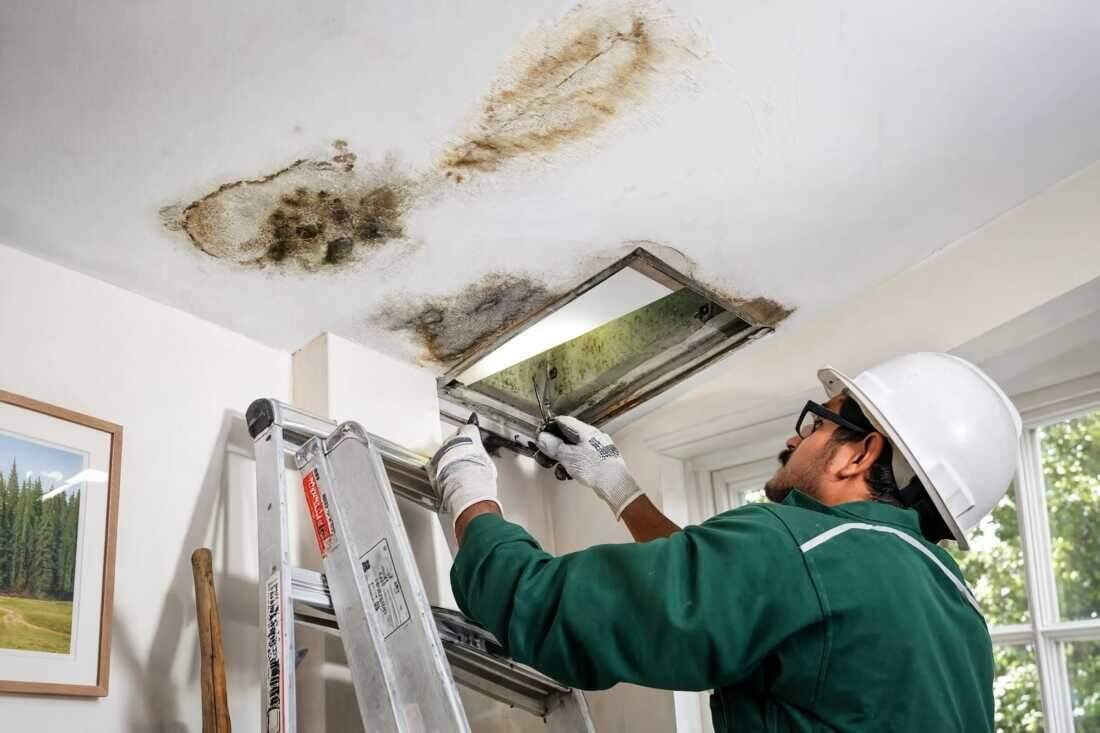
The older bungalows near the Coney Island boardwalk take on ceiling water in a way the high-rises do not. Wind-driven rain off the water works in under worn flashing or a lifted shingle, soaks the attic insulation, and pools on the back of the top-floor ceiling, so the stain shows up as a spreading brown ring days after the storm that caused it has passed. Because the wet insulation holds the water against the drywall, the panel can bow and sag long before anyone connects it to the weather. Sorting the entry point on the roof from the damage below is the first half of ceiling water damage repair; drying the attic cavity and rebuilding the ceiling is the second.
We are based in Brownsville and reach Coney Island in roughly 45 minutes, with a live person answering the phone at any hour, not an answering service. On site we trace the leak to its real origin at the flashing or shingle, pull the soaked insulation that will not dry, and meter the ceiling cavity behind the surface rather than reading the stain. A water damage ceiling fix that stops at the visible ring leaves saturated insulation packed against the drywall, so it ghosts back through fresh paint and breeds mold in the dark attic bay; we run our own air movers and dehumidifiers until the joists and insulation read genuinely dry, then rebuild and seal with a stain-blocker. We handle leaks that come through the roof and the plumbing, not storm surge or brackish flooding off the water, which is a separate specialty. We document the loss in writing as we work; your carrier decides what is covered. Call (347) 906-9419 and a crew rolls.
What we cover in Coney Island
- Trace the entry above — worn flashing, a lifted shingle, or a roof seam letting wind-driven rain into the attic, or an upstairs source, found at the real origin before we open the ceiling.
- Controlled drain and strip-out — a bulging, water-heavy panel gets relieved on a covered floor on our terms, and the soaked attic insulation that will not dry comes out instead of holding water against the drywall.
- Meter and dry the attic cavity — readings off the joists and remaining insulation behind the surface, then air movers and a dehumidifier until the framing tests dry all the way through, not just to the touch.
- Drywall and stain-blocker rebuild — the ruined board comes out, new gypsum goes up, then tape, a skim coat, and a stain-blocking primer so the storm stain never reappears through the finish.
Full detail on this service: Ceiling Water Damage in Brooklyn · or see every water damage service we provide in Coney Island.
Common questions in Coney Island
My bungalow ceiling only stains after a storm and dries between them. Is that the roof and not a pipe?
That storm-then-dry pattern points straight at the roof, not the plumbing. A pipe leaks the same in any weather, so a top-floor ceiling that wets during wind-driven rain and eases off afterward is the signature of water driving in under worn flashing or a lifted shingle and soaking the attic insulation. We meter the ceiling to map the wet footprint, then trace it up to the entry point at the roof before opening anything. Fixing where the rain gets in and pulling the wet insulation is the real repair; painting the stain just waits for the next storm off the water to bring it back.
The wet section of my Coney Island ceiling is starting to sag. What is holding it down?
Usually a load of soaked attic insulation sitting on top of the drywall. Wet insulation is heavy, and it holds the water right against the panel, so the ceiling bows and can drop a section with little warning once the board gives up. Do not poke it to drain it — keep people out from under it and call. When we arrive we relieve the panel safely on a covered floor on our own terms, pull the saturated insulation off it, then dry the bay. Getting a crew in at the sag stage almost always saves more of the ceiling than waiting for a piece to come down.
Could mold be growing in my attic even though the ceiling looks like it is drying?
It is a real risk, especially here. Damp attic insulation and a dark, still bay near the water are close to ideal for mold, and spores can take hold within two to three days of the framing staying wet. The ceiling surface can look like it is drying while the insulation and joists above stay soaked, which is exactly where it settles in unseen. That is the case for a proper dry-out rather than a coat of paint over the stain. We pull the wet insulation, dry the cavity to a verified reading, and check the bay before we close it, so moisture is not sealed in behind fresh board.
Do you handle flooding from the ocean, or only leaks from the roof and pipes?
We handle the water that comes in through the roof and the plumbing — storm leaks through flashing and shingles, burst pipes, and appliance or bathroom failures. We do not take on ocean flooding, storm surge, or brackish water pushed in off the water, which is a separate specialty with its own equipment and insurance track. If wind-driven rain came through the roof and is now showing on your ceiling, that is squarely our work, and we document it thoroughly for your carrier. If the surge itself came into the house, we will be straight with you and point you to the right help rather than take on something outside what we do.
Licensed, insured & trained to industry standards


Storm-stained bungalow ceiling on Coney Island? Call now.
A live person answers 24/7 and a crew rolls from our Brownsville base for Coney Island. We trace the entry, pull the wet insulation, dry the attic bay to a reading, rebuild the ceiling, and document the loss. Call (347) 906-9419.
Call (347) 906-9419