Ceiling Water Damage in Park Slope, NY
A brown ring blooms across the parlor-floor plaster of your Carroll Street brownstone, and the pinhole that caused it sits two rooms away in a supply line that runs sideways through the joists. Guess where to cut and you lose original plaster you cannot buy back.
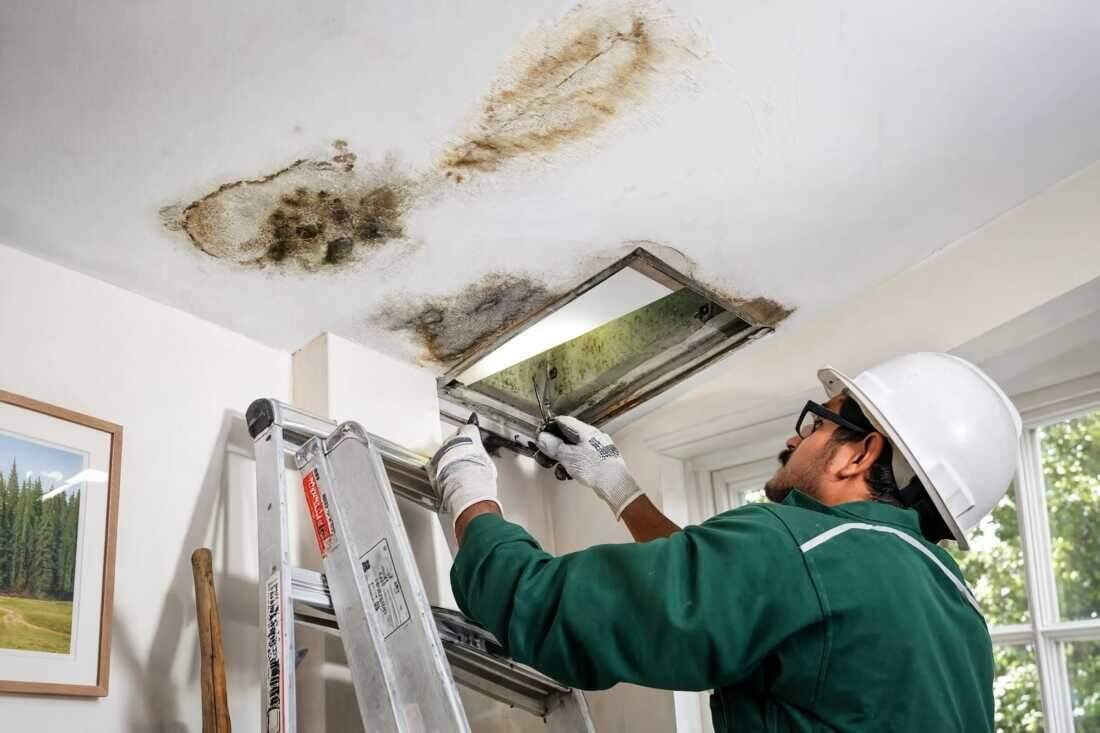
Park Slope's Italianate and Queen Anne brownstones carry some of the oldest plumbing in Brooklyn, and the way it is run is what makes a ceiling stain here so misleading. First-generation supply lines cross the joist bays horizontally, so a single pinhole can weep for weeks and let the water travel the length of the lath before it surfaces as a ring, often two rooms from the pipe that failed. The finish it comes through is original lath-and-plaster, which soaks up moisture and holds it far longer than modern drywall. Cutting where the stain shows is how a repair misses the leak and destroys good plaster in the bargain; real ceiling water damage repair traces the source to the exact pipe first, then dries the old assembly and rebuilds only what has to go.
We work out of Brownsville and reach Park Slope in roughly 45 minutes through most of the day, with a live person on the phone at any hour, never an answering service. Our IICRC-certified crew scans the lath-and-plaster with an infrared camera and a moisture meter to follow the water back to the exact supply line before opening a thing, so we save as much of the original ceiling as the wet footprint allows. A water damage ceiling fix on old plaster fails if the cavity stays wet, so we dry the assembly to a verified number, then skim the patch to match the surrounding plaster so it disappears under paint rather than reading as a flat drywall square. We document the loss for your insurer as we go. This is careful ceiling repair on original detailing, not a rip-and-replace. Call (347) 906-9419 and a crew moves.
What we cover in Park Slope
- Trace the horizontal run above — a pinhole in a first-generation supply line crossing the joists, an upstairs bathroom, or a fixture branch, followed back with infrared to the exact pipe before we open the plaster.
- Controlled drain and make-safe — a bulging, water-heavy section of plaster gets relieved on a covered floor on our terms, with power cut to any wet fixture, rather than dropping a heavy slab on the parlor.
- Meter and dry the lath and joist cavity — readings behind the plaster, then air movers and a dehumidifier held on the old assembly until the lath, plaster, and joists test dry all the way through.
- Plaster-matched, stain-blocked rebuild — we replace only the ruined section, skim the patch to match the original plaster profile, and seal it with a stain-blocking primer so the ring never ghosts back through paint.
Full detail on this service: Ceiling Water Damage in Brooklyn · or see every water damage service we provide in Park Slope.
Common questions in Park Slope
My brownstone ceiling is original plaster. Can you save it, or do you just rip it out for drywall?
We save as much of the original as the water lets us. The point of tracing the leak with infrared before we open anything is to keep the cut as small as the wet footprint, so a slow pinhole that soaked one bay does not cost you a whole ceiling of plaster you cannot replace. Where a section is too far gone or the keys have let go of the lath, we patch it and skim the new work to match the surrounding plaster profile, not slap in a flat drywall square. The goal is a ceiling that reads original once the paint is back, not a rip-and-replace.
The stain is in the front parlor but I can't find any pipe up there. Where is it actually leaking?
Almost certainly not where the ring is. These houses run first-generation supply lines sideways through the joist bays, so a pinhole can weep at the back of the house and the water rides the lath forward until it drips through the plaster near the front windows. That is why guessing at the wet spot wastes plaster and still misses the leak. We scan the assembly and read the framing on a meter to follow the water back to the exact pipe, then fix it at the source. The stain is just where the plaster finally gave the water somewhere to come out.
Will my insurance pay to restore the original plaster instead of swapping it for drywall?
Sudden, accidental water — a failed supply line rather than years of slow neglect — is often covered, and how the ceiling gets put back can depend on your specific policy and any restoration coverage on the house. We help by documenting the loss thoroughly: the source, dated photos, moisture readings, and the extent in writing, including the original plaster construction so it is on the record. We are honest about the line — we give the claim a solid footing, but your carrier decides what is covered and to what standard. We do not promise an approval we cannot control, and we log your unit's damage cleanly for the adjuster.
A wet section of my parlor ceiling is starting to sag. Is it about to come down?
Treat sagging plaster as a real hazard, because it is heavier than drywall and can drop a solid slab with little warning once the keys behind the lath soak through and let go. Do not press on it or try to poke it to drain — keep people out from under it and call. When we arrive we relieve the section safely on a covered floor on our own terms, before it fails on its own, then read the cavity and dry it out. Getting a crew in at the sag stage usually saves far more of the ceiling than waiting until a piece has already come down.
Licensed, insured & trained to industry standards


Ring spreading on your Park Slope plaster ceiling? Call now.
A live person answers 24/7 and an IICRC-certified crew rolls from our Brownsville base for Park Slope. We trace the leak to the pipe, dry the old plaster to a reading, restore the ceiling to match, and document the loss. Call (347) 906-9419.
Call (347) 906-9419