Emergency Water Damage in Bedford Stuyvesant, NY
Saturday night on a brownstone block near Halsey Street, and a steam radiator valve on the parlor floor fails at the union. Hot water spreads across the original pine, finds a seam, and drips through the medallion below. Call and a real person picks up.
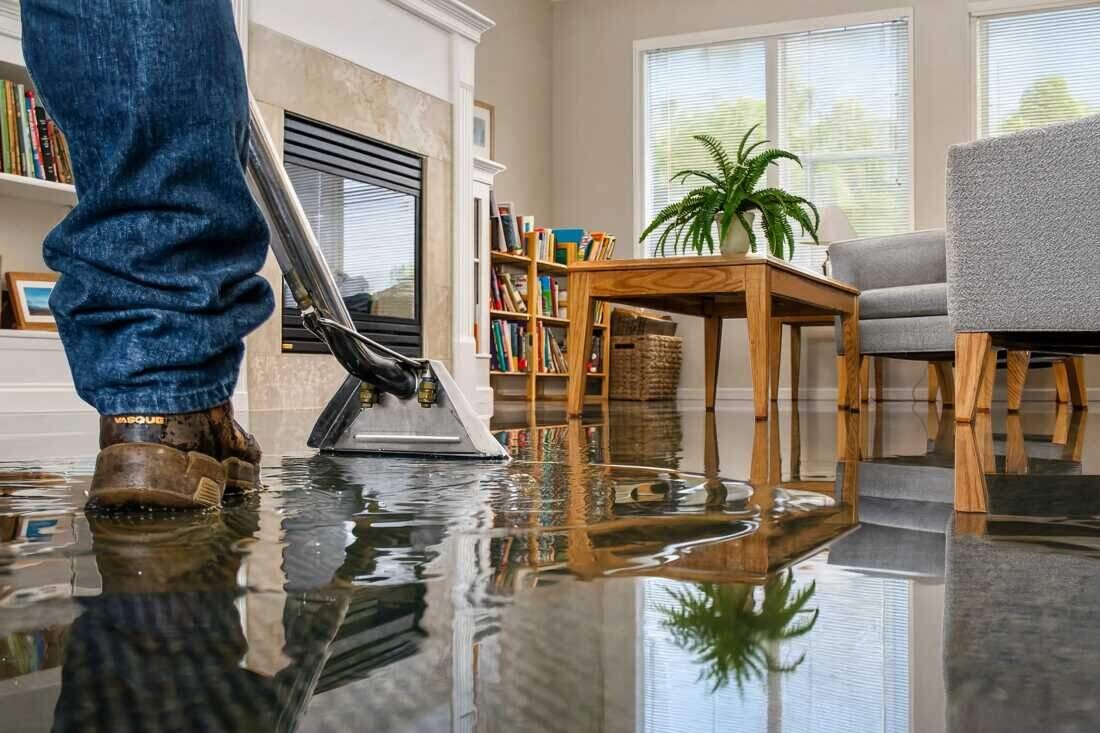
Most of Bedford-Stuyvesant is prewar brownstone, much of it raised in the 1880s and 1890s, with lath-and-plaster walls and ceilings behind the restored facades. A lot of these homes still run original galvanized or early copper supply lines and single-pipe steam heat that corrode from the inside, so a failed fitting, a split radiator valve, or a cracked riser puts water into the floor structure fast. It soaks the old subfloor, rides the joists, and surfaces through a ceiling medallion in the unit below before anyone upstairs notices. Garden-level basements take the other kind of hit when a storm overwhelms the drains and backs up through the slab. Either version is emergency water damage of the kind that gets worse by the hour in an old house.
Emergency water damage restoration in a landmarked brownstone is a careful business, because the plaster, the medallions, and the original trim are exactly what you don't want to lose to either the water or an over-aggressive tear-out. We bring moisture meters calibrated for plaster and masonry to find where the water actually traveled instead of guessing, extract, and set targeted drying to protect the woodwork and plaster wherever it's still salvageable. We document the loss for your insurer as we work. A crew reaches most of Bed-Stuy from our Brownsville base in roughly 45 minutes, any hour.
What we cover in Bedford Stuyvesant
- A real person, then a crew moving — no answering service, day or night. You reach someone who dispatches on the spot from Brownsville.
- Source stopped, hazards cleared — we shut the valve or main feeding the leak, cut power to any wet room, and check the sagging plaster before anyone works beneath it.
- Extraction, then drying tuned for plaster — truck-mounted and portable units pull the standing water, then air movers and dehumidifiers run at rates that won't crack original plaster or warp the subfloor, monitored daily.
- Documented for your claim — photos, moisture readings, and a written scope built as we work. We document the loss; your carrier decides what's covered.
Full detail on this service: Emergency Water Damage in Brooklyn · or see every water damage service we provide in Bedford Stuyvesant.
Common questions in Bedford Stuyvesant
Water is coming through my brownstone ceiling and the plaster is sagging. What do I do right now?
Get the water shut off above you if you can reach the valve, keep everyone out from under the sagging section, and call (347) 906-9419. Wet lath-and-plaster gets heavier as it absorbs, and a bowed ceiling can let go without much warning. Our crew traces how far the water moved with moisture meters, pulls only the plaster that's already failed, and sets drying tuned to the rest before more of it comes down. The faster we start, the more of that original ceiling stays where it is.
Can the ceiling medallions and plaster detail be saved, or am I going to lose them?
Often they can be saved if drying starts quickly. Plaster that's wet but still sound is usually dried in place and stabilized, which keeps medallions and crown detail that are hard and expensive to match today. Where a section has already sagged, crumbled, or pulled away from the lath, that area has to come out — but we keep removal limited to the failed portion instead of taking down a whole ceiling, and we'll tell you honestly what's salvageable before anything is cut.
The leak was steam heat, so the water was hot. Does that change the damage or the drying?
It does. Hot water from a steam radiator or riser spreads faster and drives more moisture and vapor into plaster and framing than a cold-water leak, and it can lift old finishes and glue lines as it goes. That means the wet footprint is often larger than the visible stain suggests, so we meter well past the obvious edge and dry a wider area. It's clean water rather than contaminated, which helps, but the heat is exactly why catching it fast matters — the vapor keeps migrating into the structure until the drying gets ahead of it.
How long does it take to dry out a Bed-Stuy brownstone after a leak like this?
Most jobs run three to five days of active drying, though prewar brownstones often take longer, because thick masonry and lath-and-plaster hold moisture far longer than modern drywall does. We check moisture readings daily and pull the equipment only once the plaster, framing, and floors read dry — not on a fixed calendar. Pulling the gear early is what leaves hidden moisture behind the finish, and that's what later turns into mold.
Licensed, insured & trained to industry standards


Brownstone ceiling coming down in Bed-Stuy? Call now.
Reach a real person any hour and a crew heads to Bed-Stuy from Brownsville. Wet lath-and-plaster only gets heavier and the water keeps riding the joists, so the early call is what saves the original ceiling. We stop the source, extract, dry to protect the plaster and woodwork, and document the loss for your insurer. Call (347) 906-9419.
Call (347) 906-9419