Emergency Water Damage in Coney Island, NY
No storm in sight, but a supply line on the fourteenth floor of a Surf Avenue tower splits at a corroded fitting, and clean water is tracking down through the ceilings below yours right now. Call and a real person answers, then sends a crew.
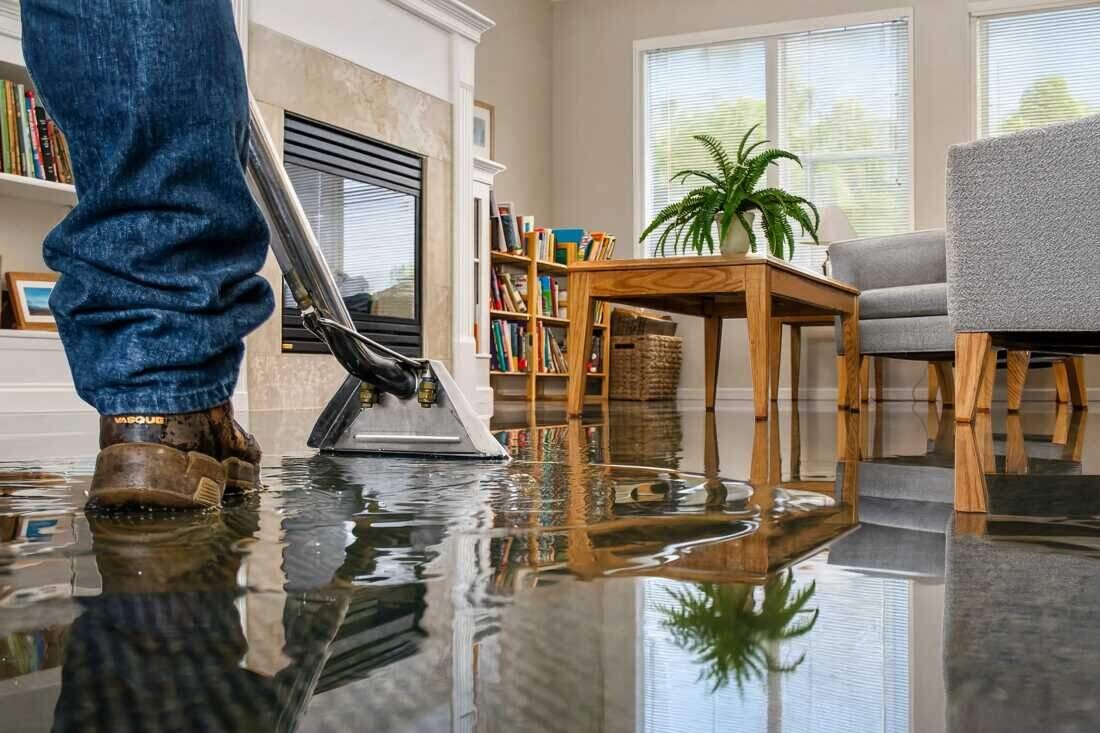
Coney Island sits on a barrier peninsula that took a direct hit from Sandy in 2012, so most of it carries flood insurance and everyone thinks of storms first. But a good share of the emergency water damage we handle here has nothing to do with the weather. In the residential towers along Surf Avenue and Ocean Parkway, a supply line, a fixture connection, or a heating line lets go on an upper floor, and gravity walks it straight down the wet columns of the building, through slab after slab and into the ceiling drywall of every unit below, well before anyone finds the shut-off. By the time the stain shows on the tenth floor, three ceilings above it are already wet.
We work the peninsula around the clock from a Brownsville base, usually on-site within the hour. A real person answers the phone, classifies the water, and dispatches a crew that arrives with portable extractors, low-profile drying gear sized for elevators and tight apartment layouts, and moisture meters. In a stacked tower the loss is rarely one apartment, so we document each affected unit on its own record, the file a managing agent, a board, and several separate carriers will each ask for. It is the kind of vertical, multi-unit loss an emergency water damage company should carry floor to floor rather than hand off, and drying equipment goes in the same visit while we log readings and dated photos.
What we cover in Coney Island
- A live answer, then a dispatch — a technician takes the address, the floor, and the source if you know it, and while the crew rolls we can call the managing agent for elevator and riser access.
- Source shut, circuits made safe — we find and close the line feeding the leak on the source floor and cut power to any wet fixture or outlet before the crew works a soaked unit.
- Extraction and drying the same visit — portable extractors clear each wet floor, then air movers and dehumidifiers go in before we leave, so ceilings that soaked top to bottom start drying that night.
- A file per unit, built while we work — moisture readings, time-stamped photos, and a written scope for every apartment the water reached, so each owner and the building get clean, separate proof.
Full detail on this service: Emergency Water Damage in Brooklyn · or see every water damage service we provide in Coney Island.
Common questions in Coney Island
The water in my ground-floor unit came in from the storm and smelled foul. Is it safe to stay in there?
No — treat storm and surge water on a ground floor as contaminated and stay out of it. On Coney Island, water that comes in low during a storm mixes with whatever the combined sewer pushes up, so it carries bacteria and sewage residue, not just salt water. Keep everyone, especially kids and pets, out of the flooded area, do not run outlets or appliances that got wet, and ventilate if you can do it safely. Then call and let the crew handle it in PPE with black-water-rated equipment; a foul smell is a real signal that the water is Category 3, not clean.
A pipe failed several floors up in my Surf Avenue building and now my ceiling is leaking. Who handles that?
We do, and we handle it as one loss across every floor the water touched, not just yours. In a tower a single upper-floor line can wet a whole vertical run of apartments, so the crew works from the source unit down: shut the line, then extract and dry each affected floor. Who pays is a separate question: the building's policy, the source unit's owner, and your HO-6 may each answer for part, and that split sits with the carriers, not with us. We document each apartment on its own record so every party has the clean, per-unit proof the claim needs.
The flood water drained back out on its own. Do I still need anyone?
Usually yes, and more so if it was storm water. Flood and surge water leaves sewage residue and bacteria behind and drives moisture deep into drywall, subfloor, and wall cavities that will not dry on their own before mold sets in. A unit that looks dry on the surface can read soaked on a meter an inch into the wall. We meter the real moisture, remove and sanitize what the contaminated water reached, and dry the structure down — which is what clears the risk, not the water level dropping on its own.
I have FEMA flood insurance. Does that change how you document the job?
It shapes what we record. NFIP flood claims want proof the damage came from rising water outside the building, so on a storm loss we photograph the high-water line, note what was below it, and log the source and category carefully, since flood and a burst pipe are covered under different policies. A tower leak from an upstairs pipe is not a flood claim at all; that is a homeowner or building policy, so we sort which one applies before we write it up. We document the loss thoroughly and bill where the policy allows; your carrier decides coverage, and a clean, correctly-sourced file gives it the best shot.
Licensed, insured & trained to industry standards


Water tracking down through your Coney Island building? Call now.
A real person answers 24/7 and a crew rolls from Brownsville, usually on the peninsula within the hour. Every hour the water sits, it drops another ceiling and soaks more structure, so the call you make now is the one that saves the most. We stop the source, extract the water, dry each floor to a meter, and document the loss per unit for your flood or homeowner's carrier. Call (347) 906-9419.
Call (347) 906-9419