Emergency Water Damage in Park Slope, NY
You come home midday to a limestone off Eighth Avenue and hear it before you see it: a second-floor bath line has been running down the stairwell into the parlor, and the oak is already dark. Call and a real person picks up, any hour.
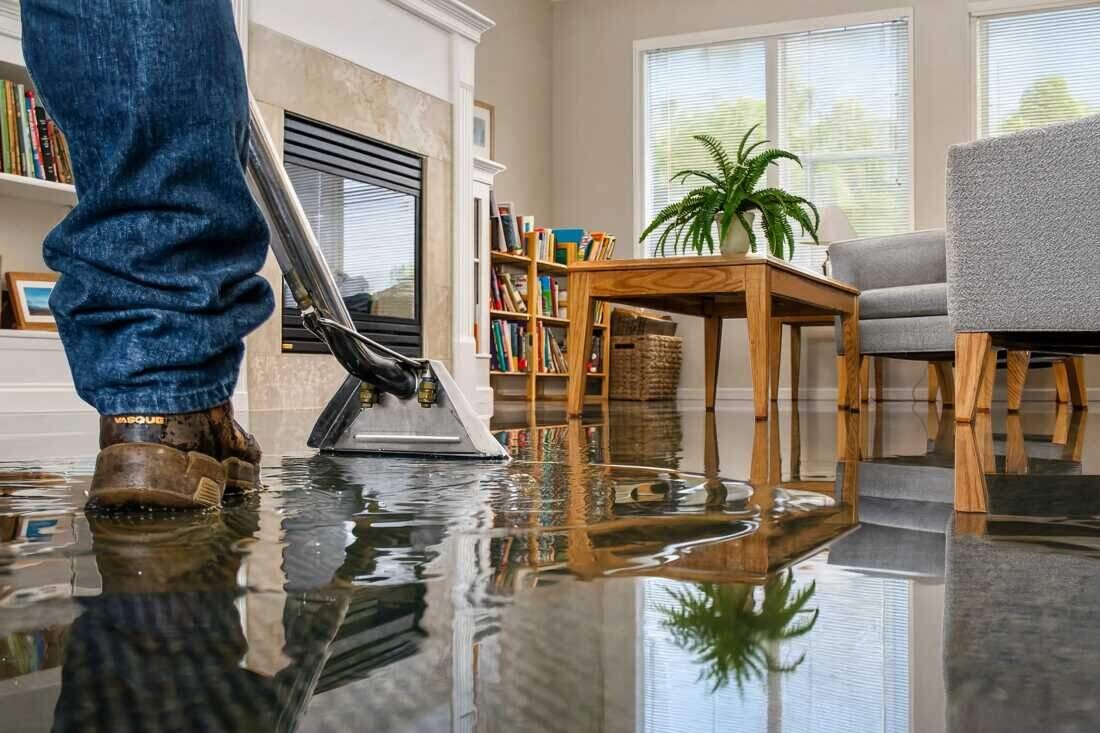
Emergency water damage in a Park Slope brownstone is a race against the house's own materials. Quarter-sawn oak floors, plaster ceilings, and the carved woodwork owners spend years restoring start pulling in water within the hour, and a leak that begins on an upper floor runs straight down the stairwell and the wall cavities into the parlor and the below-grade basement. The blocks off Prospect Park West and down toward Fifth Avenue are mostly owner-occupied single houses, so one failed supply line or a cracked bath drain is one family's whole home soaking at once, top to bottom.
You reach a live technician when you call, any hour, with no service between you and the crew that gets sent. From a Brownsville base we usually reach Park Slope in around 45 minutes, though weather and traffic move that. Our IICRC-certified crew works around the finish carpentry and the historic plaster instead of tearing out first, extracting the standing water and then using a moisture meter and thermal camera to find where it traveled behind the walls and down into the cellar. This is the kind of top-to-bottom loss an emergency water damage company should carry in one visit, and drying equipment goes in the same night so the oak and plaster that can be saved get their best chance. We log every reading and photograph the loss for your homeowner's claim; your carrier decides what is covered.
What we cover in Park Slope
- Live answer, immediate dispatch — a technician takes the address and the source, tells you what to do until the crew lands, and starts the nearest crew rather than booking you for later.
- Source stopped, power cleared — we shut the fixture or the main feeding the leak and cut the circuit to any wet outlet before the crew works a soaked parlor floor.
- Extraction and drying the same visit — we pull the standing water from the parlor and the cellar it drained into, then set air movers and dehumidifiers before we leave, aimed to dry oak and plaster in place where they can be saved.
- Documented from the first hour — moisture readings room by room, time-stamped photos, and a written scope of what the water touched, built while we work so the claim has real evidence, not a guess.
Full detail on this service: Emergency Water Damage in Brooklyn · or see every water damage service we provide in Park Slope.
Common questions in Park Slope
My original oak floors are soaked — can they be dried in place or do they have to come out?
Often they can be dried in place if we reach them soon enough. We use floor mats and directed airflow that draw moisture up through the boards while a meter tracks the reading down toward dry, which saves a lot of quarter-sawn oak that would otherwise be pulled. What forces removal is time: boards that have cupped, crowned, or stayed wet for days usually have to come up. This is exactly why the call should happen the hour you find the water, not the next morning — a few hours decides whether the original floor stays in the room.
Water came through and the parlor plaster ceiling is sagging — do you have to demo it?
Not always, but a sagging plaster ceiling holding water overhead is a safety call first: stay out from under it and keep everyone clear. If the plaster has separated from the lath or is bulging, that section usually has to come down, and we do it in a controlled way to protect the surrounding medallion and cornice. Where the plaster is only wet and still sound, we dry it in place with targeted airflow and monitor it on a meter rather than tearing it out. We make that call on what we see, not on a demo-everything reflex.
The leak ran down into my finished basement — what's different about drying a below-grade space?
A below-grade cellar traps humidity, so it dries slower and holds moisture in the slab and lower walls long after the standing water is gone. We use dehumidifiers sized for the enclosed air volume, keep air moving along the foundation walls, and meter the slab and framing daily until they read dry, not just feel dry. Because Park Slope cellars sit in old brick foundations, we also check where water wicked into the masonry, since that is where a musty smell and later mold usually start if a space is left to dry on its own.
How fast can a crew reach my block, and will someone answer in the middle of the night?
A technician answers live at any hour, and a crew starts from Brownsville right away, usually reaching Park Slope in around 45 minutes depending on traffic and where on the slope you are. That is an honest estimate, not a guarantee, and it shifts with the roads and the weather. The water, though, does not wait: oak and plaster absorb within the hour and the framing follows, so the sooner equipment is running the less of the house comes out. Tell the technician what you see and they will walk you through what to do until the crew arrives.
Licensed, insured & trained to industry standards


Water running down through your brownstone? Call now.
A real person answers 24/7 and a crew rolls from Brownsville, usually reaching Park Slope in around 45 minutes. Every hour the water sits, it soaks more oak and plaster and drops further toward the cellar, so the call you make now is the one that saves the most. We stop the source, extract the water, dry the woodwork and structure to a meter, and document the loss for your carrier. Call (347) 906-9419.
Call (347) 906-9419