Emergency Water Damage in Staten Island, NY
A January cold snap, a weeknight, and the outdoor spigot line nobody drained freezes behind the garage wall of an Eltingville ranch. It splits, thaws, and runs into the finished room beside it. Call and a technician answers, then rolls a crew over the Verrazzano.
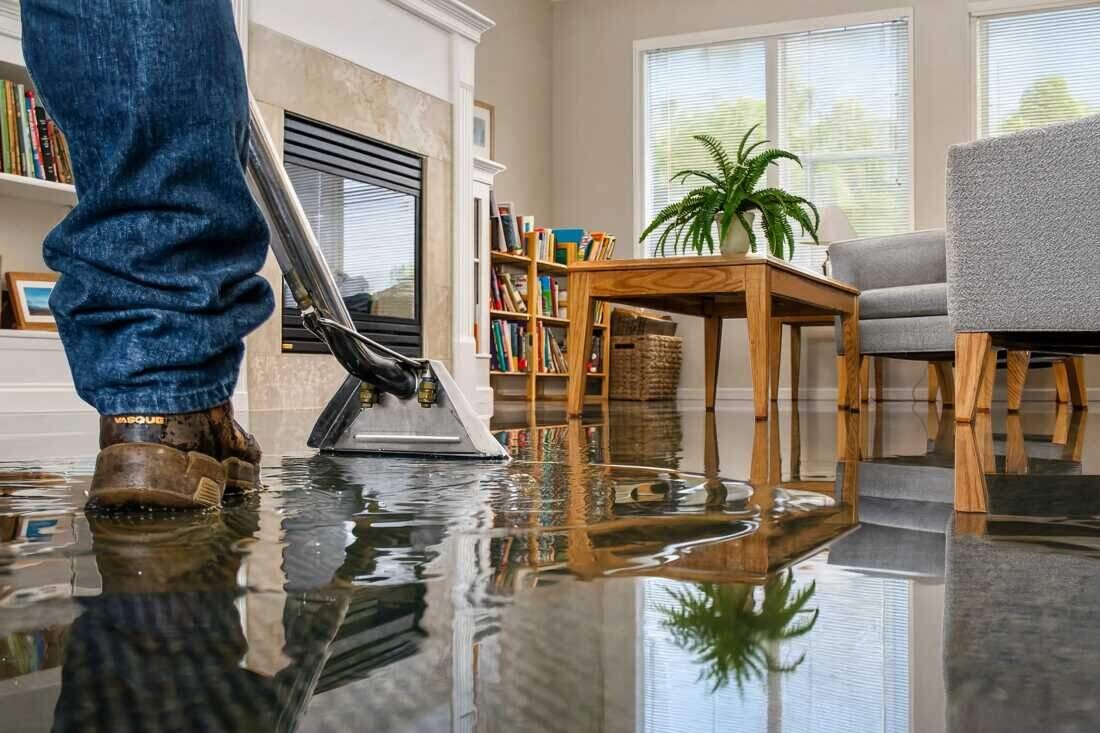
Emergency water damage on Staten Island falls into two very different patterns, and the fix isn't the same for both. On the East Shore, the finished basements of Tottenville, Great Kills, Midland Beach, and South Beach sit in FEMA flood zones that took surge during Sandy, and a bad storm can still put feet of water on a basement slab from the outside. Inland and across Mid-Island, the 1950s and 1960s ranches and raised ranches run supply lines and hose-bib feeds through uninsulated exterior walls; a hard freeze splits them, and clean water discharges into the wall cavity and first-floor framing before anyone finds the break. One is dirty water from outside, the other clean water from inside — and which it is decides both the cleanup and the claim.
We dispatch from our Brownsville base and cross the Verrazzano to reach you, usually within 45 to 55 minutes. Deep basement floods get submersible pumps; standing water on the first floor gets truck-mounted extraction; soaked slab and framing get air movers and dehumidifiers the same night. Our emergency water damage services are the mitigation end of the job, meaning we stop it, pull it, dry it, and record it. We don't do sump-pump installs or foundation waterproofing, so you never get pitched a permanent fix we don't perform. While the crew works, we meter moisture, photograph the high-water line, and write the scope your homeowner's or flood carrier will ask for.
What we cover in Staten Island
- A technician answers, a crew heads for the bridge — no answering service, no morning callback. The person who picks up dispatches a Staten Island-bound crew on the call.
- Source stopped, power cut before entry — we shut the valve or main feeding a split line and kill power to the flooded area at the breaker, because nobody wades into standing water near a live panel or a submerged furnace.
- Pumps for depth, extraction for the floor, drying the same night — submersible pumps clear feet of water off a finished basement slab, truck-mounted units take the first floor, and air movers and dehumidifiers go in before we leave.
- Documented for the right policy — the entry point and the high-water line photographed and metered into a scope, because where the water came from decides which carrier responds. We document the loss; your carrier decides what's covered.
Full detail on this service: Emergency Water Damage in Brooklyn · or see every water damage service we provide in Staten Island.
Common questions in Staten Island
A frozen pipe split in my wall overnight. Can you fix the pipe, or just handle the water?
We handle everything the water touched — the shut-off, opening the wall cavity to reach the wet framing, the extraction, and the drying. The pipe repair itself is licensed-plumber work, so we expose the split, dry the cavity out, and coordinate the timing so the wall is opened and closed once rather than twice. If your plumber doesn't answer at that hour, the water still can't wait; getting it out and the framing drying is what limits how much has to be rebuilt, whatever the schedule on the pipe.
My basement flooded in a storm. Does my Staten Island homeowner's policy pay, or do I need flood insurance?
It hinges on where the water came from. A burst pipe or a failed water heater is usually covered by a standard homeowner's policy. Surface water and storm surge entering from outside, common across the East Shore flood zones, is excluded from the homeowner's policy and falls under a separate NFIP flood policy instead. That's why we document the entry point and the high-water line precisely: how the water got in is what determines which policy responds. We document the loss; your carrier decides what's covered.
My East Shore basement floods almost every big storm. Is there any point beyond mopping it out each time?
The point is drying it all the way down, every time. Water that keeps coming back and never fully dries builds cumulative mold and wood rot in the slab and framing over the years, and that damage compounds quietly between storms. We pump it out, dry the structure to a metered reading, and hand you a moisture log and written scope after each event — something concrete for a waterproofing contractor or your flood carrier. We don't install sump pumps or waterproof foundations, so we'll tell you honestly what we found and leave the permanent fix to a contractor who does that work.
It's the middle of the night and water is coming in. What should I do before your crew crosses the bridge?
If you can do it safely from dry footing, shut the main or the valve feeding the leak, and cut power to the flooded area at the breaker — never step into standing water near outlets or a submerged panel. Lift what you can off the wet floor and take photos before anything moves, since that helps your claim. Skip the household shop-vac: on South Shore storm and basement water it's often mixed with sewer backup, which needs contaminated-rated extraction and disinfection, not a wet-vac. Then call (347) 906-9419 and we'll talk you through the rest while a crew rolls.
Licensed, insured & trained to industry standards


Water in your Staten Island home? Call now.
A technician answers any hour and a crew crosses the Verrazzano from Brownsville. A frozen-pipe split feeds the wall until it's shut, and storm water sits on a slab until it's pumped — either way the early call saves the most. We stop the source, pump and extract, dry to a meter reading, and document the loss for the right carrier. Call (347) 906-9419.
Call (347) 906-9419