Emergency Water Damage in Williamsburg, NY
You get home to a warehouse-conversion condo off Wythe Avenue and find the ceiling sagging where a top-floor line has run for hours, the water already wicking sideways through century-old plank. Call and a real person answers, then sends a crew.
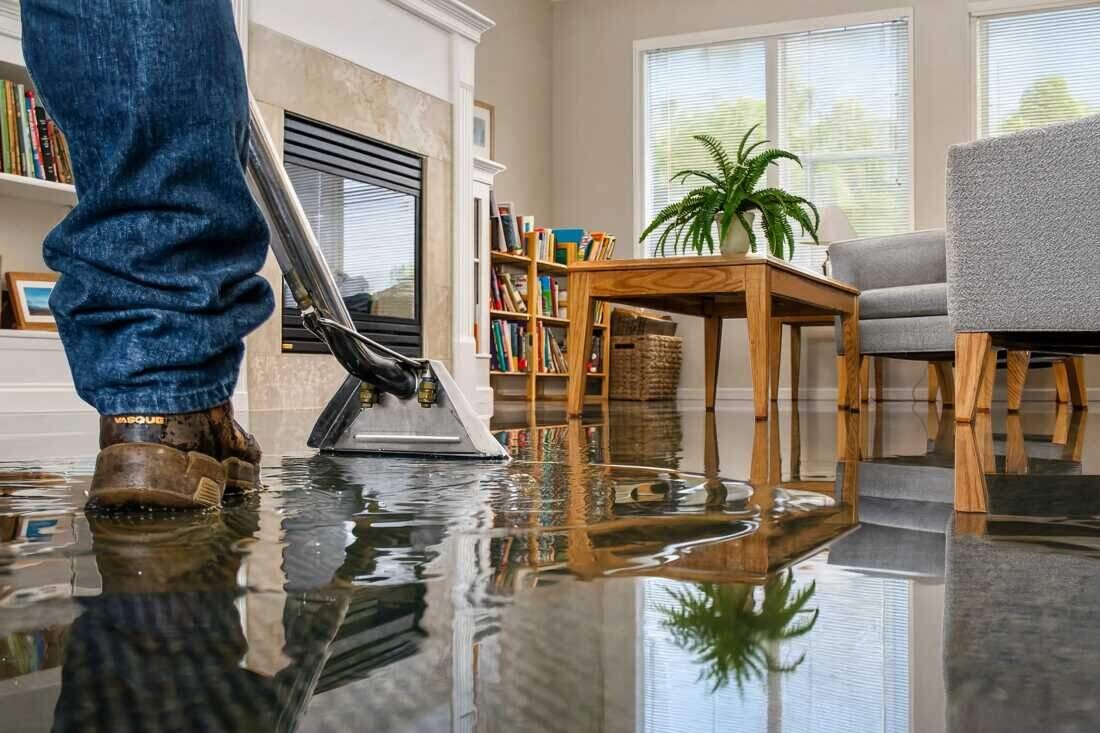
Emergency water damage in Williamsburg tends to come from one of two building types, and both hide the water. In the glass condos and warehouse conversions near the East River waterfront, a stacked dishwasher line or a shared supply riser fails on an upper floor and the water drops through unit after unit before the owner up top is even home to notice. In the old wood-frame walk-ups off Bedford and Driggs, a loft washer hookup or a split cast-iron line soaks a century-old floor that wicks the water sideways into the next room instead of pooling where it started. Either way, the finishes are wet long before the puddle is obvious.
When you call, you reach a person who can dispatch, not a service logging a message for the morning. The crew works the water where it actually went: extract the standing water first, then trace the spread with moisture meters and a thermal camera, because water from a unit above almost never stops at the ceiling stain. From a Brownsville base we usually reach North Williamsburg in around 45 minutes, traffic depending. Air movers and a dehumidifier go in the same visit so drying starts that night, and we run emergency water damage restoration as the mitigation end of the job while logging readings and dated photos for your insurer.
What we cover in Williamsburg
- A person on the line, then a crew moving — a technician answers any hour, takes the address and the source, and starts the nearest crew instead of scheduling you for the morning.
- Source shut, circuits made safe — we close the valve feeding the leak and cut power to any wet fixture or outlet before the crew steps into standing water.
- Extraction and drying in one trip — portable extractors clear the water, then air movers and a dehumidifier go in before we leave, so a plank floor that wicks water sideways starts drying that night.
- A file built while we work — moisture readings, time-stamped photos, and a written scope per affected unit, so a shared-riser loss that crossed several condos gives each owner clean, separate proof.
Full detail on this service: Emergency Water Damage in Brooklyn · or see every water damage service we provide in Williamsburg.
Common questions in Williamsburg
Water came down a shared riser from a unit above mine in my Williamsburg condo. Whose insurance handles it?
It usually splits several ways: the building's policy tends to cover the riser and common structure, the upstairs owner's policy may answer for their unit, and your HO-6 covers your interior and belongings, but the exact division depends on the building's bylaws and the carriers, and we cannot decide it. What matters at 2 a.m. is that we start before anyone sorts out fault, because the water will not wait for a liability answer. We document your unit as its own loss, keep it separate from the building's work order, and hand each carrier the clean, per-unit record they ask for.
My loft is in an old wood-frame walk-up and the washer overflowed. Do the floors have to come out?
Often not, if we get to them soon enough. Century-old plank can be dried in place when the water has not sat long, using mats and directed airflow that pull moisture out through the boards while a meter tracks the reading down. What forces removal is time and cupping: boards that have been wet for days, or that have already lifted and buckled, usually have to come up. That is the whole argument for calling the hour you find it — an early call is what keeps the original floor in the room instead of in a dumpster.
What does your crew actually do in the first hour after reaching my unit?
The source and safety come first: we shut the valve feeding the leak and cut power to any wet outlet or fixture. Then extraction starts on the standing water while one tech runs a moisture meter and thermal camera to find where it tracked behind walls and under the floor, because in these buildings the water travels well past the visible line. Once the map is set, air movers and a dehumidifier go in and we photograph and log everything. By the end of that first hour the source is off, the standing water is gone, and drying is running.
The building is a converted warehouse with a concrete deck under the floor — does that change the drying?
Yes. A concrete deck holds and spreads water instead of absorbing it, so a leak on that floor runs flat under the finish flooring and shows up well away from the source. We map the wet slab with a thermal camera before setting equipment, then dry the assembly above the deck, not just the surface, so moisture trapped under a floating floor does not feed mold weeks later. Emergency water restoration on a slab is about drying where the water went, not where it puddled.
Licensed, insured & trained to industry standards


Water tracking through your Williamsburg loft? Call now.
A real person answers 24/7 and a crew rolls from Brownsville, usually reaching North Williamsburg in around 45 minutes. Every hour the water sits, it wicks further through old plank and drops another ceiling below, so the call you make now is the one that saves the most. We stop the source, extract the water, dry the structure to a meter, and document each unit for the carriers. Call (347) 906-9419.
Call (347) 906-9419