Flood Damage Restoration in Bedford Stuyvesant, NY
A past renovation left a supply line running sideways through the joist bays of a Stuyvesant Heights brownstone, and when it finally pinholes the stain shows up two rooms from the pipe that failed. We map the water before we open a single ceiling.
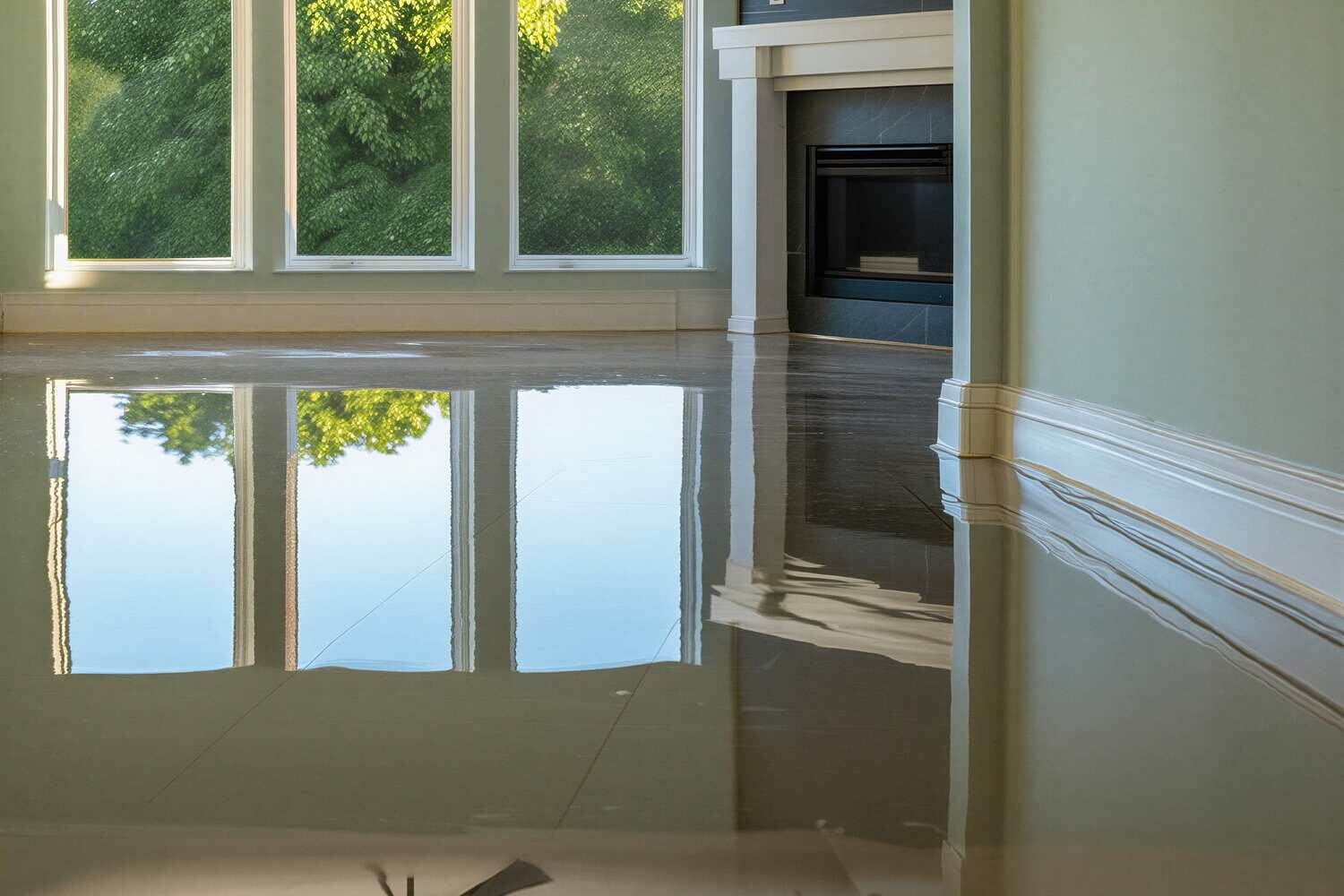
Bed-Stuy holds one of the largest landmarked stretches of Victorian brownstone in the country — Romanesque-Revival and Queen Anne row houses put up between the 1880s and 1910s, restored shells over century-old guts. That old plumbing is where the water starts. Most still carry stretches of original galvanized or lead supply line that corrode from the inside until a fitting gives, often in a January cold snap when an unheated top-floor rental drops below freezing. And decades of piecemeal renovation left their own trap: a bathroom moved or a kitchen re-plumbed put supply lines running sideways through the joist bays, so a pinhole surfaces as a stain in a room well away from the pipe that failed. Dense lath-and-plaster ceilings then take on an upstairs overflow in silence, holding the water for days before a brown ring shows, and because so many of these houses are cut into two- and three-family rentals, the tenant under the stain is rarely the one whose fixture let go.
A crew works Bed-Stuy from our Brownsville base a short run to the south, usually about half an hour depending on the traffic on Atlantic, which is the drive and not a scheduled slot. Flood damage restoration in a plaster house begins with finding the water you cannot see: a thermal camera and a moisture meter come out before anything is opened, so we map where the water tracked through the joist bays and across a shared party wall rather than guess from the stain. We extract what's standing, then stage air movers and dehumidifiers to those exact readings, metered daily until the plaster and framing read dry rather than dry to the hand. Where the water sat long enough to feed mold, contained flood cleanup comes before any rebuild. Only then do we skim the opened plaster back to match and refit the trim, with the dates, readings, and photos filed for whoever your carrier sends. We document the loss; your carrier decides what it covers.
What we cover in Bedford Stuyvesant
- Hidden-leak mapping — a thermal camera and a moisture meter trace where a sideways run or an upstairs overflow tracked through the joists, so we open the ceiling at the source, not the stain.
- Cellar & garden-level pump-out — submersible pumps and truck-mounted vacuums clear standing water from the below-grade units that flood first when the combined sewer surcharges.
- Plaster & brick drying — air movers and dehumidifiers pull moisture out of dense lath-and-plaster, old brick, and subfloor until a meter confirms it, with a reading logged daily.
- Match-back repair — we skim the opened plaster to match the original and refit the trim, so a landmarked ceiling looks like nothing came through it.
Full detail on this service: Flood Damage Restoration in Brooklyn · or see every water damage service we provide in Bedford Stuyvesant.
Common questions in Bedford Stuyvesant
My ceiling is stained but the leak clearly started somewhere else in the house. How do you find where the water actually is?
That's the norm in these brownstones, because past renovations left supply lines running sideways through the joist bays, so a pinhole shows up rooms away from the pipe. We start with a thermal camera and a moisture meter, mapping the wet path through the framing and along any shared party wall before we open a thing. Then we open the ceiling at the actual source, pull the saturated plaster and insulation that won't dry in place, and dry the cavity to a reading. Opening the stain alone would leave the real wet behind the surface. Call (347) 906-9419 and we'll trace it properly.
How long does drying take in a flooded garden-level unit in a Bed-Stuy brownstone?
Three to five days for most garden-level units once we've pulled the standing water and set the air movers and dehumidifiers. The old brick foundation and the slab under the floor hold moisture far longer than drywall, and lath-and-plaster is slow to give it back, so we read the structure with a meter every day and pull the gear when it hits a dry standard, never on a fixed timer. A sewer surcharge adds antimicrobial treatment and the tear-out of soaked carpet and padding, which can push it a day or two.
My brownstone is a rental with tenants in the garden unit. Can you work around them?
Usually, yes. On most of these flood jobs we contain the wet area, run drying equipment where the damage is, and keep the rest of the house usable so tenants stay in place where it's safe. When a unit is too far gone to occupy during tear-out, we say so plainly and stage the work to get them back in fast. We also write each unit's loss up on its own, which matters when a tenant's renters policy and your building policy both come into it. Call (347) 906-9419 and we'll walk the building with you.
An old galvanized line split in a cold snap and the plaster ceiling below is soaked. Can it be saved?
Some of it, depending on how long it ran. Clean water caught early lets us dry framing and much of the plaster, but dense lath-and-plaster holds water behind a face that still looks sound, so a leak that ran overnight or longer usually means the plaster and the insulation in that bay come out. What you're protecting is the framing and the room below. We meter behind the surface, dry the cavity to a reading, and only then skim the plaster back to match — and because a frozen-pipe burst is the kind of sudden loss a homeowner's policy often responds to, we log the source and dates for the claim. We document the loss; your carrier decides coverage.
Licensed, insured & trained to industry standards


Stain spreading across a brownstone ceiling? Call now.
Call (347) 906-9419 and a live person answers, any hour, with the crew a short run north from our Brownsville base. We trace the hidden water, dry the plaster and brick to a meter reading, skim the ceiling back to match, and document every step for your claim.
Call (347) 906-9419