Flood Damage Restoration in East New York, NY
A supply line in the uninsulated exterior wall of a two-family off New Lots freezes overnight and splits on the January thaw, and clean water rides the studs down into the garden apartment the owner rents below. Caught early, most of it dries and stays.
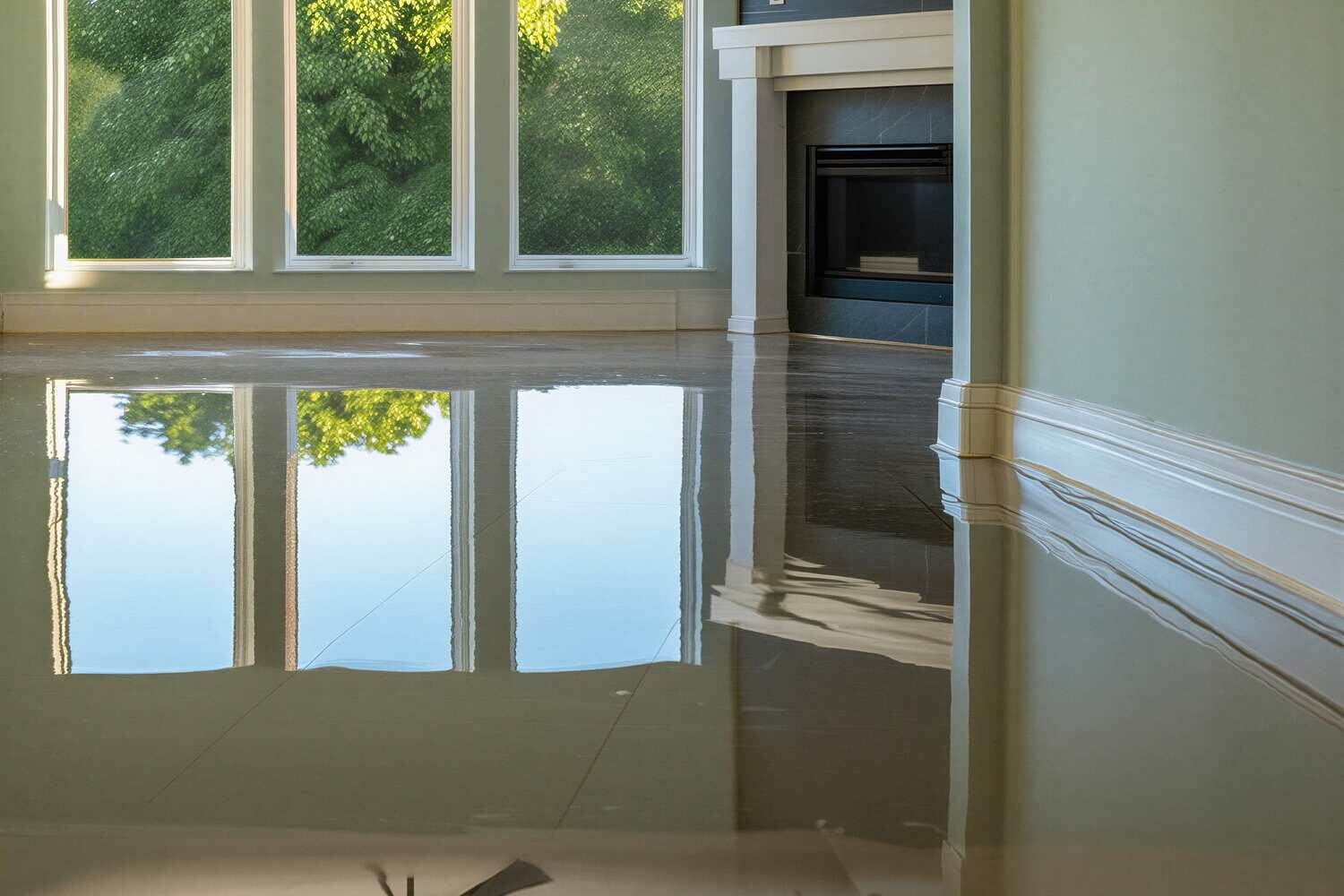
East New York is a dense grid of one- and two-family brick and frame row houses off New Lots, Pennsylvania, and Dumont Avenues, and most of them finished the lowest level into a garden apartment, a basement rental, or a den. That is the floor the trouble lands on. A galvanized supply line corrodes through inside an old framed wall, or a pipe running an uninsulated exterior wall freezes and splits on a winter thaw, and because these houses are built on platform framing the clean water rides the studs and joists sideways and down before a stain ever shows below. Caught fast it is usually salvageable, which is the whole reason an early call matters. Then there is the low ground: the flats around Cypress Hills and the blocks below New Lots sit on an aging combined sewer, so a hard summer rain overwhelms it and shoves stormwater and sewage back up through the lowest cellar floor drain — a very different loss on the same street.
A crew reaches most of East New York in about 45 minutes from our Brownsville base next door along Van Sinderen Avenue, traffic depending, and we run the flood damage restoration the same disciplined way every time. We classify the water first, because a clean burst and a sewer surcharge get handled in opposite ways and, in a lived-in basement, the difference decides what can be saved. A backup is Category 3 black water, contained and sanitized before any dryer runs; a burst line is pumped and extracted, then dried. Either way, air movers and dehumidifiers work a moisture map until the framing and subfloor read dry on the meter, not dry to the hand. The flood repair closes it out, with new drywall, insulation, and flooring wherever the soaked material came out, and we log the water source, how deep it got, and every piece we hauled — because that record is what your homeowner's or flood policy runs on. We document the loss; your carrier decides what it covers.
What we cover in East New York
- Burst & frozen-line response — we trace a split supply line down through the platform framing and dry every stud bay and joist the clean water rode before it reached the rental below.
- Water classified first — a clean burst and a Category 3 sewer surcharge are opposite jobs, so we test what we're dealing with before a single fan runs.
- Structural drying — air movers and dehumidifiers run against the wet framing and subfloor, and the daily meter reading, not the calendar, decides when they come out.
- Flood damage repair — we cut out soaked drywall, insulation, and flooring, then put the garden level back together so you get the rental back on its feet.
Full detail on this service: Flood Damage Restoration in Brooklyn · or see every water damage service we provide in East New York.
Common questions in East New York
A pipe in my exterior wall froze and split, and the water ran down into the garden apartment I rent out. Can that be saved?
Often, yes, if the drying starts fast. That's clean supply water, and clean water caught early lets us save framing, subfloor, and much of the drywall by drying the cavities before mold gets going in 24 to 48 hours. On a platform-framed house the water travels the studs and joists well past where the stain shows, so we meter the wall bays, not just the wet patch, and stage air movers and dehumidifiers to those readings. What holds water and comes out either way is soaked carpet pad and insulation. Call (347) 906-9419 and the sooner we're drying, the more of that lower unit you keep rentable.
Water came up through my cellar drain after the storm and looked fairly clear — is it really contaminated?
Treat it as contaminated until it's tested. That floor drain ties into the combined sewer under your block, so when the line surcharges in a downpour, whatever backs up has already mixed with sanitary waste upstream, clear-looking or not. We meter and inspect the moment we arrive and handle it as Category 3 at any sign of contamination: the porous materials that drank it up come out, and every hard surface that stays gets disinfected. Don't run fans or the HVAC first, because that just spreads contaminated air and grows the job. Call (347) 906-9419 and we'll look at it today.
How long does it take to dry a flooded basement in an East New York two-family?
Most finished cellars take three to five days once we've pulled the standing water and set the air movers and dehumidifiers. The below-grade slab and the CMU foundation walls hold moisture far longer than the drywall above, so we read the structure with a meter every day and pull the equipment when it hits a dry standard, never on a fixed timer. A clean winter burst dries at the shorter end; a sewer backup adds antimicrobial treatment and the tear-out of soaked carpet and padding, which can push it a day or two.
Will my homeowner's policy pay, and does it matter whether the pipe burst or the sewer backed up?
It matters a lot. A standard homeowner's policy usually responds to a sudden internal failure like a frozen pipe that splits or a failed water heater, so a winter burst is often the covered case. But it generally shuts out the storm water and groundwater that push up through a cellar drain, and drain or sewer backup is covered only if you carry the specific backup endorsement — plenty of East New York owners don't learn it's missing until they file. Either way we photograph the source, log the water category, and write up the readings so your adjuster has the whole picture. We document the loss; your carrier decides coverage.
Licensed, insured & trained to industry standards


Split pipe or flooded cellar in East New York? Call now.
Call (347) 906-9419 and a real person on our own team answers, any hour, with the crew loading from our Brownsville base right across Van Sinderen Avenue. We classify the water, pump and extract it, dry the framing to a meter reading, and document every step for your claim.
Call (347) 906-9419