Flood Damage Restoration in Flatbush, NY
A long soaking rain loads the soil against the old foundation of a Ditmas Park Victorian, and groundwater pushes straight through the mortar into a deep cellar that never drains fast. No burst pipe, no backed-up drain — just water coming through the wall.
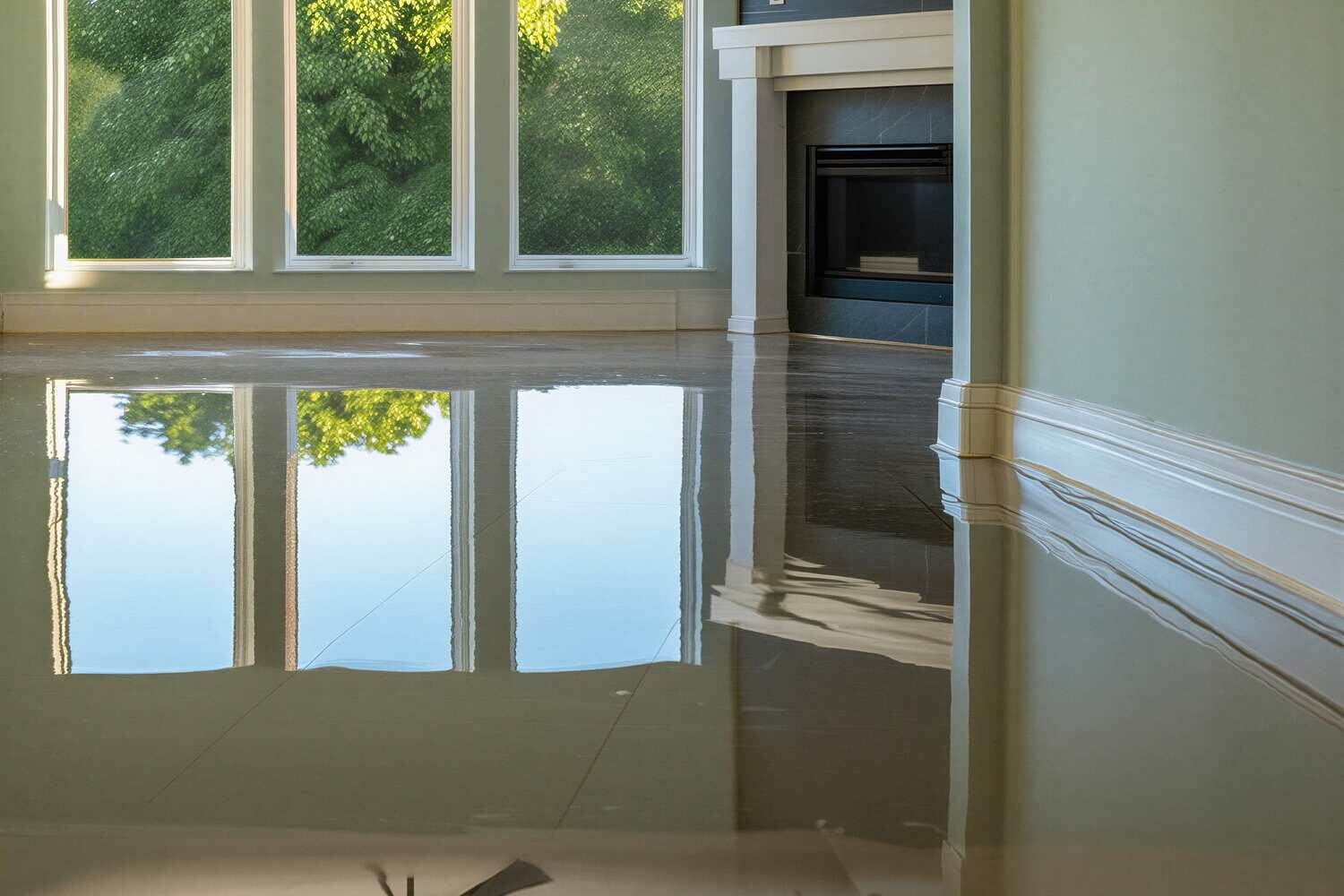
Flatbush is really two housing stocks that flood in different ways. The landmarked blocks of Prospect Park South, Ditmas Park, and Midwood Park hold hundreds of big detached wood-frame Victorians raised in the 1900s and 1910s: freestanding houses on Albemarle, Buckingham, and Rugby Roads, three full stories over a deep cellar dug well below grade. Those cellars drain slowly, so a hard rain that loads the soil against the old foundation walls pushes groundwater straight through the mortar joints into a lower level people now use as a den or a rental — no burst pipe, no backup, just water seeping through the wall. And because the house is wood frame, when a galvanized supply line does let go inside a stud wall, the water rides the studs and joists sideways and down before a stain ever shows a floor below.
A crew loads at our Brownsville base a short run to the east, so figure roughly 45 minutes to most of Flatbush in ordinary traffic, the honest drive and not a scheduled slot. Flood damage restoration in a deep-cellar Victorian leads with water removal: submersible pumps for what's standing, then truck-mounted extraction for whatever wicked into the subfloor and the framed lower walls. Because the wet travels farther through the studs than the surface shows, we map the moisture before we open anything and read the meters daily until the framing holds dry numbers, not a dry face. The avenues are the other Flatbush. Church, Ocean, and the blocks off Cortelyou Road run six-story prewar apartment houses on single risers, and many low blocks sit over an older combined sewer that surcharges in a storm and shoves grey water up the cellar drain, which is contaminated the moment it surfaces and gets contained and sanitized, not wet-vacced. Where water sat long enough to feed mold, that flood cleanup comes before any rebuild, and the flood repair closes it: drywall, flooring, and trim back, with the readings, photos, and dates filed for whoever your carrier sends. We document the loss; your carrier decides what it covers.
What we cover in Flatbush
- Deep-cellar pump-out — submersible pumps and truck-mounted vacuums clear standing water from the deep cellars under the Ditmas Park Victorians that never drain fast.
- Wood-frame moisture mapping — a meter traces water that rode the studs and joists well past the stain, so we dry the wall bays and not just the wet face.
- Sewer-backup cleanup on the low avenues — when a storm pushes the drain back up a low Church or Ocean Avenue block, we contain, remove the porous material, and sanitize every surface the grey water reached.
- Flood damage repair — we cut out unsalvageable drywall, insulation, and flooring, then put the space back together so the lower level is livable again.
Full detail on this service: Flood Damage Restoration in Brooklyn · or see every water damage service we provide in Flatbush.
Common questions in Flatbush
Water is coming through the foundation wall of my Ditmas Park cellar during a long rain, not from a pipe. What can you do?
Groundwater pushing through old mortar is one of the most common calls on these deep-cellar blocks, and the immediate job is the same as any flood: get the standing water out and dry the structure before it feeds mold. We pump and extract, then meter the slab, the framing, and the base of the walls, because a masonry foundation holds moisture long after the floor looks clear. The seepage itself is a foundation and drainage issue to solve separately — we'll tell you plainly what we saw — but the water in your finished space is ours to remove and dry now. Call (347) 906-9419 and we'll look at it today.
My cellar took on a few inches after a heavy rain and a wet-vac cleared it. Do I still need professional drying?
Yes. The depth of water you saw says nothing about how much moisture the structure drank. A couple of inches sitting on an old cellar slab for a few hours wicks into the base of the framing, the bottom plate of the walls, and the subfloor overhead. A shop vac pulls the puddle off the floor; it leaves the wood inside the wall wet, and wet framing grows mold in 24 to 48 hours. We extract, meter the materials, and run commercial air movers and dehumidifiers until the readings hit a dry standard, not just until the floor looks clear. Call (347) 906-9419 and we'll look at it today.
Water ran down from an upstairs unit in my prewar Flatbush apartment building and stained the ceiling. What do you actually do?
In these older buildings the leak usually travels inside the wall and ceiling cavity before it shows, so the wet plaster you see is a fraction of what soaked. We open the ceiling at the source, find where the supply line, drain, or tub gave way, and pull the saturated plaster and insulation that won't dry in place. Then dehumidifiers and air movers go in on both the wet unit and the one below it, and we meter the framing daily until it's dry. We photograph each step, which matters when two units and a building policy are involved and everyone needs the same record.
After a storm pushed water into my Flatbush cellar, is that covered by insurance?
It depends on how the water got in, and the answer surprises a lot of Flatbush owners. A standard homeowner's policy covers a sudden internal failure like a burst supply line or a failed heater, but it generally excludes groundwater and storm water that seeps through the foundation or backs up the cellar drain. A drain backup is only covered if you carry the specific backup endorsement, and plenty of people on these low blocks find out it's missing the hard way. Groundwater seepage is typically excluded from a homeowner's policy altogether. We photograph the entry point, log the water category, and write up the readings so your adjuster has the full picture. We document the loss; your carrier decides coverage.
Licensed, insured & trained to industry standards


Water in a deep Flatbush cellar? Call now.
Call (347) 906-9419 and a live person answers, any hour, with the crew a short run east from our Brownsville base. We pump the cellar out, dry the framing and masonry to a meter reading, and document every step for your claim.
Call (347) 906-9419