Flood Damage Restoration in Manhattan, NY
A dishwasher line lets go on the twenty-first floor of a West End Avenue co-op, and by the time the desk smells it the water is three ceilings down. We sign in at the door, clear the COI, and set drying gear in every wet unit.
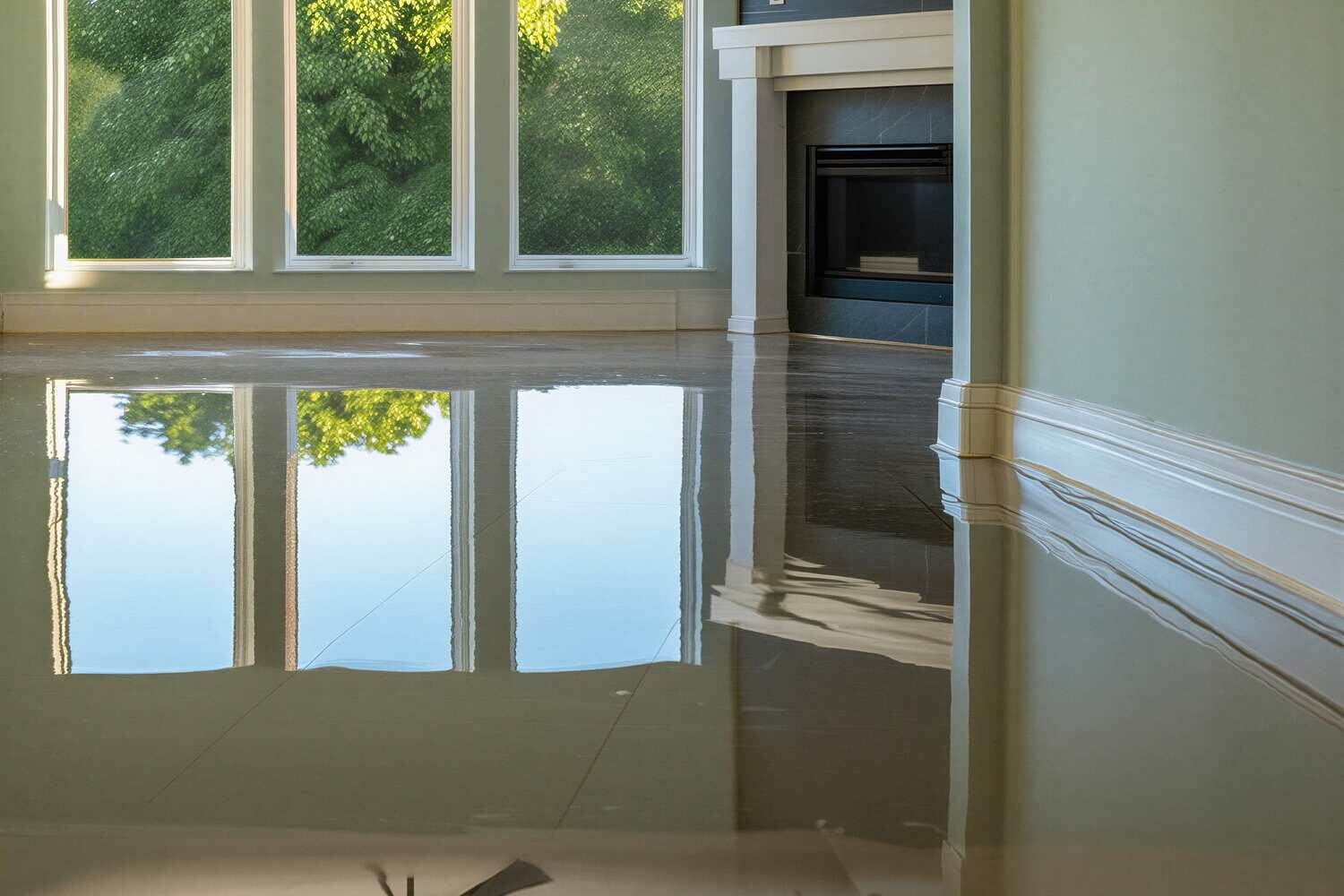
In a Manhattan tower, a flood almost never begins in the apartment that ends up under water. A single riser feeds the same column of kitchens and baths up the whole building, so a fitting that fails on a high floor sends water down the chase and surfaces as a brown ring one, two, or three units below the break. In the prewar co-ops off the Upper West and Upper East Sides it hits lath-and-plaster ceilings that hold the water and start to sag before a stain even shows; in the postwar glass towers it runs wide behind skim-coat and drywall. Pinning down which unit is actually leaking means getting into several at once, and in a 25-story building that takes the super and the managing agent, not one owner with a key.
We run this kind of loss as flood damage restoration end to end, and half the work in a doorman building is the logistics. The crew signs in at the front desk, we get a certificate of insurance to management before a hose comes off the truck, and we time the riser shutoff with the super so the source stops first. Then the standing water gets pulled and the flood cleanup begins: air movers and dehumidifiers go onto the slab and up into the ceiling cavity, metered daily until the plaster and framing read dry on the instrument rather than dry to the hand. Every affected apartment becomes its own documented loss, so the managing agent and each owner's insurer work from one record. There is also a city rule worth knowing here, that once a mold problem passes a modest square-foot threshold a building's own porters may not clear it, which is a second reason a wet ceiling gets a certified outside crew and not a mop.
What we cover in Manhattan
- Building-side logistics handled — we sign in with the doorman, get the certificate of insurance to the front desk, and time the riser shutoff with the super, so nothing waits in the lobby.
- Emergency extraction — weighted extractors and wet vacuums pull water out of carpet, pad, and hardwood before it soaks the slab and loads the apartment below.
- Cavity drying, not surface drying — a meter maps the water trapped above an old plaster ceiling, so we dry the ceiling cavity and the wall framing to a verified reading, logged every day.
- Repair & repaint — the soaked drywall and plaster we opened go back, and each affected unit is documented on its own for the claim.
Full detail on this service: Flood Damage Restoration in Brooklyn · or see every water damage service we provide in Manhattan.
Common questions in Manhattan
Water came down through my co-op ceiling from the unit above. How do I start, and what do you hand me?
Notify building management and your own HO-6 co-op policy first. A riser is usually a building system, so what your policy pays versus the building's master policy turns on your proprietary lease. What we give you is a unit-by-unit record: timestamped photos of the ceiling, walls, and floor; moisture readings that show how far the water traveled; a written scope of what dries and what comes out; and daily drying logs. That package is what your insurer and the building's carrier need to settle who owes what. We document the loss; your carrier decides what it covers. Call (347) 906-9419 and we can get a crew there today.
My building wants a certificate of insurance before any contractor works in the halls. Does that hold you up?
Not if you name the building when you call. Most doorman and elevator buildings want a COI on file before a crew runs equipment past the lobby, and we start that paperwork the moment we hang up so nobody is parked at the desk waiting on a fax. The real holdup a house never has is access: the super still has to open each affected apartment, so the more units we can get into at once, the faster the drying starts. While you wait, shut the unit's water if the leak is yours and lift what you can off the wet floor.
How long does it take you to reach Midtown or the Upper West Side from Brooklyn?
A live person answers any hour and dispatches the crew from our Brownsville base. Getting into Manhattan means a bridge or a tunnel, so a river crossing and the traffic at that hour set the clock, not us — figure roughly 45 to 60 minutes as an estimate, never a promise. With water still coming through a ceiling, the first hour matters most: if you can reach the panel without stepping in anything wet, cut power to the rooms where water is near a fixture, slide a bucket under the heaviest drip, and photograph the stain before it spreads.
The leak ran two days before anyone caught it. What survives in an Upper West Side prewar apartment?
Clean water caught early lets us save most hard surfaces, solid-wood furniture, and stretches of drywall if we dry the cavity before it sits past about 48 hours. Carpet pad, soaked insulation, and particleboard almost always come out, because they hold water and feed mold. The catch up here is the ceilings: old plaster and lath trap water above the finished surface where you cannot see it, so more tends to go when a leak ran for days. We meter behind the plaster and dry the cavity, not just the visible ring, before any new material goes back.
Licensed, insured & trained to industry standards


Water coming through a Manhattan ceiling? Call now.
Call (347) 906-9419 and a real person picks up, any hour — no answering service between you and the crew. We handle the doorman, the COI, and the super, pull the water, dry the slab and the ceiling cavity to a meter reading, and document each affected unit for your claim and the managing agent.
Call (347) 906-9419