Flood Damage Restoration in Mill Basin, NY
A three-day rain lifts the water table under a Basin Avenue block until it seeps through the CMU foundation into a canal-side family room. No tide, no drain backing up, just groundwater the wall couldn't hold. We pump it dry and meter the masonry.
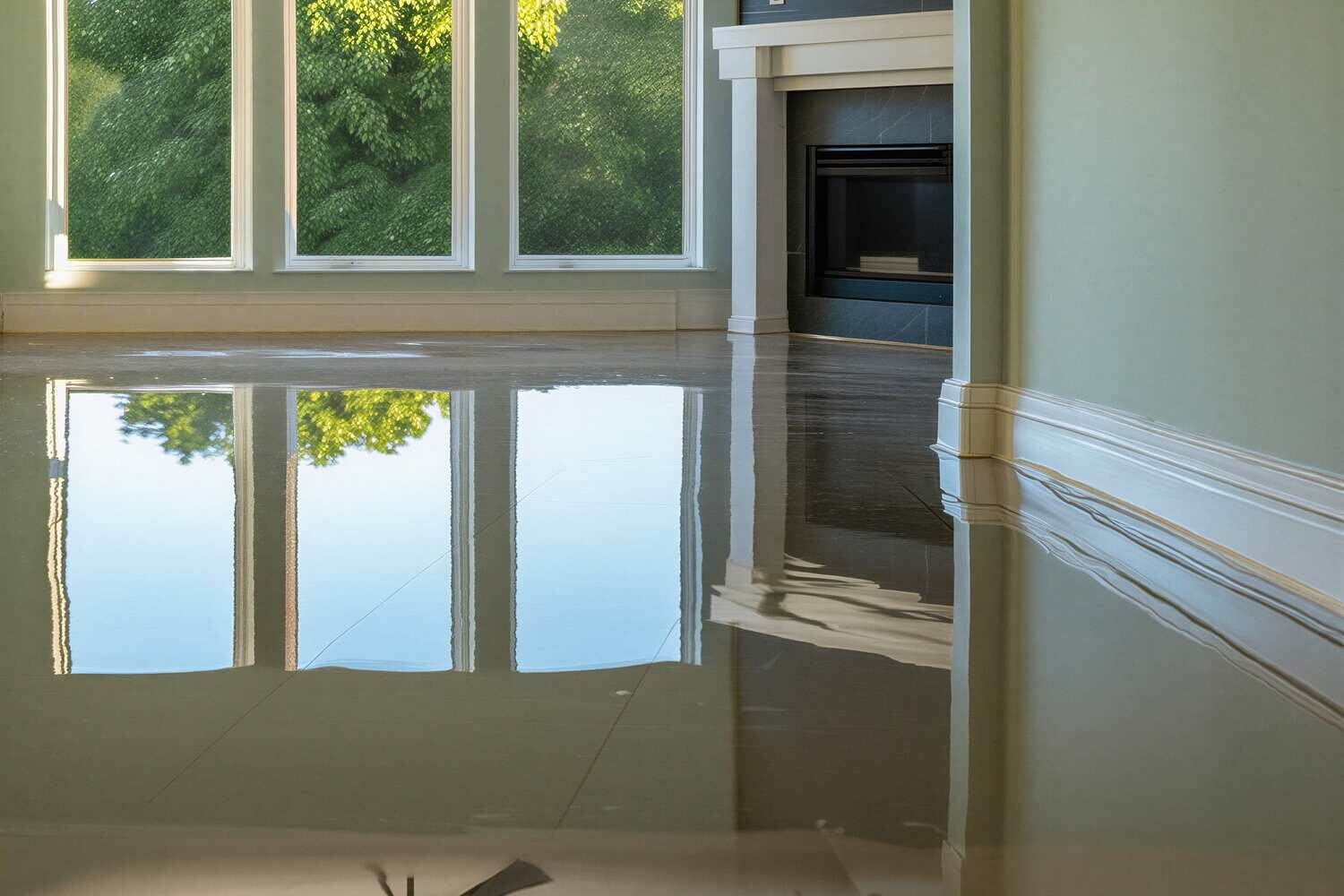
Flood damage restoration in Mill Basin is waterfront work on quiet water. The big detached and semi-detached houses here back onto the man-made canals that finger off Jamaica Bay, most built mid-century with a finished basement or a family room sitting close to the water line, and after FEMA remapped the area following Sandy the bulk of these blocks landed in the AE flood zone. The water arrives more than one way. A nor'easter or a high tide pushes the canal up over the grade and up the floor drain. But the sneakier one takes no tide at all: a long soaking rain lifts an already-high water table until groundwater presses straight through the CMU foundation and the mortar joints into the lowest finished room, welling up at the base of the wall while the block above still looks dry.
Getting the water out is where Reliable Brooklyn Water Damage Restoration starts every one of these, with a live person answering at any hour. A crew rolls from our Brownsville base and reaches the peninsula in roughly 45 minutes, traffic depending. We pump the standing water, test whether it came up clean or carried sewage off the canal, then sanitize whatever a backup touched. Air movers and dehumidifiers go in next and stay until the framing, slab, and CMU walls read dry on the meter, not the hand, a fresh number logged daily. Masonry holds water long after the floor feels clear, so we meter the base of the walls, not just the surface. Then the rebuild: soaked drywall, insulation, and flooring out to the flood line, the room back together. It is complete flood restoration under one crew, and we log the source, how deep it got, and every piece hauled, because on an AE-zone property your NFIP policy runs on that record. We document the loss; your carrier decides what it covers.
What we cover in Mill Basin
- Emergency pump-out — submersible pumps and truck-mounted vacuums clear the canal-side basements and at-grade garages that take Mill Basin's water first.
- Flood cleanup & sanitizing — we shovel out the silt brackish bay water leaves and treat every surface a backup reached with an EPA-registered antimicrobial.
- Masonry & structural drying — air movers and dehumidifiers pull moisture out of CMU foundation walls, framing, and subfloor, with a fresh meter reading logged every day until it's verified dry.
- Flood damage repair — we cut the unsalvageable drywall, insulation, and flooring back to the flood line, then rebuild so you get the basement or family room back.
Full detail on this service: Flood Damage Restoration in Brooklyn · or see every water damage service we provide in Mill Basin.
Common questions in Mill Basin
Groundwater came up through my Mill Basin foundation during a long rain, no tide and no drain backup. What can you actually do?
The water in your finished room is ours to remove and dry, and that part is the same as any flood: we pump and extract what's standing, then meter the slab, the framing, and the base of the CMU walls, because block and mortar hold moisture long after the floor looks clear. We run air movers and dehumidifiers to a verified reading so it doesn't feed mold. The seepage itself — a high water table pressing through the foundation on a canal block — is a drainage and waterproofing issue to solve separately, and we'll tell you plainly what we saw so you can price that fix. Call (347) 906-9419 and we'll look at it today.
My house is in the AE flood zone. Will my NFIP policy cover this, and does it matter that it was groundwater, not the tide?
It can matter, so the documentation is everything. NFIP covers flooding — surface water and the tide pushing up the canal or the drain — and it splits the building from its contents and caps finished-basement improvements, so two neighbors on the same canal can land in very different spots. Pure groundwater seepage can be treated differently than a general condition of surface flooding, which is exactly why we photograph the entry point, log the water's path, and date every reading. A sudden internal failure like a burst line is a homeowner's-policy matter instead. We hand your adjuster the full record and work alongside their inspection. We document the loss; your carrier decides what it covers.
Only a couple of inches came in and I wet-vac'd it. Do I still need professional drying on the canal?
Yes. The depth you saw says nothing about how much the structure drank. A few inches sitting on a canal-side slab for a few hours wicks into the bottom plate of the walls, the subfloor, and the base of the CMU foundation, and a shop vac pulls the puddle but leaves that wet behind, and that is where mold starts in 24 to 48 hours. We extract, meter the materials, and keep commercial drying equipment running until the readings land on a documented dry standard, not just until the floor looks clear. On this high water table it pays to dry it properly the first time. Call (347) 906-9419.
Do you come out while the tide is still up and the water is coming in?
No. We are a restoration crew, not a water rescue, and while the canal is still over the grade there is nothing to dry yet and the hazard is real. We move in once the tide has dropped and the water recedes and it's safe to work. In the meantime, cut power to the flooded level at the panel if you can reach it without stepping in water, get people and pets to a dry floor, lift what you can off the wet ground, and photograph the high-water line. The moment the water pulls back we pump the room down and start the cleanup and drying, so calling early means we're already dispatched when that window opens. Reach us at (347) 906-9419.
Licensed, insured & trained to industry standards


Water in a canal-side Mill Basin basement or family room? Call now.
A crew heads for the canals the moment it's safe, any hour, with a live tech answering at (347) 906-9419. We pump the water out, dry the masonry and framing to a meter reading, and document every step for your flood claim.
Call (347) 906-9419