Flood Damage Restoration in Park Slope, NY
A steam radiator valve on the top floor of a Berkeley Place brownstone weeps overnight, and by morning the water ran the joist bays down onto wide-plank oak no lumberyard can match. We read the boards with a pin meter and set air movers before the wood sets.
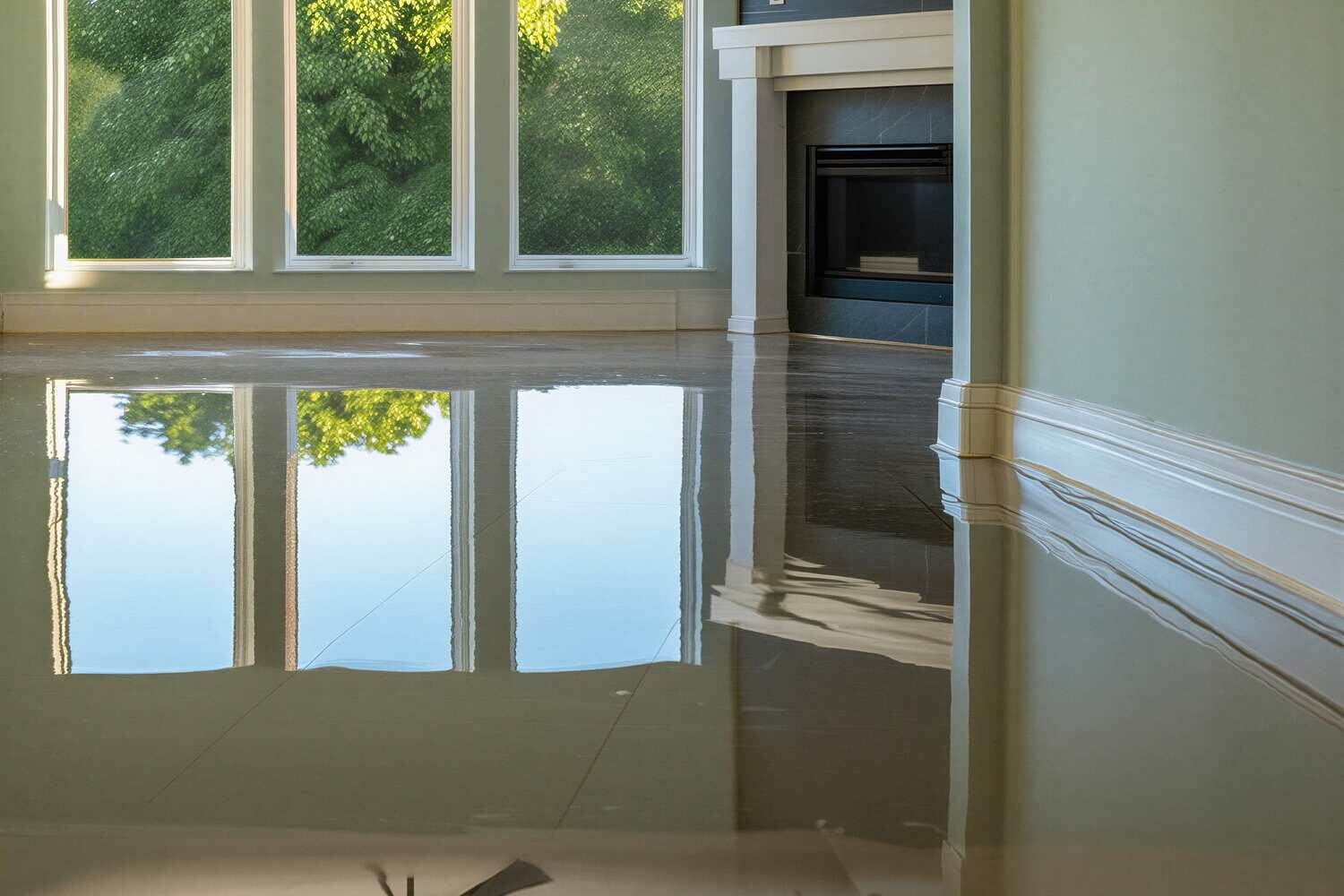
Flood damage restoration in a Park Slope brownstone is usually a preservation job before it is anything else. The rows from Prospect Park West down toward Fourth Avenue went up between the 1880s and 1910s, and what is inside them cannot be replaced off a shelf: narrow-strip and wide-plank oak, heart-pine, real lath-and-plaster ceilings and moldings. Most still run steam heat, and a radiator valve or a supply elbow that weeps on an upper floor does not pool and wait. The water slips through the gaps around the joists and travels down through the structure, so a top-floor leak surfaces on a parlor ceiling and then the finished basement below. Reach the wood before that water sets, and the question shifts from whether the floor is lost to whether it dries in place or has to come up.
That answer turns on speed, so we lead with the clock. A crew rolls from our Brownsville base and reaches Park Slope in roughly 40 minutes most of the time, traffic depending, with a live person on the phone at any hour. On arrival we read the hardwood with a pin meter and make the in-place drying call right there, which usually holds when the equipment is running within a few hours of the leak. We pump and extract any standing water, then dry the framing, plaster, and boards to a verified number instead of a hunch. The cleanup and rebuild close it out: whatever drywall, insulation, or flooring is too far gone comes out and goes back. We photograph the plaster and floors in detail and log every reading, so your homeowner's claim has a real record. It is complete flood restoration under one crew, source to finish. We document the loss; your carrier decides what it covers.
What we cover in Park Slope
- Emergency pump-out — submersible pumps and truck-mounted vacuums clear standing water out of the finished basements and below-grade cellars common under Park Slope brownstones.
- Hardwood & plaster drying — air movers and dehumidifiers pull moisture from wide-plank floors and lath-and-plaster ceilings to a daily meter reading, so the original wood gets a real chance to stay.
- Flood cleanup & sanitizing — we clear the muck a floor-drain backup leaves in the cellar, then treat every surface the dirty water reached with an EPA-registered antimicrobial.
- Removal & rebuild — the drywall, insulation, and flooring that will not dry to standard come out, then we put the space back so it is livable again.
Full detail on this service: Flood Damage Restoration in Brooklyn · or see every water damage service we provide in Park Slope.
Common questions in Park Slope
The leak from upstairs soaked my original wide-plank floor. Does it have to be pulled, or can you dry it?
Often it dries in place if we reach it fast, and that is the whole reason to call early. We read the boards with a pin meter on arrival and decide right there: caught within a few hours, before the wood has cupped hard or sat past about 48 hours, floating floor dryers and dehumidifiers pull the moisture out from above and below and the boards usually flatten back. Left to sit, oak cups, the finish blisters, and the seams open, and then some or all of it has to come up. Because these floors cannot be matched at a store, the early call is what saves them. Call (347) 906-9419.
Water came down and stained my parlor-floor plaster ceiling. Can real lath-and-plaster be saved?
Some of it, depending on how long the water ran. Dense old plaster holds moisture behind a face that still looks sound, so a leak that ran overnight often means the plaster and any insulation in that ceiling bay come out at the wet spot. What you are protecting is the framing and the room below. We meter behind the surface, dry the cavity to a reading before anything closes up, and where plaster does come out we patch it back to match the original profile rather than leaving a flat drywall square in a molded ceiling.
It started at a steam radiator. Do you handle that, or do I need a separate trade?
We handle the water and the building; the radiator valve or steam line itself is a steamfitter's repair. We get the source shut, pull and dry the standing water, and dry the floors and ceiling below to a meter reading, then coordinate so the heating fix happens before we close anything back up. If the radiator sits over that irreplaceable oak, we protect and dry the floor first, because the wood is the part of a Park Slope brownstone you cannot buy back. Tell us it is a steam leak when you call so we bring the right gear.
Will my homeowner's policy cover a burst pipe or radiator leak in my Park Slope brownstone?
A sudden interior failure — a burst supply pipe, a radiator or valve that lets go — is usually one of the covered water losses on a standard homeowner's policy, and that generally takes in the extraction and drying. The Park Slope trap is the other direction: rain that seeps through the old foundation or backs up the cellar drain is typically excluded and needs separate flood coverage or a water-backup endorsement plenty of owners find out they never bought. We document the water source and category precisely, so your adjuster can rule on it without a fight. We document the loss; your carrier decides what it covers.
Licensed, insured & trained to industry standards


Water on the wide-plank floors of a Park Slope brownstone? Call now.
A crew rolls toward Park Slope any hour, day or night, answered live by our own team. We pump the water out, read the hardwood before it sets, dry the plaster and boards to a verified meter reading, and document every step for your claim. Call (347) 906-9419.
Call (347) 906-9419