Flood Damage Restoration in Williamsburg, NY
An old galvanized supply line splits at a rusted joint inside a wood-frame Southside walk-up off South 4th Street, and clean water rides the studs down two floors before a tenant spots the bulge in the plaster. We map the wet framing before we open a wall.
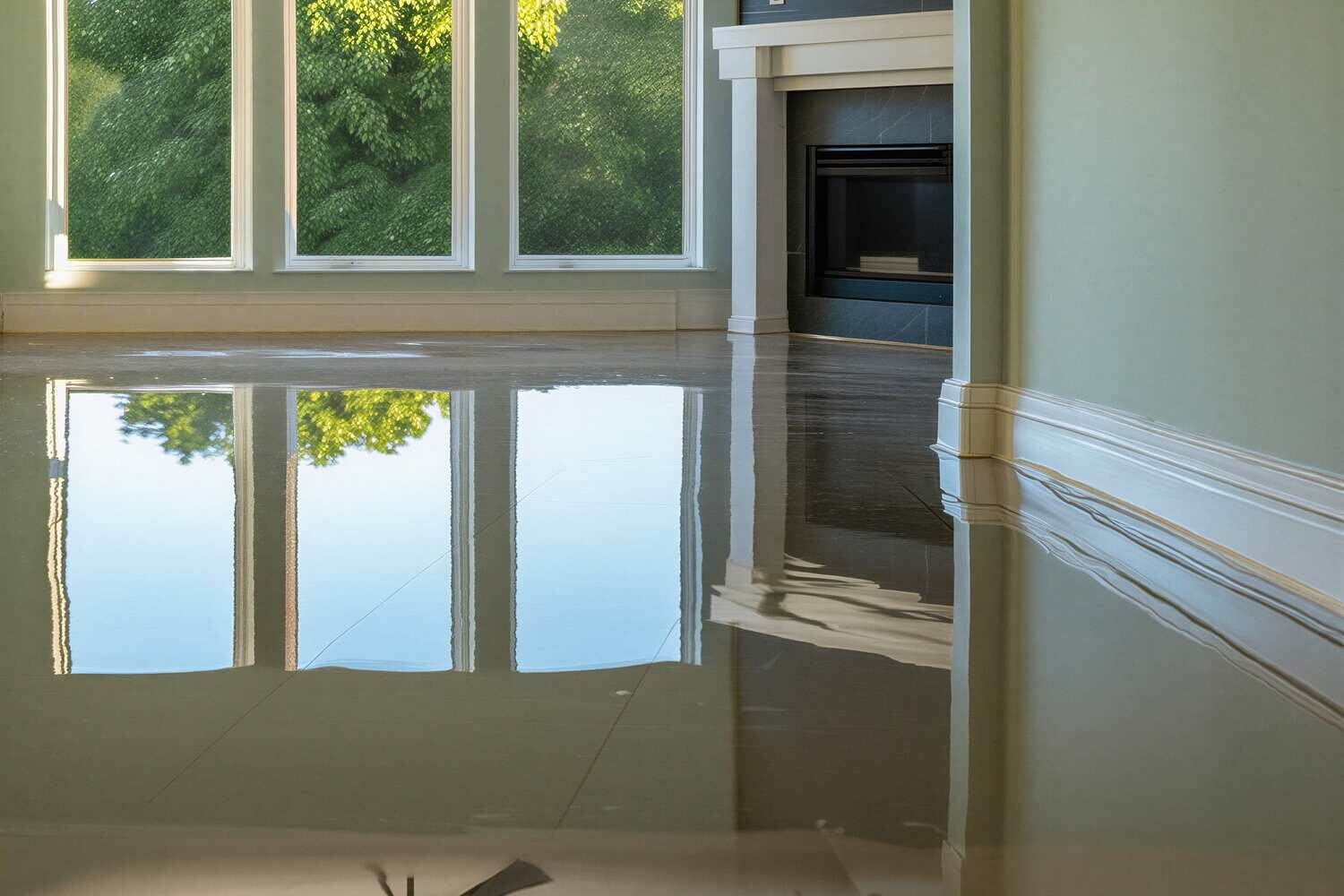
Flood damage restoration in Williamsburg changes with the building, and the neighborhood holds three kinds. The old industrial buildings off Wythe and Berry became lofts with wide-open floor plates, so an upstairs failure runs the water flat and far before it drops through a slab gap to the unit below. The glass towers along the East River stack apartments on shared risers, where one break can wet three floors before anyone hears it. And the wood-frame walk-ups on the Southside, through Los Sures off South 4th and Havemeyer, still run their original galvanized supply lines, rusted thin from the inside and prone to splitting at a joint no one can see. Because those houses are platform-framed, the clean water tracks the studs sideways and down, surfacing as a bulge or a stain a floor or two below the pipe that let go.
A crew rolls from our Brownsville base and usually reaches Williamsburg in about 45 minutes, depending on the BQE and the hour. We run every one of these the same way. A live person answers first, any hour. We pump and extract the standing water, test whether it came up clean or carried waste from a backup, and sanitize whatever it reached. Then the drying: air movers and LGR dehumidifiers work the framing, subfloor, and any slab until the meter reads dry, not the hand, with a fresh number logged daily. The rebuild closes it, new drywall and flooring wherever soaked material came out. It is complete flood restoration under one crew — and because a walk-up wall hides where the water actually went, we meter the stud bays before we open anything, then document each affected unit on its own. We document the loss; your carrier decides what it covers.
What we cover in Williamsburg
- Emergency extraction — submersible pumps and truck-mounted vacuums clear standing water off open loft plates and out of the cellars under older Southside walk-ups.
- Stud-bay moisture mapping — a meter and thermal camera trace where a split galvanized line ran the framing, so we open the wall at the wet, not at the guess.
- Structural drying — air movers and LGR dehumidifiers pull moisture out of framing, subfloor, and the concrete between loft floors until the meter confirms it, read fresh each day.
- Flood damage repair — the soaked drywall, insulation, and flooring come out, then the wall and the unit go back together so you get the room back.
Full detail on this service: Flood Damage Restoration in Brooklyn · or see every water damage service we provide in Williamsburg.
Common questions in Williamsburg
A corroded galvanized pipe split inside my Southside walk-up wall and soaked two floors. Can any of it be saved?
Usually a fair amount, because it is clean supply water and clean water caught early dries in place. On a platform-framed house the water rides the studs and joists well past the bulge you can see, so we meter the wall bays, not just the wet patch, and stage air movers to those readings. Framing and much of the drywall come back if we start before mold gets going in 24 to 48 hours. What holds water and comes out either way is soaked insulation and carpet pad. Call (347) 906-9419 and the sooner we are drying, the more of that plaster and floor stays put.
The pipe that failed is original to the building. Are you going to fix the plumbing, and will this just happen again?
We are the restoration crew, not the plumber, so we get the source shut and dried and then tell you plainly what we saw in the wall — old galvanized rusted to the point one joint let go usually means the rest of that run is on borrowed time. Re-piping is a separate job with a licensed plumber, and worth pricing while the wall is already open, because closing it up only to reopen it in a year is the expensive path. We coordinate the timing so the plumbing gets swapped before we rebuild, not after.
How long does drying take in a wood-frame Williamsburg walk-up after a burst line?
Three to five days for most units once the standing water is out and the equipment is set. Old plaster on a wood-frame wall holds moisture longer than modern drywall, and the water sitting in the stud bays is slow to give up, so we read the framing with a meter every day and pull the air movers only when it hits a dry standard, never on a fixed timer. If the wall had to be opened to reach the wet cavity, that adds a day. The rebuild after gets scheduled off how much came out.
My insurer is asking whether the pipe burst suddenly or leaked slowly. Why does that matter for a Williamsburg claim?
Because a standard policy covers a sudden, accidental burst but often excludes gradual leakage that ran unnoticed for weeks. A galvanized joint that finally lets go can look like either, so how it is documented matters. We photograph the failure point, log the water category, and record the moisture pattern, which shows an adjuster whether this was one sudden release or a long slow seep. We cannot decide coverage, but a clean file gives the sudden-burst reading its best footing. We document the loss; your carrier decides what it covers.
Licensed, insured & trained to industry standards


Split pipe soaking a Williamsburg walk-up or loft? Call now.
A crew heads for Williamsburg any hour, answered live by our own team, not a machine. We pump the water off, trace it through the stud bays, dry the framing to a meter reading, and document each affected unit for your claim. Call (347) 906-9419.
Call (347) 906-9419