Mold Removal in Bedford Stuyvesant, NY
A past renovation left a supply line running sideways through the joist bays of your Stuyvesant Heights brownstone. It develops a pinhole, and the stain surfaces on a parlor ceiling a full room away from the pipe. Behind that plaster, the growth is already spreading through the joists.
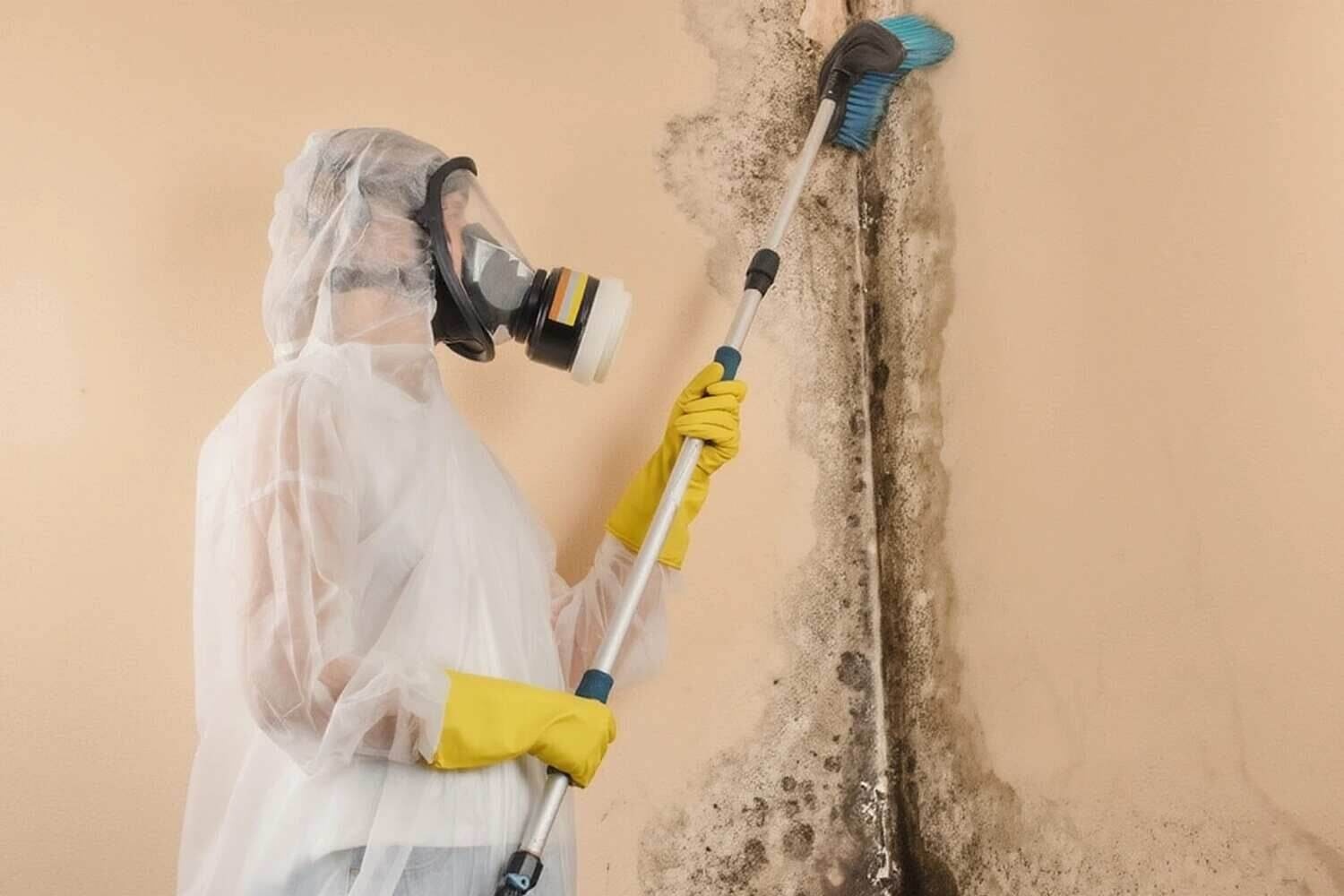
Bedford-Stuyvesant holds one of the largest landmarked stretches of Victorian brownstone in the country, block after block of Romanesque-Revival and Queen Anne row houses put up between the 1880s and 1910s around Stuyvesant Heights. Restored shells over century-old guts. Decades of piecemeal renovation set the trap that feeds so much of the mold here: a bathroom moved or a kitchen re-plumbed left supply lines running horizontally through the joist bays, so when a fitting develops a pinhole the water rides that framing sideways and surfaces as a stain in a room well away from the pipe that failed. Original lath-and-plaster then holds the moisture behind a surface that still looks sound, and mold from water damage takes hold in the joist cavity long before a brown ring shows. By the time it does, the growth has usually run past the visible patch into framing bleach was never going to reach.
Reliable Brooklyn Water Damage Restoration works these Bed-Stuy row houses every week, so we know what the wall hides. Original plaster that can't simply be dried on a modern drywall timeline. Joist cavities that carry the water a room away from its source. A cast-iron line that often needs a plumber before anything closes back up. A thermal camera and a moisture meter come out before we open a thing, because the stain marks where the water broke through, not where it started. We seal the work area under negative air, pull only the saturated material, and dry the cavity with our own air movers and dehumidifiers until a meter confirms it. As much of this job is saving the original plaster and ornamental trim as it is the spores, so we go back only as far as the readings force us. A mold remediation company that chases the stain instead of the moisture path leaves wet framing sealed inside a wall nobody opened, and the colony comes back through the fresh skim coat. We document the loss for your carrier. A real person answers any hour at (347) 906-9419.
What we cover in Bedford Stuyvesant
- Sealed containment — plastic barriers and negative air hold spores in the work area while we open the ceiling or the parlor-floor wall.
- HEPA air scrubbing — scrubbers run through the demolition, when disturbed plaster throws the most spores into the air.
- Original detail kept where we can — soft, blown, or grown-through plaster comes out and gets bagged; sound plaster and trim are HEPA-cleaned and treated, never gutted past what the readings call for.
- Whole path traced and dried — we follow the wet run through the joist bays to its source, shut the water there, and dry the cavity to a verified meter number so the mold loses what it grows on.
Full detail on this service: Mold Removal in Brooklyn · or see every water damage service we provide in Bedford Stuyvesant.
Common questions in Bedford Stuyvesant
The stain is on my parlor ceiling but nowhere near the upstairs bathroom. Why would you open a wall across the room?
Because in a repiped brownstone the stain marks where the water finally dropped through, not where it entered. These houses were re-plumbed piecemeal, so a supply line often runs horizontally through the joist bays instead of straight down a chase, and the water rides that framing before it surfaces. A thermal camera and a moisture meter show us the real wet path, which regularly starts a room or two from the mark on the ceiling. We open only where the readings say the water and the growth went, dry that cavity, and leave the sound plaster alone. Chasing the stain instead of the moisture is how a leak gets patched twice and the framing keeps rotting behind a wall nobody opened.
My house is in the Stuyvesant Heights historic district. Does landmark status limit what you can remove or restore?
Inside, mostly not. Landmark rules in the district govern the exterior and the facade, so interior mold remediation, opening a ceiling, drying a cavity, replacing plaster, generally isn't restricted by the Landmarks Commission the way a stoop or a cornice on the street face would be. Where it does come into play is any exterior work tied to the water source, like a parapet or a facade repair, which can need approvals the owner arranges. We focus on the interior growth and the framing, save the original ornamental plaster and trim wherever the readings let us, and flag anything on the building envelope that belongs on a separate landmark track.
We're already renovating that floor. Can you fold the mold work into the project?
Yes, and a renovation is a good moment to do it right, since the walls are opening anyway. The one rule that doesn't bend is sequence: the mold removal, the source repair, and the cavity drying have to finish and read dry before your contractor closes anything back up, or the growth gets sealed inside new finishes. We coordinate with your GC and plumber, contain the work zone so spores don't spread through the rest of the job, remove and treat the affected material, and hand off a dry, cleared cavity. Building fresh drywall or plaster over a wet, moldy bay is exactly how a beautiful renovation starts smelling musty a season later.
The leak was slow and hidden for months. Will my homeowner's policy still pay for the mold?
Maybe not, and it's the honest catch worth knowing before you file. Policies most reliably cover mold that follows a sudden, accidental water event, a fitting that lets go, a line that bursts. A slow drip that seeped for months is often treated as a maintenance issue the policy expected you to catch, which is a common exclusion, and mold coverage usually carries its own dollar cap set below the water-damage limit besides. We don't decide coverage. What we do is pin down the source, log the water category, and photograph the loss with dated moisture readings, so your adjuster sees the full picture. We document the loss; your carrier decides what's covered.
Licensed, insured & trained to industry standards


Stain surfacing a room from the leak in your Bed-Stuy brownstone? Call now.
A crew is on the road, 24/7, answered live. We trace the water through the joists, contain the area, save the original plaster where the readings allow, and dry the cavity to a meter number, with the loss documented for your claim. Call (347) 906-9419.
Call (347) 906-9419