Mold Removal in Brownsville, NY
You catch it in the hallway before you see a thing: a musty pull outside your door in a Van Dyke or Tilden building. A riser two floors up has been weeping into the shared wall cavity for weeks, and now your baseboard drywall is soft and dark.
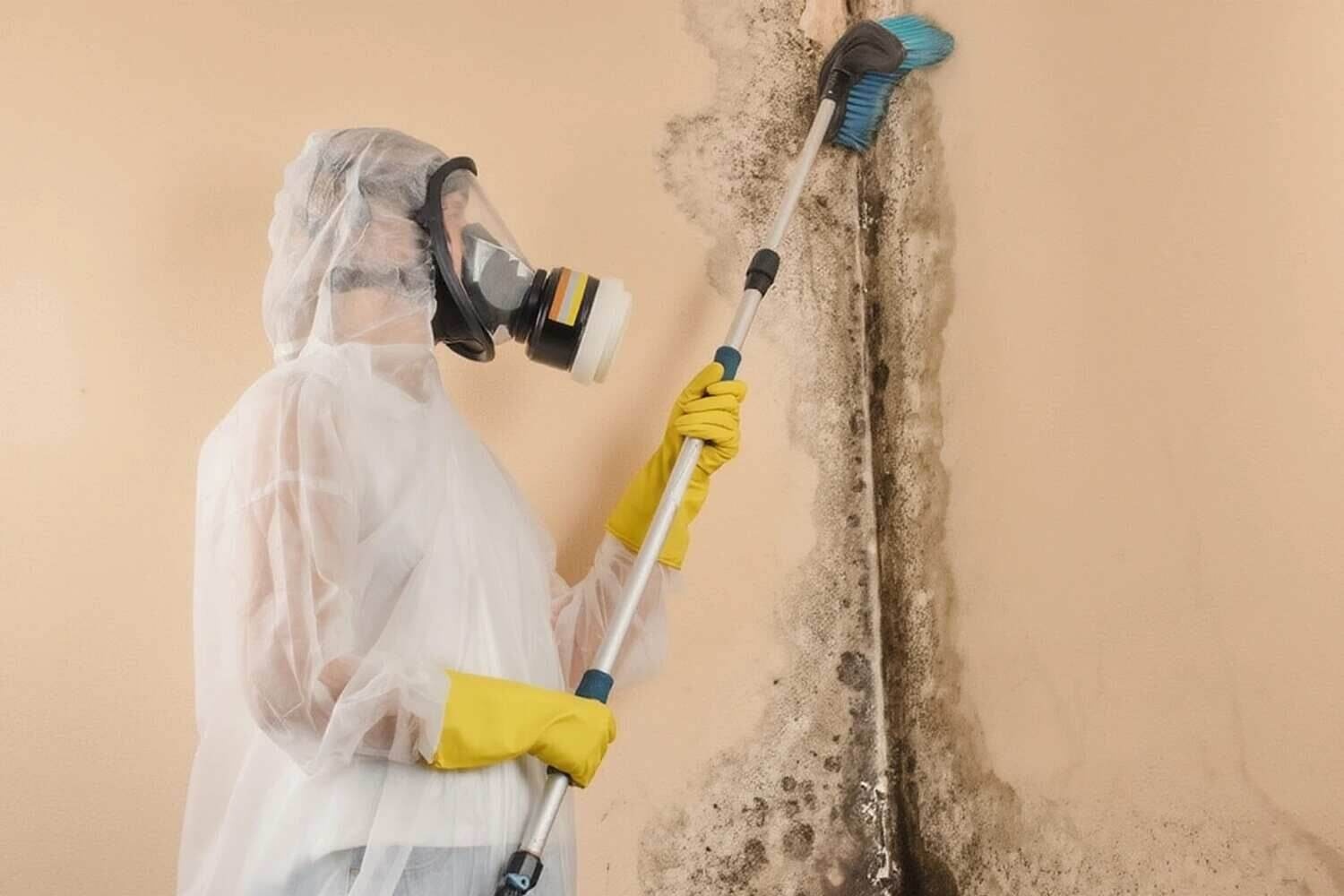
Mold removal in Brownsville usually starts with a leak nobody watched. Around eighteen NYCHA developments sit between Pitkin Avenue and Linden Boulevard, Van Dyke, Tilden, Howard, and Brownsville Houses among them, and most run a dozen floors of apartments on single plumbing risers. A joint fails high in the stack, water follows it down through the shared wall cavity, and the framing stays wet long enough for growth to set in before the smell ever reaches a room. The old brick row houses off Mother Gaston Boulevard fail the other way, through century-old cast-iron drains that back up through the lowest fixture and leave a cellar damp for weeks. Either way the colony ends up behind the surface, not on it, and mold from water damage runs well past the patch you can see. The fix is not bleach on the wall. It is finding the moisture source, taking out what's colonized, and drying the cavity so it can't return.
Reliable Brooklyn Water Damage Restoration keeps its shop right here on Thatford Avenue, so a crew reaches most of the neighborhood in around 45 minutes, traffic and the job ahead of yours setting the real clock rather than a promise. We work the job in a fixed order. First we trace the source, whether that's a riser, a backed-up cast-iron drain, or a slab that never dried after the last storm. Then we seal the work area, run HEPA scrubbers on the air, and pull the saturated drywall and insulation under negative pressure so spores stay penned in the zone. We fix or flag the leak, dry the wall to a verified meter reading, and photograph each step. In a NYCHA building the housing authority owns the riser and the repair, so we document the growth in your unit as an independent record you can push through the official channel. What your policy pays is the carrier's decision, but a documented file gives the claim its best footing. As the mold removal company on your own blocks, we've opened these exact walls before. Call (347) 906-9419 any hour and a person picks up.
What we cover in Brownsville
- Sealed containment — plastic barriers and negative air keep spores out of the rooms still clean while we cut into the wall.
- HEPA air scrubbing — our own scrubbers pull the airborne spores out as the growth is disturbed, not after the work is finished.
- Colonized material bagged — soft drywall, wet insulation, and trim cut out and hauled; the salvageable framing cleaned and treated, never sealed over.
- Source traced, cavity dried — we stop the water at the riser or drain, or flag it for the building, and dry the wall to a verified reading so it stays gone.
Full detail on this service: Mold Removal in Brooklyn · or see every water damage service we provide in Brownsville.
Common questions in Brownsville
I smell mold in the hallway outside my door but I can't see anything inside my apartment. Where is it?
Usually inside the shared wall cavity, not on any surface you'd spot. In Brownsville's NYCHA towers the risers and wall voids run between units, so a leak a floor or two up can wet the framing on your side and grow there with no standing water in your own apartment. A musty pull in the hallway or around the baseboard, with nothing visible, is a reliable sign it's feeding inside the wall. We meter the framing and trace the moisture path before we open anything, so we know where the growth actually sits rather than guessing.
NYCHA is slow on the work order. Does having you come out actually help me get it fixed?
It can, because it changes what you're holding. The housing authority owns the riser and the repair in the units it manages, and NYC Local Law 55 puts the duty to clear indoor mold and the moisture behind it on the building. Put your complaint in through the official maintenance request so it carries a date, then let us document the growth independently: the extent, the location, and the moisture readings, written up and dated. That professional record is what gives a tenant real standing when the work order sits, and it's the kind of proof that backs a complaint if you have to escalate.
Mine is an old row house off Mother Gaston, not a NYCHA building. Is the mold job different?
The source is different, so the front of the job is too. In the brick row houses the water usually comes up through a scaled, cracked cast-iron drain rather than down a tower riser, so it backs in at the lowest fixture and leaves the cellar damp. That water is often contaminated, which means the material it soaked comes out rather than gets dried and reused. From there the remediation is the same as anywhere: contain the space, remove what's colonized under HEPA and negative air, and dry the structure to a verified reading. Where a backwater valve is the lasting fix, that's a plumber's call, and we'll tell you so plainly.
You're based right here in Brownsville. Does that change anything about the mold job itself?
It changes the start and the familiarity, not the promise. From the shop on Thatford Avenue the crew isn't crossing Brooklyn to reach you, so the mold gets contained sooner, though traffic and the job ahead of yours still set the clock. Just as useful, the crew has worked these exact buildings, the single-riser NYCHA stacks and the plaster-over-brick row houses, so we tend to know where the moisture went before we open a wall. The phone side is the same as everywhere we serve: a live person answers at any hour, never an answering service.
Licensed, insured & trained to industry standards


Mold behind the wall in your Brownsville building? Call now.
We're based a few blocks away and answer live, any hour, no machine. A crew traces the leak, contains and removes the growth under HEPA, dries the wall to a meter reading, and documents the loss for your insurer or to push a slow work order. Call (347) 906-9419.
Call (347) 906-9419