Mold Removal in East New York, NY
The combined sewer surcharges in a downpour and pushes wastewater up the floor drain of the garden apartment you rent out off New Lots Avenue. The water drops by morning and the floor looks fine. What it left in the framing is already feeding something behind the drywall.
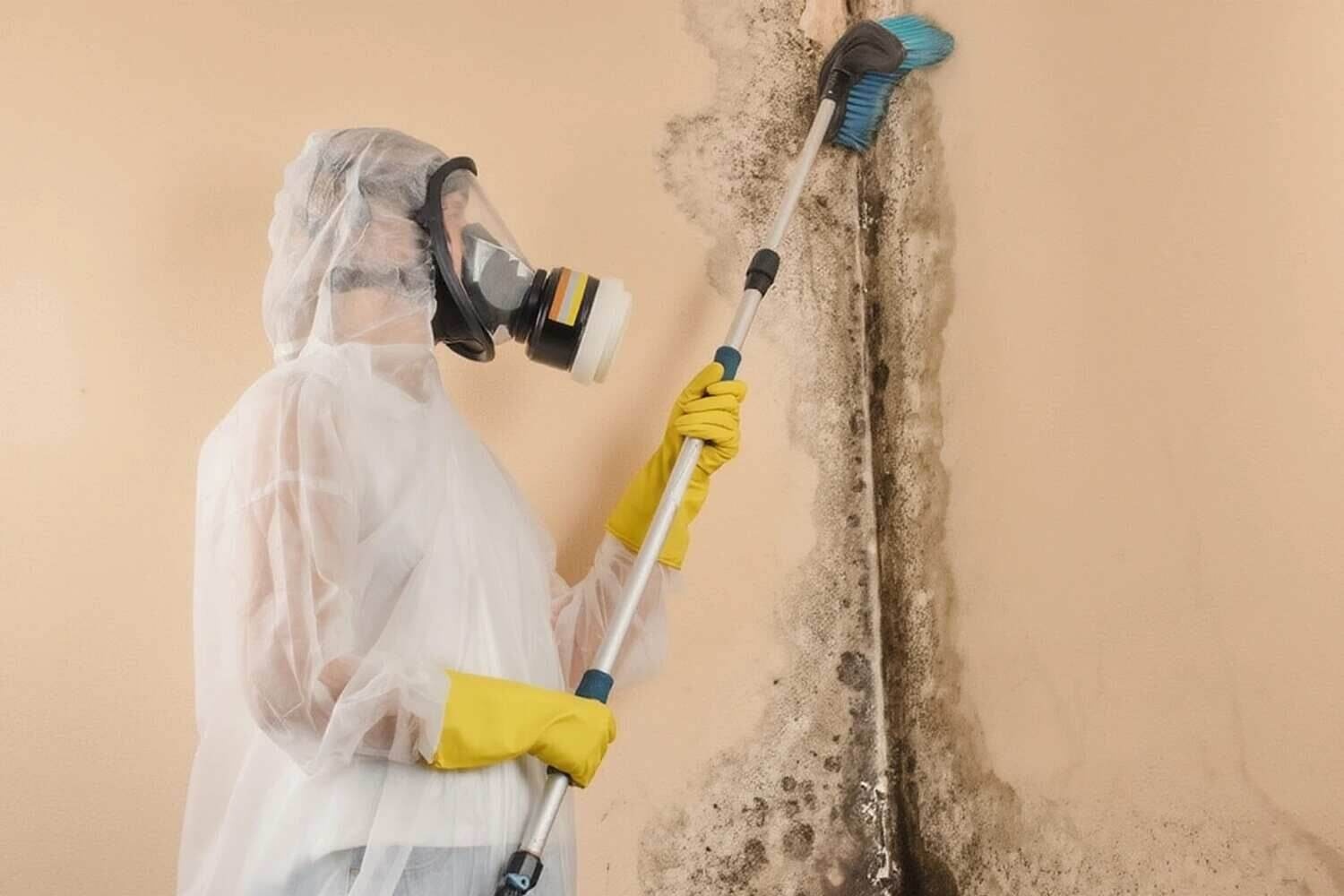
East New York sits low and drains slow, and that shapes almost every mold job we take here. The one- and two-family brick houses along New Lots, Pennsylvania, and the blocks running toward Spring Creek nearly all rent out a garden apartment or a basement unit, and that floor is the one a storm backup fills first. The neighborhood runs on the city's combined sewer, so when a downpour overwhelms the system the backpressure forces wastewater up through the floor drains into rec rooms, laundry corners, and converted bedrooms. That water carries sewage, and contaminated moisture feeds mold faster and dirtier than a clean supply-line leak does. If the basement dried on its own and still smells off weeks later, the growth is usually well established in the framing where the air never reached, so mold after water damage here is rarely the size of the spot on the baseboard.
An East New York basement is really two problems stacked: the contamination the backup left, then the mold it fed, and the order can't be short-cut. Reliable Brooklyn Water Damage Restoration seals the work area under negative air, cuts out the soaked drywall and insulation, HEPA-vacuums the bare framing, treats it with an EPA-registered antimicrobial, and dries the cavity to a verified reading before anything goes back. A crew usually reaches this side of Brooklyn in around 45 minutes from our Brownsville base, traffic depending, and a real person answers the phone at any hour, not a service. Where a landlord rents the flooded unit, we keep each side of the loss straight, the building's structure on one file and a tenant's belongings on another. Any mold removal company can haul moldy drywall out of a basement; the ones that also own the drying gear are the ones that stop it coming back. We document the loss; your carrier decides what it covers. Call (347) 906-9419.
What we cover in East New York
- Sealed containment — plastic barriers and negative air so spores don't drift up into the living floors while we work the basement.
- HEPA air scrubbing — scrubbers pull the airborne spores out while the mold is being disturbed, not after it has already spread.
- Sewage-soaked material out — after a Category 3 backup the drywall, insulation, and trim are cut out and bagged; sound surfaces HEPA-cleaned and treated, not dried and reused.
- Source flagged, cavity dried — we dry the wall to a verified reading and tell you straight if a backwater valve is what keeps the next storm out.
Full detail on this service: Mold Removal in Brooklyn · or see every water damage service we provide in East New York.
Common questions in East New York
I own the house and rent the garden apartment that flooded. Who's responsible for the mold, me or my tenant?
The building and everything built into it are yours, so the drywall, flooring, and structure of that unit are your side, and the mold remediation on them goes on your building policy. What belongs to your tenant is their own property inside the apartment, covered by a renters policy if they carry one. We keep the two straight from the first visit: the structural loss written up under your building for your carrier, and a clear record your tenant can hand to theirs. If the growth makes the unit unlivable during removal, we say so plainly and stage the work to get them back in fast. The coverage decision is always the carrier's, not ours.
Can't I just sanitize and dry the basement myself after a sewer backup?
The drying you can attempt; the contamination is the problem. Water that comes up a floor drain is Category 3 black water, carrying sewage and bacteria, so the porous material it soaked, drywall, insulation, carpet, has to come out rather than get wiped down and kept. Disturbing established growth with no containment is the other risk: scrubbing it dry sends spores through the whole house, and you'd be handling contaminated material bare-handed. We seal the room, run it under negative air, remove what the sewage and the mold claimed, treat what stays, and dry the structure so it has nothing to grow back into.
How far down does this go? The floor looks fine but the whole basement smells.
Usually deeper than the floor shows. After a backup, water wicks up into the wall framing behind the baseboards and down into the subfloor and the seam where the slab meets the wall, all places that dry on top and stay wet underneath. A basement that looks dry can hold trapped moisture in those spots for weeks and grow mold completely out of sight. We use moisture meters and, where a reading calls for it, open small inspection points to find the edge of it, so the removal covers the actual footprint and not just the surface you can see.
How soon after a backup does mold actually start? Mine dried out days ago.
Fast, which is why drying-out-on-its-own is misleading. On damp material mold can begin colonizing within 24 to 48 hours, and sewage-fed moisture pushes it along quicker because the contamination is food for it. So a basement that flooded, drained, and air-dried on the surface days ago has very likely started growing inside the framing already, even if nothing shows yet. That's the reason a musty smell after the water recedes is worth acting on now rather than waiting to see: the sooner the wet material comes out and the cavity dries, the smaller the removal.
Licensed, insured & trained to industry standards


Garden apartment flooded and now musty in East New York? Call now.
A crew is on the road any hour, and a real person picks up when you call (347) 906-9419. We contain the area, cut out and bag the sewage-soaked material, scrub the air, and dry the cavity to a meter reading, with each side of the loss logged for the right claim.
Call (347) 906-9419