Mold Removal in Flatbush, NY
You pull the couch off a Ditmas Park cellar wall to vacuum and the plaster behind it is furred green to the baseboard. That corner never dried right after the spring backup. What you can see is a fraction of what has spread inside the wall.
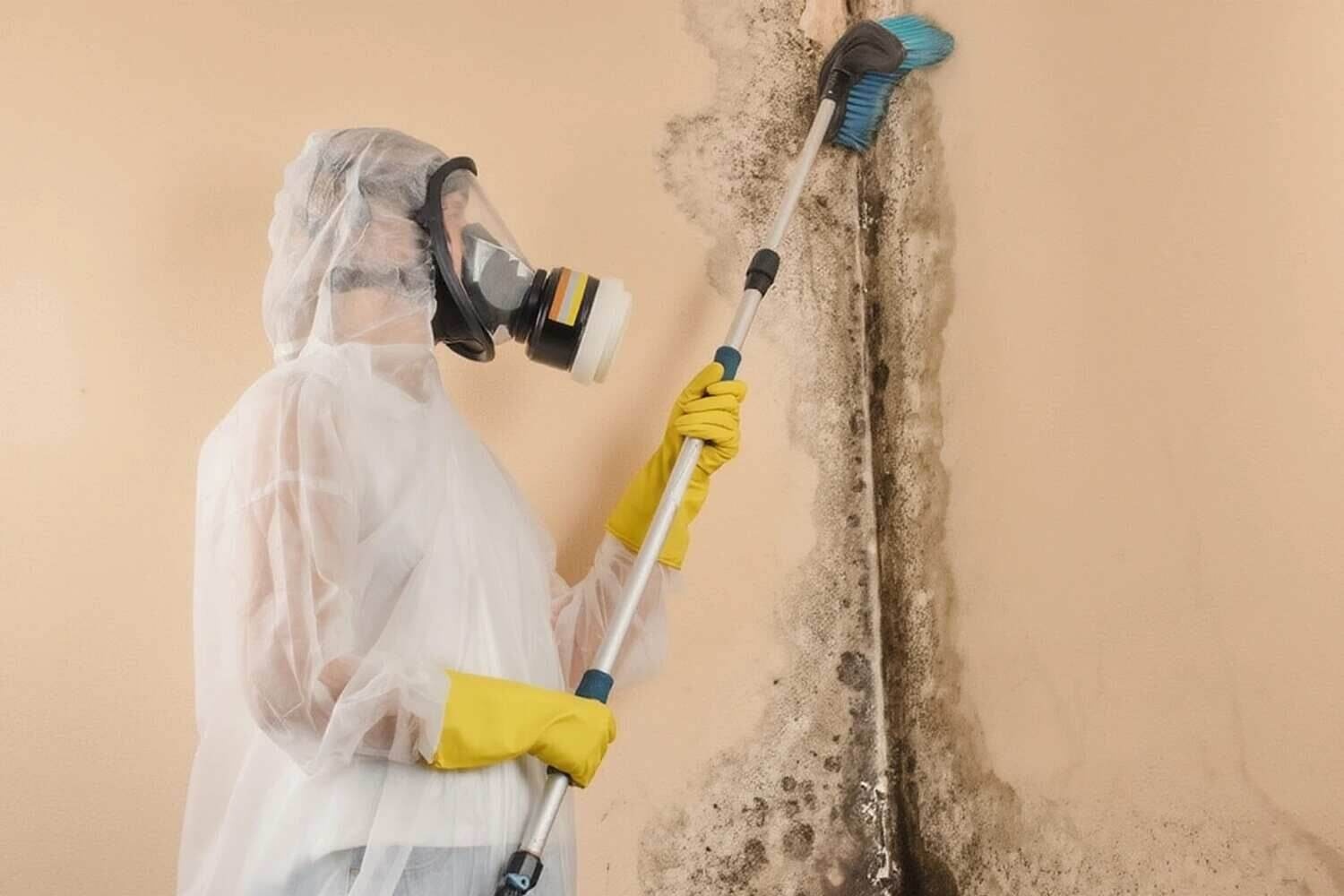
Mold removal in Flatbush is really two jobs stacked together, because the growth almost always started as water that nobody got fully out. The neighborhood splits by its housing. In the deep Victorian basements around Ditmas Park and Prospect Park South, the culprit is groundwater and a combined sewer that surcharges up the floor drain in a hard rain, leaving the finished lower level damp at the mudsill for weeks. In the six-story apartment buildings along Church and Ocean Avenue, it is a slow supply-line drip inside old plaster that surfaces a floor down before anyone catches the smell. Either way, mold from water damage runs well past the patch on the surface.
That is why we work the moisture before the mold. As a mold remediation company we trace the water to where it gets in, seal the room off under negative air, and cut out the colonized material. Only then do we dry the opened cavity to a meter reading, before a single board goes back. Our mold removal services fold the leak repair and the structural drying into one scope, so the crew that clears the growth is the same one that dries the wall it grew from. We run from our Brownsville base and usually reach Flatbush in about 45 minutes, traffic depending.
What we cover in Flatbush
- Seal the room first — poly barriers and a negative-air machine put the work zone under suction before any cutting, so the spores we stir up in a Ditmas Park cellar stay penned behind plastic instead of drifting upstairs.
- Remove under HEPA air — furred plaster, wet insulation, and soft baseboard come out in sealed bags while scrubbers clear the air during the dirtiest part of the work; framing worth keeping gets HEPA-vacuumed and treated.
- Fix what kept it wet — a surcharging floor drain, a weeping supply line, a wall that wicks groundwater: we stop the moisture at its source, because a colony cut out of a wall that is still damp is one you will meet again.
- Dry it, then clear it — air movers and dehumidifiers pull the cavity down to a verified number, and the wall stays open until the meter agrees; larger jobs get independent clearance under New York's mold law before the rebuild.
Full detail on this service: Mold Removal in Brooklyn · or see every water damage service we provide in Flatbush.
Common questions in Flatbush
The plaster behind my cellar wall is furred green, but the rest of the basement looks fine. How much of it actually has to come out?
Only the material the growth has grown through, and no more. But we find that edge with a meter, not by eye. In a Flatbush Victorian cellar, plaster on furring strips wicks damp sideways, so growth you can see on one panel often runs behind the two next to it where the wall is still wet. We probe the whole run, mark where the moisture actually stops, and cut back to a clean dry edge. Sound framing behind it gets HEPA-vacuumed and treated rather than torn out. You lose the wet material and keep the rest.
How long does a job like this take, start to finish?
Most single-room jobs run three to five days. Day one is containment, source repair, and removal; then the air movers and dehumidifiers run two to four days while the cavity dries down to a metered reading, and equipment does not leave until the number holds. A colony spread across several rooms, or one fed by a source that needs more of a repair, takes longer. We would rather give you a real schedule after we have metered the wet than a number over the phone that turns out wrong.
I rent a third-floor apartment near Ocean Avenue and the growth came through from a leak upstairs. Do I call, or does my landlord?
Either of you can call, and we start the work before the fault question is settled, because a live colony does not wait on it. We document your unit on its own: the source, the meter readings, the material we remove, and we keep that record separate from the building's, so whoever ends up paying has a clean file. In a multi-unit Flatbush building the leak, the repair, and the bill can involve the upstairs tenant, the owner, and two carriers, and that is theirs to sort. Our part is clearing the mold and proving what caused it.
Does insurance pay for the mold, or just the water?
When the mold grows out of a sudden covered event — a burst supply line, a failed hose — many homeowner's and HO-6 policies include the remediation, usually up to a stated dollar cap that is often smaller than people expect. Groundwater and sewer backup are handled differently and frequently need a separate rider. We photograph the source, log the readings, and bill your insurer directly. We document the loss; your carrier decides what it covers. We cannot promise an approval, but a file that ties the mold straight back to the water event gives the claim its best footing.
Licensed, insured & trained to industry standards


Green fur behind the wall in your Flatbush basement? Call now.
A real person answers any hour, and the crew rolls from Brownsville with the containment and drying gear already loaded, usually into Flatbush inside about 45 minutes. Every job closes the same way: the source stopped, the cavity metered dry, the file ready for your carrier. Mold only needs a damp wall and a couple of days, so the sooner the room is sealed, the less of it you lose. Call (347) 906-9419.
Call (347) 906-9419