Mold Removal in Manhattan, NY
A supply branch fails on a high floor of a West End Avenue co-op, and the water rides the riser chase down before the super isolates the line. Two floors below, your ceiling has sat damp for a day. Inside sealed prewar plaster, that is all mold needs.
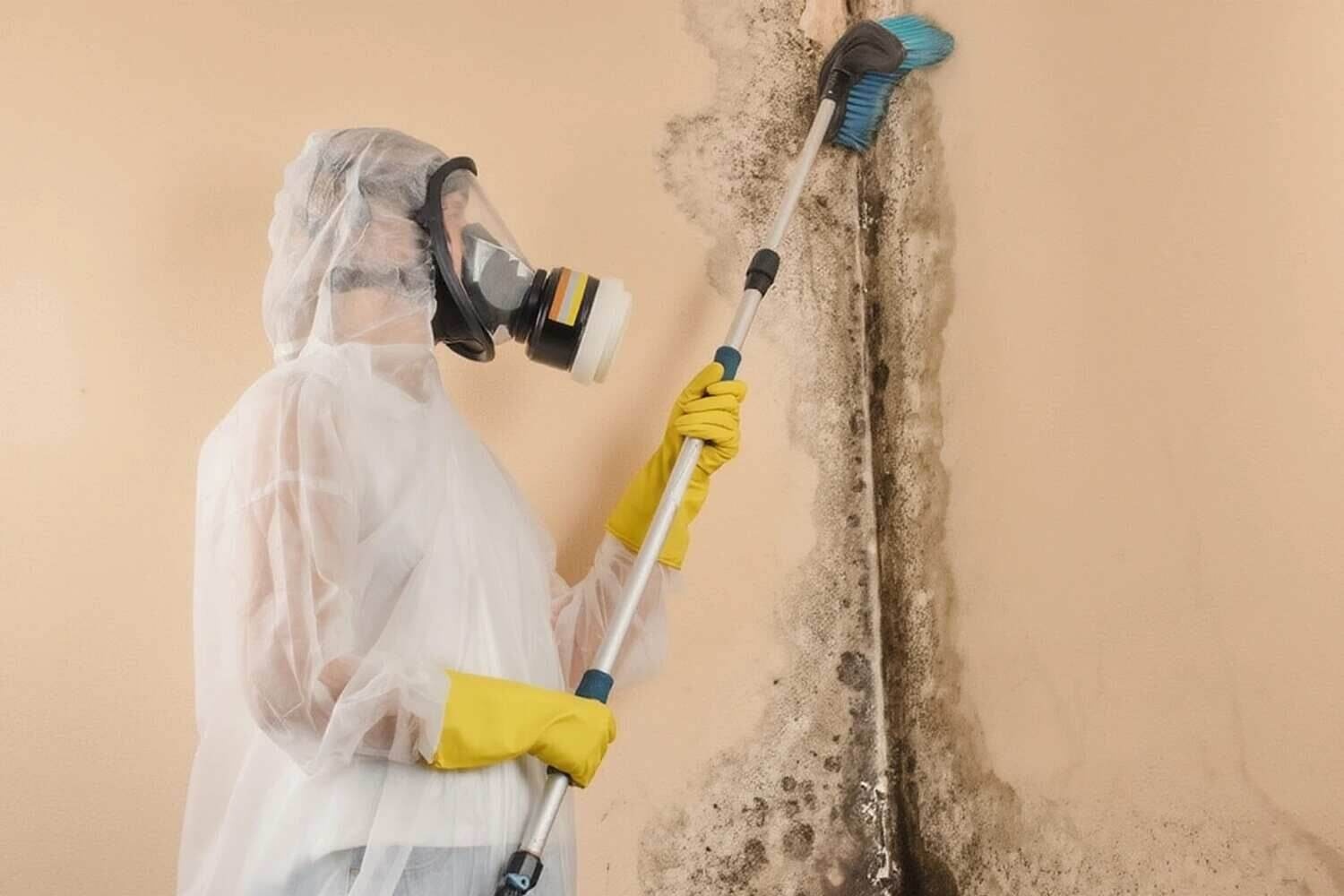
Manhattan stacks its apartments and stacks its plumbing with them, so a single riser or supply-branch failure rarely stays in the unit where it started. Water follows the chase down through the floor-and-ceiling assembly, wetting cavities one, two, or three units below the break before management confirms the repair and the drywall stops soaking. Add the day or two that takes in a prewar co-op off West End Avenue or across the Upper West Side, and the ceiling has been holding moisture long enough for growth to set in behind plaster that still looks sound. When corroded risers finally forced a full pipe replacement in one 495-unit building up here, it was the same aging line that lets go at 3 a.m. and wets six floors on the way down. There is also a New York City rule worth knowing before you call anyone: once the affected area passes a modest square-foot threshold, a building's own porters and handymen are barred from clearing it, so the mold remediation has to go to a certified outside crew.
Reliable Brooklyn carries the IICRC certification and the paperwork a Manhattan managing agent asks for before a vendor touches a wall. We time building access with your super, contain each affected unit on its own, and pull the mold-bearing material under negative air so spores don't ride the hallway or the shared HVAC down to neighbors. When we close out, the board gets a written scope and a clearance record; shareholders and condo owners get the source and the damage logged in a form the carrier and any subrogation claim against the responsible unit can both use. Our crews handle the whole sequence as one job, the containment, the removal, and the drying, rather than the removal-only half a smaller mold removal company can offer without its own drying gear. A crew reaches most of Manhattan in roughly 40 to 60 minutes, the bridge or tunnel and the hour depending. Call (347) 906-9419 any time, and a person answers.
What we cover in Manhattan
- Unit-by-unit containment — plastic barriers and negative air hold spores in the work zone instead of letting them ride the shared HVAC or the hallway into clean apartments.
- HEPA air scrubbing — scrubbers run through the demolition, when opening the wall throws the most spores into the air, not as a pass at the end.
- Plaster and drywall out — the soaked, grown-through material is cut and bagged, while the framing and surfaces worth saving are HEPA-cleaned and treated rather than sealed over.
- Board-ready close-out — a written scope and clearance for the managing agent, plus the source-and-damage record every owner's adjuster in the stack needs.
Full detail on this service: Mold Removal in Brooklyn · or see every water damage service we provide in Manhattan.
Common questions in Manhattan
Why can't the building's own super or handyman just clear the mold in my unit?
Once the affected area passes a modest size, New York City bars building staff from doing the remediation, and the job has to go to a licensed, certified outside contractor. It isn't the building brushing you off; below that threshold a super can handle a small spot, but past it the rule is firm. The reason is that clearing mold without containment and negative air spreads spores through the corridor and the ventilation, so the city wants trained crews and proper controls on anything sizable. We carry that certification and bring the containment, so your managing agent can point to the rule and have it done right.
The mold showed up after a riser leak the building already repaired. Whose remediation is this, mine or the co-op's?
Usually yours, even though the pipe was the building's. Under most NYC co-op and condo bylaws the corporation maintains the riser inside the common stack, while cleaning up the mold on your interior walls, ceiling, and finishes falls to the shareholder or unit owner unless your governing documents say otherwise. Your HO-6 policy may pay for the interior work when a sudden covered leak caused it. We put both halves in writing, the source the building owns and the damage inside your unit, which is the record your adjuster needs and which also settles a scope dispute with the board if one comes up.
Can you recover my deductible from the owner upstairs whose line failed?
That's a subrogation question the carriers settle among themselves, and we can't decide it for you, but the documentation we provide is exactly what that claim runs on. When a specific upstairs fixture or supply line caused the loss, your insurer may pursue the responsible owner or their liability policy to recover what it paid, including your deductible. What tips those claims is proof: we log where the water entered, trace the path down through the stack, and photograph every affected surface with dated moisture readings, so your carrier and the upstairs owner's both work from the same facts instead of arguing over them.
The doorman won't let anyone up without a certificate of insurance. Can you handle that before you arrive?
Yes, and it's standard in most Manhattan buildings, so we deal with it daily. Give us the managing agent's certificate of insurance requirements when you call and we issue one naming the building and the agent as needed, usually the same business day, so the front desk and your super clear our crew without a wasted trip. We can also hold work to the building's approved hours and use the service elevator when the rules require it.
Licensed, insured & trained to industry standards


Mold spreading through your Manhattan apartment? Call now.
A Reliable Brooklyn crew is on the way to Manhattan, any hour, answered by a live person. We clear the COI with your building, contain the unit, take the growth out under HEPA and negative air, dry the cavity to a meter reading, and write the report your board needs. Call (347) 906-9419.
Call (347) 906-9419