Mold Removal in Queens, NY
A finished basement in Jamaica took storm water up the floor drain, dried on the surface after a couple of fans, and smelled clean again by the weekend. Then spring came and the rec room went sour. That sour smell is mold, already set inside the wall.
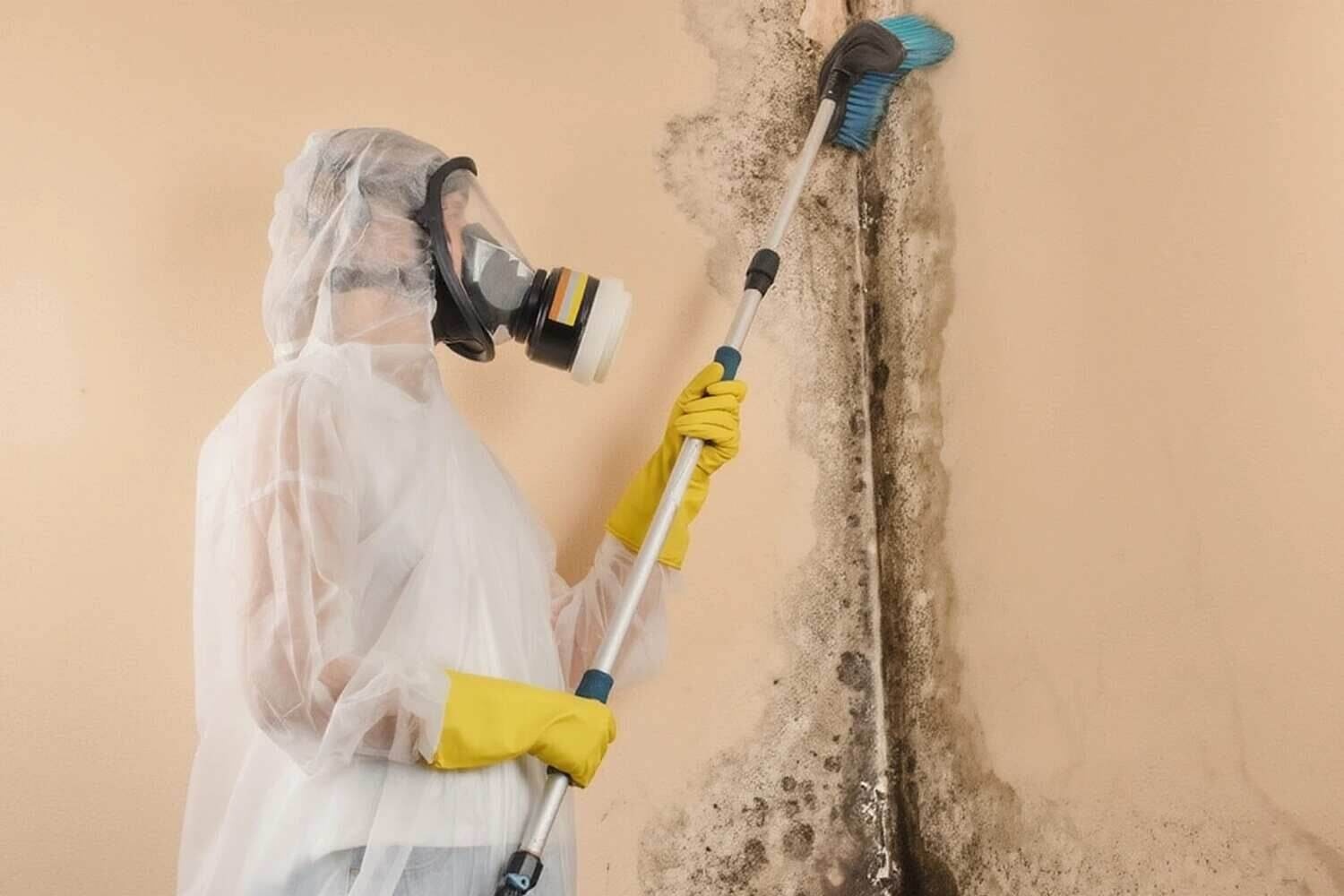
Most Queens mold jobs trace back to a basement that flooded and then dried in the wrong place. The one- and two-family brick houses through Jamaica, South Ozone Park, and Howard Beach nearly all finish the lower level into a den or a spare bedroom, and that floor sits low enough to take water up the drain whenever a hard rain overwhelms the combined sewer beneath the street. The remnants of Ida put three inches of rain on the borough inside an hour in September 2021, but a routine August cloudburst does the same trick on a smaller scale. Someone pulls the standing water, runs a fan a few days, and the open room feels dry. The studs and the insulation behind the drywall never did, and mold from water damage takes hold there within a day or two, out of sight and out of the airflow.
By the time the phone rings, the stain on the baseboard is the small part and the colony is in the cavity and under the subfloor. We run this the way sewer-fed growth has to be run, because that first-inch water carried sewage and cannot be short-cut: seal the room under negative air, cut out and bag the soaked material, HEPA-vacuum and treat the framing worth keeping, then find the moisture and dry the wall to a verified meter reading. Homeowners searching for a mold removal company off the Belt Parkway usually find the ones that scrub and repaint; the difference shows the following August, when the patch either stays gone or blooms back through the fresh coat. A crew reaches most of southern Queens in roughly 45 to 60 minutes from our Brownsville base, traffic on the Belt permitting, and we document the loss for your homeowner's or flood file from the first hour on site.
What we cover in Queens
- Basement contained first — plastic barriers and a negative-air machine put the work zone under suction, so spores don't ride the stairwell up into the living floors while we open the wall.
- HEPA air scrubbing — scrubbers pull the airborne spores during removal, when cutting into the growth throws the most into the air, not once the demolition is finished.
- Sewer-fed material out — after a Category 3 backup the soaked drywall, insulation, and trim get cut out and bagged, not dried and reused; the sound framing is HEPA-vacuumed and treated.
- Source found, cavity dried — we run our own air movers and dehumidifiers until a meter says the wall is dry, so the mold has nothing damp left to grow back on.
Full detail on this service: Mold Removal in Brooklyn · or see every water damage service we provide in Queens.
Common questions in Queens
My South Ozone Park basement smelled clean all summer and only went musty months after the backup. Is that still mold?
Almost certainly. A smell that shows up months later, not right after the flood, is the signature of growth deep in the wall cavity or under the floor, where the surface dried on top and the framing stayed wet underneath. Sewer water leaves bacteria and organic matter that feed mold slowly, so it can take weeks to bloom to the point you notice it. We probe the moisture behind the drywall and, where a reading calls for it, cut one small inspection hole before scoping anything. No tear-out gets recommended until we know how far the water actually pushed.
Half of Howard Beach flooded in the same storm. If mine is a smaller job, does it wait behind the big ones?
No. A mold job and a fresh flood are different clocks. The whole-borough emergency is the standing water the night of the storm; the mold surfaces weeks later, once the rush has passed, so your call rarely competes with a street full of pump-outs. When you reach us, a live person answers any hour and we schedule the assessment against real availability, not a queue. If your growth is contained to one basement corner, that is often a same-week job start once you say go.
Can I just run a dehumidifier down there and skip the tear-out?
A dehumidifier pulls moisture out of the open air, which helps, but it does nothing for the water already trapped inside a closed wall or the mold feeding on it. Worse, after a sewer backup the material the water soaked is Category 3 contaminated, so drying it in place and leaving it doesn't make it safe. We take out what the growth and the sewage claimed, treat the framing that stays, then bring the cavity down to a verified dry reading, which is the part a rental dehumidifier by itself was never going to reach.
Water backed up my basement floor drain, not a pipe. Does my homeowner's policy cover the mold cleanup?
Often it doesn't, and it catches a lot of Queens owners off guard. A standard policy answers a sudden internal failure like a burst supply line, but the groundwater and sewer water that come up through a basement floor drain are usually excluded unless you carry a specific sewer-and-drain backup endorsement. Plenty of owners don't learn it's missing until they file. What we do either way is photograph the source, log the water category, and record the moisture readings, so your adjuster has the full picture. We document the loss; your carrier decides what's covered.
Licensed, insured & trained to industry standards


Basement in Queens gone musty months after the flood? Call now.
A crew reaches southern Queens fast, any hour, answered live by the people who do the work. We contain the basement, cut out the sewer-fed material, treat the framing, and dry the cavity to a verified reading. Call (347) 906-9419.
Call (347) 906-9419