Roof Water Damage in Coney Island, NY
Years of salt air off the boardwalk rot through the metal coping cap on the parapet of your Surf Avenue high-rise, a nor'easter drives rain up under the loose cap, and it runs down the inside face of the parapet into the top-floor ceiling.
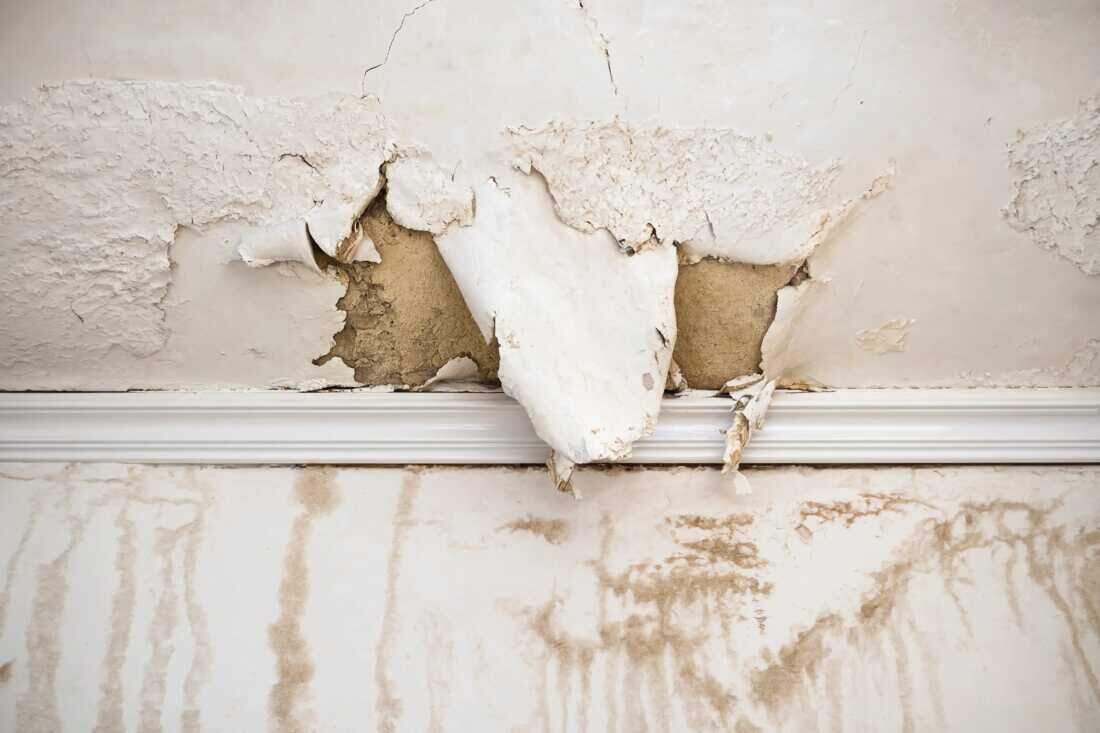
On the Coney Island peninsula, the roof detail that fails first is metal, and it fails from salt. The high-rises along Surf and Neptune Avenues cap their parapet walls with a metal coping, and the salt-laden wind off the Atlantic corrodes the fasteners and the seams over the years until the cap loosens. A nor'easter then drives rain sideways up under that coping and down the inside face of the parapet, so the water enters at the roofline and stains a top-floor ceiling with nothing wrong on the flat roof deck itself. A roof leak here is usually the corroded coping and flashing, not the field of the roof, and the wind-driven water can run several feet in before it drips.
We tarp or reseal the corroded coping to stop the wind-driven water, then map the wet zone in the parapet and the ceiling below with meters before opening anything, and dry it out with our own air movers. Because we run water damage roof repair as one job, the source at the coping, the metered dry-out, and the ceiling rebuild all come from a single crew, and in a multi-story building we coordinate roof and common-area access with management. A real person answers around the clock, never an answering service, and a crew usually reaches the peninsula from our Brownsville base inside the hour. Call (347) 906-9419 and someone picks up.
What we cover in Coney Island
- Same-visit coping containment — we tarp or reseal the corroded coping cap and parapet flashing the same trip, so the wind stops driving rain under the cap while the permanent metal repair gets scheduled.
- Parapet & ceiling drying — air movers and dehumidifiers run against the inside face of the parapet and in the top-floor ceiling cavity to a documented dry reading before anything gets closed up.
- Salt-water check & rebuild — oceanfront water can carry salt that keeps drawing moisture, so we test what came in before deciding what dries in place and what comes out, then rebuild the ceiling once it meters dry.
- Documented for your carrier — the entry at the coping, the interior water path, and dated readings written up while we work, and the roof loss kept separate from any surge or flood water. We document; your carrier decides coverage.
Full detail on this service: Roof Water Damage in Brooklyn · or see every water damage service we provide in Coney Island.
Common questions in Coney Island
The storm stained my top-floor ceiling, but somebody walked the Coney Island roof deck and found nothing. How's it getting in?
Usually the parapet coping, not the roof field. Years of salt air corrode the metal cap on top of the parapet wall, and a nor'easter drives rain up under the loosened cap and down the inside face of the parapet, so the water enters at the roofline and never touches the flat deck you'd think to check. We inspect the coping and parapet flashing first, seal the corroded cap, and dry the parapet and ceiling behind it. Standing on the roof deck tells you nothing; the leak is in the wall cap around the edge.
My ceiling got wet in the storm. How do I know if it's the roof or surge coming up through the building?
On the peninsula both happen, sometimes in the same storm. We check the roof, the parapet coping, and the exterior penetrations first, then trace whether the water ran down from the roofline or pushed up from the lower levels. The answer changes your claim, because wind-driven rain through a corroded coping and rising surge from the street are usually two different policies. We map the entry point and the travel path so your insurer can sort out who covers what, and we keep the roof water and any surge water separate on the file.
Do you handle the roofs on the Surf Avenue high-rises, or just the smaller homes?
Both. We work the bungalows and post-Sandy rebuilds near the boardwalk and the residential high-rises along Surf and Neptune. In a tall building we coordinate roof and common-area access with management, dry each affected top-floor cavity, and give you a unit-by-unit report. The drying approach is the same either way; on the high-rises the access and the paperwork are what scale up, and the coping and flashing are what we check first.
The roof water sat in my ceiling for a couple days before I called. Is mold a worry now?
Yes, and it's a good reason to call sooner rather than later. Wet insulation and trapped moisture in a ceiling cavity can start growing mold within a few days, especially in the humid salt air near the water. We treat the wet materials, run dehumidifiers to pull the moisture down fast, and monitor the readings so it dries before mold takes hold instead of after. On the coast we also check for salt in the water, since salt left behind keeps a surface damp and slows the whole dry-out.
Licensed, insured & trained to industry standards


Storm driving water through your Coney Island ceiling? Call now.
Call (347) 906-9419 and a real person picks up, day or night, usually inside the hour from Brownsville. We seal the corroded coping, dry the parapet and ceiling to a meter, and keep the roof water separate from any surge on the file for your carrier. Every hour the cap stays loose, the wind drives more water down the parapet.
Call (347) 906-9419