Roof Water Damage in Staten Island, NY
A January nor'easter piles snow on the low-slope porch roof of your New Dorp split-level, it melts by day and refreezes at the eave by night, and the ice dam that builds up backs meltwater under the shingles and down two floors into the finished basement.
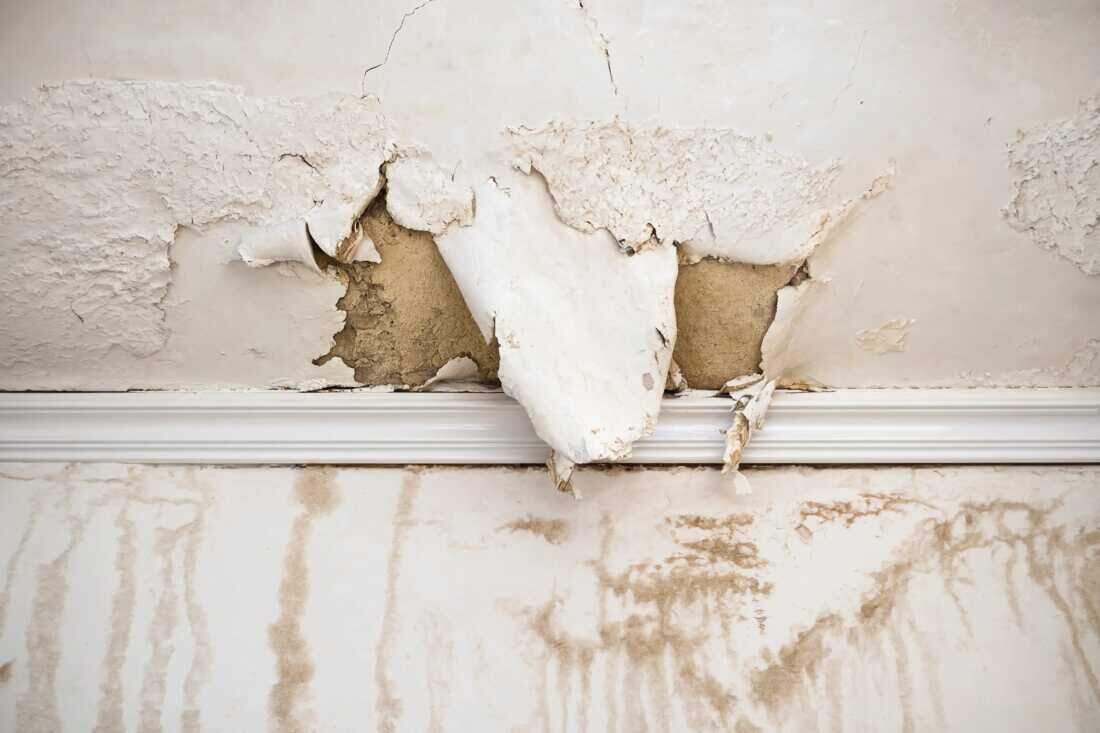
Staten Island runs on single-family homes with finished basements, and a roof leak here rarely stops at the roof. Water backs up under the shingles at an ice dam or ponds on a low-slope section, gets in at the eave or a flashing joint, then rides a stud bay or the floor deck and surfaces in a basement ceiling far from where it entered. On the East Shore and the Sandy-hit North Shore stretches like Midland Beach, an aging roof sitting over a flood-zone basement means trouble can arrive from the top and the bottom in the very same storm, and the two need to stay separate on paper.
We answer the phone ourselves, any hour, and roll a crew over the Verrazzano from our Brownsville base, usually inside the hour in steady traffic. Working with a single water damage roof repair company keeps the job in order: tarp the roof to kill the active leak, read every wet layer with moisture meters, the ceiling cavity, the wall bays, the basement framing, then dry each to a verified number with our own drying gear before the rebuild. We photograph and log the loss as we go, keeping the roof path and any ground-water path clearly apart in the file, and your carrier decides what your policy covers. Reach a live person at (347) 906-9419, day or night.
What we cover in Staten Island
- Same-visit roof tarping — we shut the active leak at the eave, the ice-dam line, or the ponding low-slope section the same trip, before the next band of weather adds to the loss.
- Top-to-basement moisture mapping — we trace the water from the roof down through the wall to the finished basement and dry every wet cavity, not just the ceiling stain that showed first.
- Attic, cavity & basement drying — air movers and dehumidifiers set in the attic, the ceiling void, and the basement, run to a verified dry reading before we close anything back up and repair the interior.
- Roof and ground water kept separate — dated photos and moisture logs that keep the roof-down loss distinct from any flood-up water, so your adjuster can read the two causes apart. We document; your carrier decides coverage.
Full detail on this service: Roof Water Damage in Brooklyn · or see every water damage service we provide in Staten Island.
Common questions in Staten Island
My roof leak only showed up after a snowstorm, then stopped when it warmed up. Is that a hole in my roof?
Usually not a hole, an ice dam. On a Staten Island cold snap, snow melts over the warm part of the roof, runs to the cold eave, and refreezes into a ridge of ice. Meltwater then pools behind that dam and backs up under the shingles, which are built to shed running water, not to hold a standing pool, so it finds its way in and drips inside. When the ice melts, the leak seems to vanish, then returns with the next freeze-thaw. We tarp and clear the affected run, dry what the water reached, and note in the file that the cause was ice-dam backup, which insurers generally treat as sudden rather than wear.
My finished basement on the East Shore sits in a flood zone. Does that change how a roof leak gets handled?
It changes the paperwork more than the drying. Water that came down from the roof is a separate cause from any flood that pushed up through the foundation, so we map and date each source on its own. That keeps a covered roof leak from getting lumped in with a flood event your standard homeowner's policy may exclude, which is a real risk on the East Shore. On the equipment side we dry the basement the same way either way, but the roof path and the ground-water path stay clearly distinct in the file so your adjuster can sort them.
A hard freeze cracked my flashing and burst a pipe the same night. Can you handle both in one Staten Island job?
Yes, and that pairing is common here on the coldest nights. We treat it as one water event with two entry points: we tarp the roof, coordinate with your plumber if the line needs a repair, then dry everything the water reached in a single continuous job. The report keeps the two causes and the area each affected separate, which matters because a wind-driven or ice-dam roof leak and a sudden frozen-pipe burst can fall under different parts of your policy. We document the loss; your carrier decides what it covers.
Water is pooling on the flat porch roof off my split-level and dripping through the ceiling below. Can that be dried without tearing the whole roof off?
Yes. Ponding on a low-slope porch or extension roof is a drainage problem, and the interior side, the soaked ceiling and framing under it, is exactly what we dry and rebuild. We tarp the ponding section so it stops feeding the ceiling, meter the cavity above the room below, and run drying gear until it reads dry, then patch the ceiling. A full re-roof to fix the slope or drainage is a roofing contractor's trade; the tarp holds the water out until that work is scheduled, so you're not stuck with an open ceiling waiting on the roof job.
Licensed, insured & trained to industry standards


Roof leaking down into your Staten Island basement? Call now.
A live person answers any hour and a crew heads over the Verrazzano, usually inside the hour in normal traffic. Once roof water soaks the ceiling and framing it keeps wicking for hours after the storm and grows mold in days. We tarp, dry to a verified reading, and document the loss for your carrier. Call (347) 906-9419.
Call (347) 906-9419