How to Spot Water Damage in Your Brooklyn Home — Before It Spreads
A brown ring on the bedroom ceiling that wasn't there last month. Paint that bubbles near the baseboard. A musty smell no open window clears. Each is an early sign of water damage; here's how to read it, and what it may be hiding.
Short answer: trust your senses first. A stain, a smell, or a wall that gives under finger pressure means moisture is present right now. Mold can take hold within 24 to 48 hours, so the sooner you find it, the cheaper and safer the fix.
This guide covers the signs of water damage a homeowner can actually spot, one surface at a time, plus the hidden tells that only a meter finds. We run a Brooklyn water damage restoration crew, so the readings below come from jobs we walk into every week, not a stock checklist. Use it to decide whether the mark on your wall is a live leak or an old scar you can paint over.
What it looks like, room by room
Water shows up differently depending on where it's coming from. In a Brooklyn brownstone or apartment, the clue often points straight to the source. Start with the ceiling and walls, where gravity and old plaster make damage easiest to read, then work down to the floor and basement.
| Where you see it | What it looks like | Likely source |
|---|---|---|
| Ceiling | Brown ring stains, sagging, cracking texture, an active drip or a soft bulge that holds water | Roof, or a leak from the unit or bathroom above |
| Walls | Yellow or brown staining, bubbling paint, peeling wallpaper, a bulged or bloated surface, blistering near the baseboard | Pipe inside the wall, window flashing, exterior masonry |
| Floors | Warped or cupping hardwood, lifting tile, soft or springy spots, a gap opening between boards | Subfloor leak, appliance line, slab moisture |
| Basement | White chalky deposits (efflorescence), damp concrete, a tide line on the wall, rust on metal legs and shelving | Groundwater, foundation seepage, drain backup |
| Around fixtures | Caulk pulling away, rust at fittings, dark grout, a swollen vanity base, peeling laminate on a cabinet floor | Tub or shower, sink, toilet, dishwasher, washing machine |
A stain that's damp or growing means an active leak. A dry, well-defined stain may be old, but only a moisture reading confirms whether the material behind it is still wet.
What water damage looks like on a ceiling
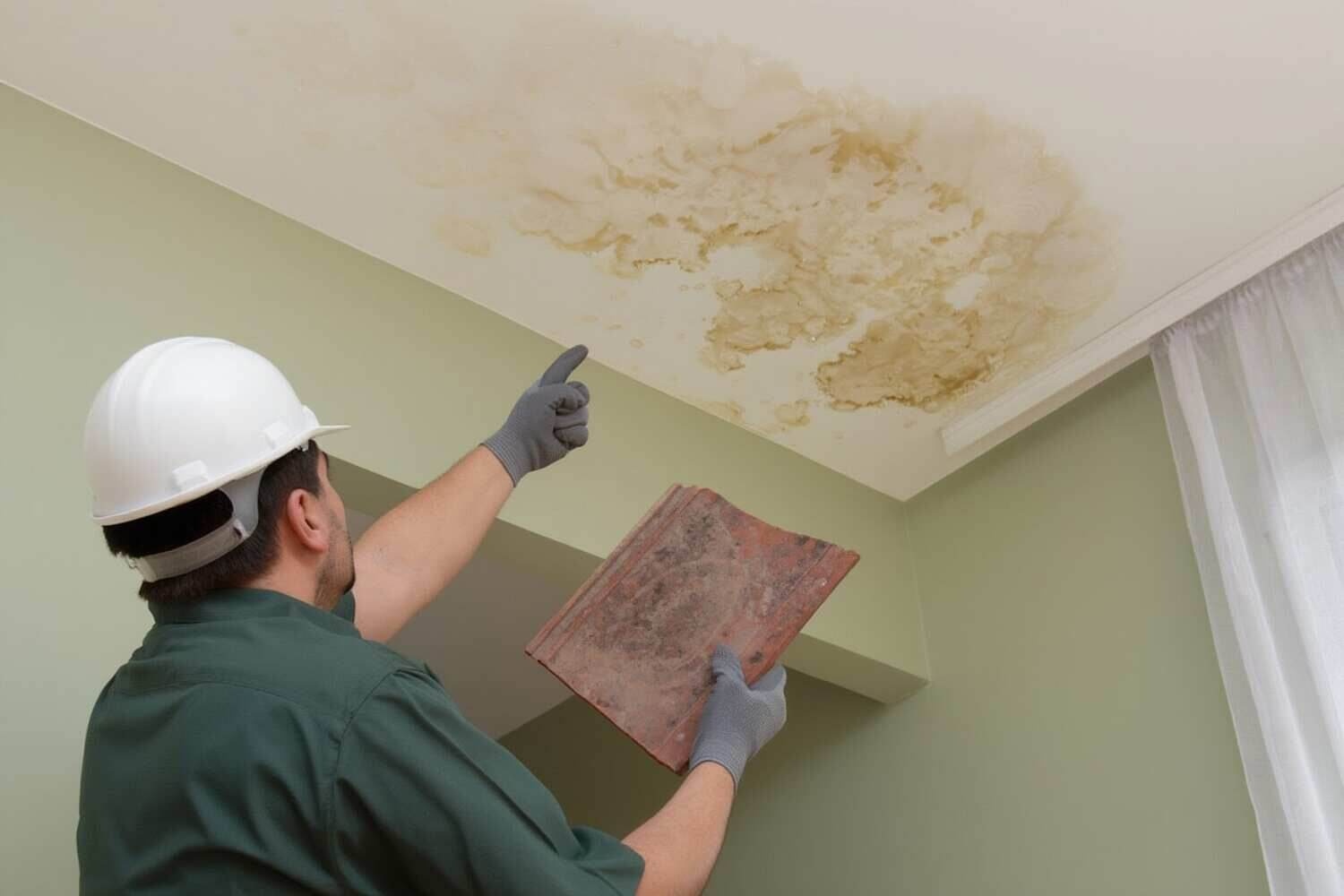
A ceiling is where most Brooklyn water damage shows up first, because water from an upstairs unit, a bathroom, or the roof always finds its way down. The earliest tell is a faint coffee-colored ring with feathered, uneven edges, often around a light fixture or a corner where the ceiling meets the wall. As the leak continues, the ring darkens and spreads, the plaster or drywall starts to sag, and the painted texture cracks or flakes. A ceiling that bulges or feels heavy and spongy is holding standing water above it and can let go without warning, so keep people and furniture out from under it.
What water damage looks like in walls
In a wall, the damage is usually working from the inside out, so the surface changes before the cause is ever visible. Look for paint that bubbles or blisters in a soft patch, wallpaper lifting at a seam, and yellow or brown staining that creeps upward from the baseboard or down from the ceiling line. Press the suspect area: wet drywall feels cool and gives slightly, where a dry wall is firm. In an older Brooklyn building with plaster and lath, the same leak shows as a damp, crumbling patch or a dark bloom that returns every time it rains. Drywall tape lifting along a seam is another quiet sign, because trapped moisture breaks the adhesive from behind.
What water damage looks like on hardwood floors
Hardwood tells on you slowly, then all at once. The first signs of water damage on a wood floor are boards that darken and feel slightly tacky underfoot, a subtle change you notice more with bare feet than with your eyes. Next the planks start to move: cupping (edges rising higher than the center) means moisture is soaking up from below, while crowning (the center bulging up) usually means the top got wet and dried too fast. Left long enough, gaps open between boards, the finish clouds or peels, and the wood begins to rot and spring underfoot. Soft, punky boards or a floor that flexes when you step on it point to water damage under the floor, in the subfloor or joists, which is where wood rot from water damage does its real structural harm. In a Brooklyn parlor floor over an unheated cellar, a slow supply-line drip can cup a whole row of century-old oak before a single drop reaches the surface.
Hidden signs behind walls & floors
Most water damage is invisible at first, because the water is inside the structure and not yet on its surface. These indirect signs are the ones most homeowners miss. Watch and listen for them:
- A musty, earthy smell with nothing visible. This is the classic sign of moisture and mold behind a wall or under flooring.
- A wall that feels cool, soft, or spongy compared to the area around it. Wet drywall loses its rigidity and gives under light pressure.
- An unexplained jump in your water bill. A hidden supply-line leak runs day and night with nothing showing on the surface.
- Dripping, hissing, or trickling you can hear when no fixture is running. That's water moving inside the walls.
- Paint or drywall tape lifting at the seams. Trapped moisture breaks the adhesive bond from inside.
- Nail pops and small brown dots appearing on a wall or ceiling. Corroding fasteners and rust are pushing through the paint.
Water damage vs. termite damage and other look-alikes
Not every mark on a wall is water. The comparison people ask about most is termite damage vs water damage, because both can buckle wood and blister a painted wall. The tell is in the pattern: water damage stains, spreads, and feels damp, and its wood swells and cups; termites leave dry damage, hollow-sounding wood that crumbles into papery layers along the grain, pinholes with gritty brown "mud" or frass, and mud tubes running up a joist or foundation wall. If you tap a suspect board and it sounds hollow and sheds dry flakes, think insects and call a pest inspector. If it's soft, wet, or ringed with a stain, it's water, and it's the kind of job our restoration service handles. Here's a quick way to tell water from the common look-alikes before you panic, or dismiss a real problem:
| The sign | Water damage | Something else |
|---|---|---|
| Discoloration | Yellow or brown rings with feathered edges, often spreading | Smoke, age, or a one-time spill, with sharp, static edges |
| Damaged wood | Swollen, cupped, soft and damp, darkened along a water path | Termites: dry, hollow-sounding, crumbling in papery layers with frass or mud tubes |
| Cracks | A bowed wall plus cracking that's damp or growing | Hairline settling cracks, dry and stable, common in old NYC buildings |
| White deposits | Efflorescence on basement masonry, marking an active moisture path | Old paint chalking or dust that wipes off and doesn't return |
| Smell | A persistent musty, earthy odor that returns after you air the room out | Trash, drains, or a one-off odor that clears with ventilation |
| Bubbling | Paint blisters that feel damp or hold water | Heat blistering or bad surface prep, dry to the touch |
When in doubt, the deciding factor is moisture: a meter reading on the affected material settles it. Water damage is wet now or was recently; termite and cosmetic damage are dry.
How to check for mold
Where there's hidden water for more than a day or two, there's usually mold. You can run a basic moisture check yourself before deciding whether to open a wall:
- Smell first. Walk the room with your nose. A musty corner, closet, or baseboard is the strongest free clue that mold is present.
- Foil test. Tape a square of aluminum foil flat against a suspect wall and leave it for 24 hours. Condensation under the foil means moisture is moving through the material.
- Press and feel. Push along baseboards and corners. Soft, cool, or spongy spots mean the gypsum core is wet, which is prime ground for mold.
- Look in the usual places. Check grout lines, under sinks, behind the toilet, window sills, and any spot that's been wet. Mold favors the corners where surfaces meet.
- Don't disturb visible growth. If you find more than a small patch, leave it alone, because sanding or scrubbing spreads spores. That's the point to call a pro for mold removal.
When hidden damage means you need a pro
DIY checks tell you something is wrong; they can't tell you how far it spread. Bring in a Brooklyn restoration crew when:
- The stain is damp, spreading, or keeps coming back after you repaint.
- You smell a musty odor but can't find the source, which means it's inside the structure.
- A wall or floor feels soft, warped, or sagging, so the material may already need removal.
- There's been standing water, a backup, or a leak that sat overnight, because the clock on mold is already running.
A technician confirms what's hidden with moisture meters and thermal imaging, so there's no guesswork and no opening walls blindly, then gives you a written scope. From there the work follows the water. Reliable Brooklyn Water Damage Restoration handles water extraction for anything standing, runs air movers and dehumidifiers until structural drying hits a metered reading, does the cleanup and haul-out for whatever can't be saved, and treats mold if the damp sat long enough to grow it. Catching it early is the difference between a patch-and-paint repair and a gut renovation. Worried about the bill? See water removal, restoration cost, and insurance claims.
Can water damage be hidden with no visible signs?
Yes. A slow leak inside a wall or under a floor can run for weeks before it surfaces. The earliest tells are a musty smell, a higher-than-normal water bill, or a wall that feels cool and soft, all of which appear before any stain does. A moisture meter is the only way to confirm without opening the surface.
How long does it take for water damage to cause mold?
Mold can begin growing on wet drywall, wood, or insulation within 24 to 48 hours. That's why a leak that sat overnight is treated as urgent: the damage and the cost both climb fast once mold starts.
What does water damage smell like?
Damp, earthy, and a little stale, like a basement after a rainy week. It's the smell of mold and bacteria growing on wet material, and it usually returns within a day or two of airing the room out. A musty smell with no visible stain is one of the strongest signs that water is trapped behind a wall, under a floor, or above a ceiling.
How do I tell water damage from termite damage?
Water damage is wet: the wood swells, cups, and darkens along the path the water took, and the surface stains or blisters. Termite damage is dry: the wood sounds hollow when you tap it, crumbles into thin papery layers along the grain, and often shows pinholes with gritty brown frass or mud tubes climbing a joist. Damp and stained means water; dry, hollow, and flaking means insects. A moisture meter confirms water in seconds; anything dry and tunneled is a job for a pest inspector, not a restoration crew.
Does insurance cover water damage in Brooklyn?
Sudden and accidental damage, such as a burst pipe or an overflowing appliance, is often covered by a homeowner's or renter's policy. Gradual leaks and flood (rising surface water) usually are not; flood needs separate flood insurance. You owe your deductible, and your carrier decides what's covered. We document the loss and bill your insurer directly to support the claim. See insurance claims.
Found a sign? Get it checked before it spreads
A Brooklyn technician will take moisture readings and tell you exactly what's behind the wall. Call Reliable Brooklyn Water Damage Restoration at (347) 906-9419 any time and a real person answers, 24/7, never an answering service. We're based in Brownsville and usually reach most of Brooklyn in around 45 minutes, depending on traffic.
Call (347) 906-9419